
Politics
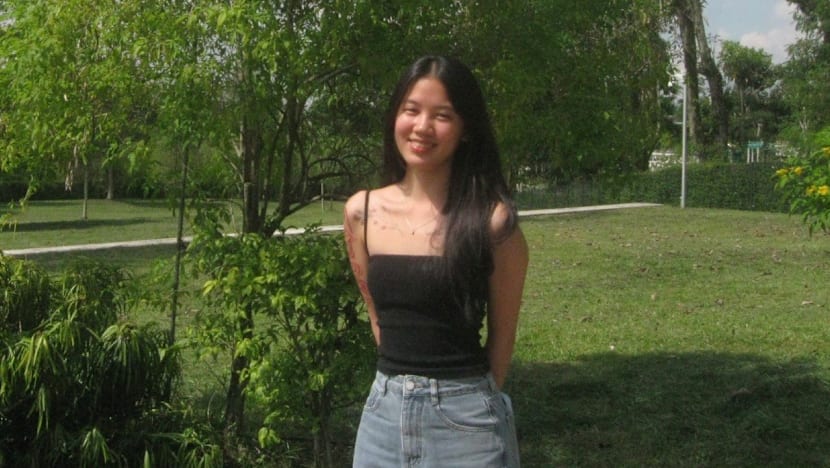
She lost her mother to suicide at 13, survived abuse and grew up in care – now, at 22, she helps others find hope
Key Points
She lost her mother to suicide at 13, survived abuse and grew up in care – now, at 22, she helps others find hope Shirlene Ng moved between shelters and caregivers' homes eight times in four years as a teen. Now a psychology undergraduate and the youngest recipient of the President’s Challenge Springboard Fellowship, she reflects on her lost childhood and why she wants to help other young women navigate life after trauma. Shirlene Ng was 13 when she lost her mother.
She lost her mother to suicide at 13, survived abuse and grew up in care – now, at 22, she helps others find hope
Shirlene Ng moved between shelters and caregivers' homes eight times in four years as a teen. Now a psychology undergraduate and the youngest recipient of the President’s Challenge Springboard Fellowship, she reflects on her lost childhood and why she wants to help other young women navigate life after trauma.
Shirlene Ng was 13 when she lost her mother.
One morning, she heard a “weird noise” drifting out of the bedroom. When she went to investigate, she came upon her mother lying in bed. Ng’s mother had stabbed herself with a knife.
“She was hallucinating and shouting to go to the afterlife,” Ng recalled.
After her mother was rushed to hospital, Ng helped her father clean up the blood before falling into an exhausted sleep.
“I woke up at 8pm with many missed calls. My mum was in the intensive care unit (ICU). When we arrived, they had already taken her off life support,” she said.
Today, 22-year-old Ng is a first-year undergraduate studying psychology at the Singapore Institute of Management (SIM), supported by the President’s Challenge Springboard Fellowship for individuals who have overcome significant life challenges.
A CHILDHOOD MARKED BY TRAUMA
Some of Ng’s earliest memories were of her parents shouting and physically fighting. Ng spent multiple nights at the police station.
“My parents were separated as early as I can remember,” recalled Ng, the youngest of four children.
Both her father, a taxi driver, and her mother, a public servant, struggled with mental health issues, Ng told CNA Women.
“My mum would use markers, crayons and paint to write our names, phone numbers and IC numbers on the wall and mirrors at home, cursing us,” she recalled.
Her father also shared his suicide ideation with the young Ng.
Meals were irregular and Ng often went hungry. “Eventually, when I was 10, my dad got me a small frying pan and I learned how to cook for myself,” she said.
Her parents divorced when she was 11 but continued living together because they could not afford separate homes.
After the divorce, her parents stopped cooking altogether. Given S$30 a week for food, she ate just one meal a day.
At the age of 13, Ng was 10kg underweight. Sometimes, she even fainted from hunger.
“I could not see anything. There would be ringing in my ears. Blind and deaf, I would crawl from my bedroom to the kitchen to find something in the fridge or cupboards. Eventually, we ran out of food, so I started eating uncooked expired instant noodles,” she recalled.
WHEN THE PAIN BECAME TOO MUCH
After a childhood of neglect, her mother’s suicide finally tipped Ng over the edge. She started self-harming and tried to take her life by overdosing on antidepressants at the age of 14.
“I thought, since my mother could go, I can too. There was no one looking after me. There was nothing that I really cared about. I had no more dreams or aspirations,” she said.
She was admitted to the Institute of Mental Health and put on suicide watch. She was prescribed medication and underwent counselling.
After her discharge, her counsellor discovered that Ng’s father was abusing her. A police report was made, and Ng was placed in a temporary shelter in 2018.
EIGHT MOVES OVER FOUR YEARS
“I felt like I was kidnapped and put in some strange place with other kids who cannot go home. I cried every single day,” recalled Ng.
Ng’s godmother took her out of the shelter after three days. A good friend of Ng’s late mother, her godmother had taken three months off work to watch Ng round-the-clock because of her history of suicide and self-harm.
One of the odd things Ng remembers about that period was the breakfasts, regular meals, and honey water her godmother prepared for her – simple things she never had in her own home.
When her godmother returned to work, Ng entered HCSA Dayspring Residential Treatment Centre, which supports teenage girls who have experienced trauma.
After two years of weekly therapy, Ng completed her treatment at Dayspring at 16 and was placed with a family that intended to adopt her.
Ng still remembers how happy she was to leave Dayspring, and how badly she relapsed when she ended up getting abused at the new home. Ng began self-harming again and made further suicide attempts.
During this period, Ng was moved to a temporary shelter for three months, before being sent to yet another foster family. This home was “dirty, rundown and had dust mites everywhere”, Ng said. She ran away 24 hours later and was sent back to a temporary shelter before moving to her final foster family.
In 2022, after staying with this foster family for one-and-a-half years, Ng turned 18 and could leave foster care. She moved into a hostel to live independently.
PICKING UP THE PIECES
Ng dropped out of school at 14, after her mother’s death. However, a sponsor she met through Dayspring paid for her to go to a private Christian school from the age of 15, where she caught up with her studies and even made it to the honour roll almost every term.
Wanting to pay it forward, in 2021, Ng joined the leadership team of Owena, Dayspring’s alumni programme. The programme connects former residents with staff and provides a network of practical and emotional support.
“Kids that go through the system endure a lot of trauma. When they come out of the system, they may not know where to get support,” she said.
Ng helps organise regular gatherings and retreats for former residents. “(These get-togethers) are really important for our girls because they give us a reason to bring everyone back together to rebuild old relationships and help them socialise.
“We feed them and let them bring food back because we don’t know if they have food at home. A lot of these girls work very hard to continue living independently and survive out here,” she said.
Where possible, Ng and her team help former residents access housing assistance, emergency grocery funds, affordable therapy and educational sponsorships. They also organise workshops such as resume writing and financial literacy.
From 2022 to 2025, Ng studied psychology at Temasek Polytechnic on a bursary, working three jobs to support herself.
In July this year, Ng started university at SIM as a recipient of the President’s Challenge Springboard Fellowship, supported by SIM through the SIM Impact Fund. This fellowship fully covered her school fees. She decided to study psychology and hopes to apply what she learns in university to her volunteer work at Owena and eventually help other young people.
At 19, Ng returned to her family home after her father became seriously ill and entered a nursing home. He died in 2025.
“That grieving was difficult because one part of me really resented him, even hated him. But the other part of me remembered how much I used to love him. When I was younger, he used to be the family member I was the closest to,” she reflected.
Ng may be back in her family home, but her heart has yet to find a sense of home. “I don’t feel a sense of belonging anywhere I go. I don’t know if I will ever find a stable home,” she said.
She has a box of memorabilia from Dayspring, alongside cards, notes and trinkets from people who have crossed her path.
Among the keepsakes is a pair of yellow children’s scissors, a black T-shirt gifted by friends eight years ago, and her sister’s maroon hoodie that her brother packed for her when she was removed from her home.
“The fact that these things stayed with me for so long made them important to me. It’s just nice to have something to move around with,” she reflected.
The closest thing Ng has to a childhood are her memories from her time at Dayspring, from the ages of 14 to 16.
“It is in an ulu (secluded) spot, so sometimes, stray animals like cats, dogs, bunnies and even chickens would come in through a hole in the fence. We even had squirrels break into the bedroom and climb over all our things and us,” she laughed.
“We used to colour the bulb of a bedside lamp with highlighter and put a laundry basket with holes over it. When you turn on the light, it looks like a homemade disco and we’d blast music and party.
“Sometimes, at night, one girl would take the broomstick and pretended to be Harry Potter,” she reminisced.
These moments of happiness were fleeting, but they remain among Ng’s most cherished childhood memories.
“If you really try to look for it, there was still joy,” she said.
Where to get help:
National mental health helpline: 1771
Samaritans of Singapore Hotline: 1767
Singapore Association for Mental Health Helpline: 1800 283 7019
You can also find a list of international helplines here. If someone you know is at immediate risk, call 24-hour emergency medical services.
CNA Women is a section on CNA Lifestyle that seeks to inform, empower and inspire the modern woman. If you have women-related news, issues and ideas to share with us, email CNAWomen [at] mediacorp.com.sg.