
Politics
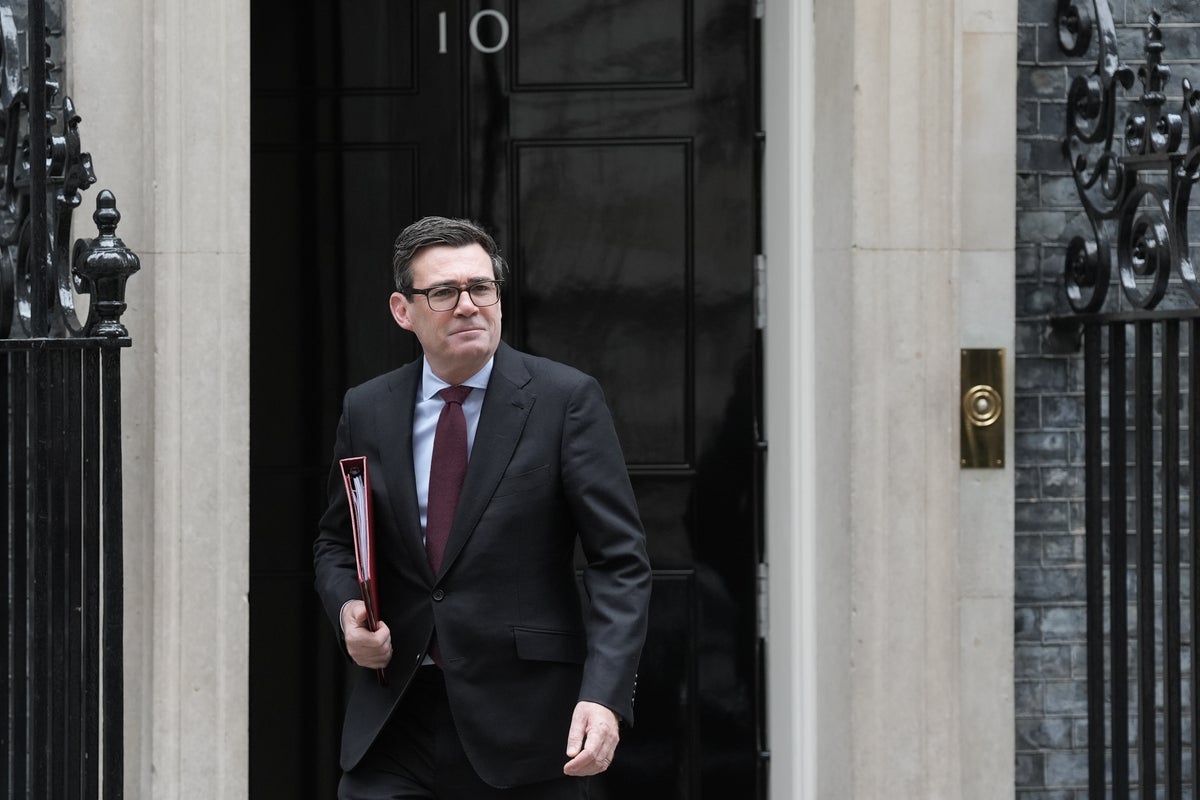
Why Andy Burnham must not allow another aid pledge to be broken
Key Points
Comment Why Andy Burnham must not allow another aid pledge to be broken Next year the world’s attention will turn to Britain, and many countries will be watching to see if we keep our word, writes Fleur Anderson. Missing our reduced 0.3 per cent aid target would damage the reputation we are trying to rebuild - Bookmark - CommentsGo to comments Become an Independent member to bookmark this article Already a member? Log in Over the next two years, Britain will chair both the G20 and the G7.
Comment
Why Andy Burnham must not allow another aid pledge to be broken
Next year the world’s attention will turn to Britain, and many countries will be watching to see if we keep our word, writes Fleur Anderson. Missing our reduced 0.3 per cent aid target would damage the reputation we are trying to rebuild
- Bookmark
- CommentsGo to comments
Become an Independent member to bookmark this article
Already a member? Log in
Over the next two years, Britain will chair both the G20 and the G7. At a time when the world around us feels more unsure than ever, that is a chance to bring countries together and shape the response to the biggest challenges we face.
We should grasp it. Recent elections around the world, in Brazil and in the US midterms, have shown that many people are hoping for a different way: a politics that offers cooperation and hope rather than retreat. That is exactly what a Labour government should be pushing for.
It was heartening to see Andy Burnham show leadership by attending Cop31 in Turkey and setting out his ambitions for our G20 presidency. He pledged to prioritise the debt and climate crises, and recognised that developing nations are paying the highest price for global heating. “Britain will live up to its commitments,” he said, a message of shared responsibility, and a standard we must now meet.
But in one area that matters enormously to many nations, we are at risk of falling short. If we want to make the case for a fairer world, we must first be clear about what we stand for ourselves, and that starts with the same proposition: we should keep our promises. The government has committed to spending 0.3 per cent of national income on aid. It should deliver it.
Currently, it won’t. The cut to the aid budget was hard for many Labour MPs and supporters to swallow. Holding the line is the first step, not the last: aid should return to 0.7 per cent in time, and we shouldn’t be shy about saying so. But in the meantime higher than expected inflation means the announced budget is on course to fall short of spending that 0.3 per cent – there is a £320 million hole that must be filled.
It’s easy for numbers like that to feel abstract. In ten of our 17 African partner countries, bilateral aid is being cut to a token £5 million. The government has accepted that this will end all health programmes in Sierra Leone and Malawi, two of the world’s poorest countries. Putting back the missing £320 million would reverse almost 40% of the bilateral cuts in Africa. For countless people, that support is a lifeline. And in our interconnect world, their stability is ours too.
The real picture is worse than headlines suggest. Part of our aid budget is being spent here in the UK, largely on hotels housing asylum seekers. Strip that out and we are heading to spend the lowest percentage level in at least 35 years. As those costs come down, the money should return to the programmes it was meant for, not disappear elsewhere in government.
None of this is a counsel of despair, there is real reason for optimism. The foreign secretary has promised to put development and climate at the heart of our foreign policy, because he understands that we are weaker when we don’t. The development minister is making the moral case for aid again, out loud and without apology. With a rare opportunity in front of us, I urge them to be bold.
And much of what would help the poorest countries costs the Exchequer little or nothing. At the G20, we can push for a fairer deal on debt so that governments buckling under repayments can afford to pay for schools and healthcare. A Labour government has a record of achievement here: when we last led the G8 at Gleneagles in 2005, we helped secure the cancellation of billions in debt for the world’s poorest countries. We can go after the tax avoidance and corruption that drain wealth from the countries that most need it. And we can press the big multilateral banks to get more money out the door to the people it’s meant for. The government is already talking about all of this, and I am hopeful for what we can achieve.
But credibility starts at home. Next year the world’s attention will turn to Britain, and many countries will be watching to see if we keep our word. We can’t ask others to step up while falling short ourselves, missing this target would damage the reputation we are trying to rebuild. Meeting our commitment on aid won’t undo the cuts, but it would show we mean what we say, and that’s the basis for asking others to do the same.
Fleur Anderson is a member of parliament’s Foreign Affairs Select Committee and Labour MP for Putney
This article has been produced as part of The Independent’s Rethinking Global Aid project
Join our commenting forum
Join thought-provoking conversations, follow other Independent readers and see their replies
Comments