
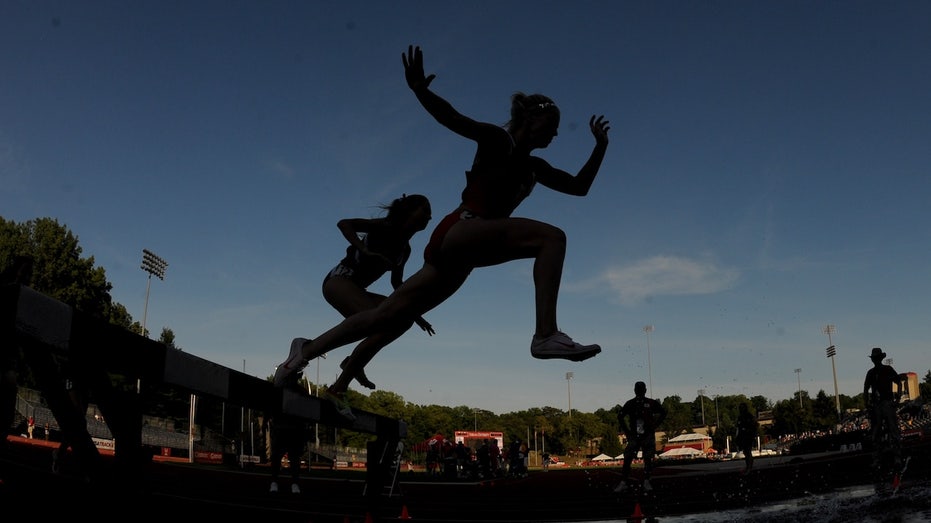
I ran a lot of track for many years. I’m fast enough that, back in high school, I was named Female Track & Field Athlete of the Year three years in a row by my school’s coaching staff.
But I’m not a male. Male athletes have strength and speed I’ll never have, and when I step out on the track, forced to run against one, I know, before the pistol even fires, that the result is already decided—we’re just going through the motions. Voters in four states—red and blue—understood this when they went to the ballot box on Nov. 3 and passed measures protecting women's sports. Now the American Civil Liberties Union is seeking to undo the one in Washington state.
Other female athletes and I won’t take this without a fight, because we speak from experience. In one of my best high school events—the girls' 4x400-meter relay race—my relay team ran against a male athlete who had previously competed in the high school boys' category. He beat us, easily, and went on to beat a lot of other girls. He even won the state championship in the women’s 400-meter race two years in a row.
ACLU OF WASHINGTON SAYS IT WILL SUE TO BLOCK BALLOT INITIATIVE TO PROTECT GIRLS' SPORTS
No female athlete runs to lose, any more than a male does. We didn’t put ourselves through all that rigorous training, grind through those straining workouts or run those endless sprints for the fun of watching someone else finish race after race ahead of us.
When males enter girls’ sports, that’s not competition. Running races you’re guaranteed to win is not competition; neither is entering races you’re guaranteed to lose. All these male athletes are doing is securing automatic trophies for themselves while women like me lose roster spots, records, medals, our turn on the podium, and our privacy.
Years ago, Congress passed Title IX to ensure that wouldn’t happen. Earlier this month, seeing that social and political movements had combined to undercut that landmark law, Washington state voters, Democrats and Republicans alike, rallied to pass Initiative 638—by a margin of more than 10 percentage points—to vindicate Title IX and protect women's sports.
Voters had to do that; our legislators wouldn’t. But then, our voters understand what our elected representatives can’t seem to grasp: that biology isn’t red or blue. This is not a partisan issue—it’s common sense. And it’s up to the state of Washington to defend in court what a clear majority of its citizens have made law at the ballot box.
We need our officials to step up, because the ACLU—unable to make its case that men should be in women’s sports at the ballot box—is demanding that a state court go around us and overturn Initiative 638. To ensure the ACLU doesn't succeed, Alliance Defending Freedom is representing Female Athletes United, a coalition of female athletes, in filing a motion to intervene in the ACLU’s lawsuit. I’m filing a declaration as part of that lawsuit.
I’ve been here before. Last year, I filed a complaint with the U.S. Department of Education’s Office for Civil Rights, asking it to investigate our state’s athletic policies and require that sex-designated sports categories be based on sex. I did that not only for myself but for countless other young women across my state who’ve been on the receiving end of this issue for years—and for our younger sisters, waiting to take their own blows for the cause.
This isn’t about wounded pride. It’s about safety: another female athlete in our state, Kallie Keeler, for instance, suffered great harm during a high school women’s wrestling match against a competitor who turned out to be male. None of the coaches or officials had bothered to tell her.
It’s also about privacy: Would you want your daughter changing clothes and showering with men who’ve politicized their way into her locker room?
And it’s about fairness. A United Nations report documents more than 600 female athletes across 29 sports who’ve been displaced by men; the men collectively took more than 890 medals. But then, just in West Virginia, one male defeated more than 470 girls over 1,400 times in a single sport.
CLICK HERE FOR MORE FOX NEWS OPINION
That’s the instance that resulted in last summer’s State of West Virginia v. B.P.J. case, in which the U.S. Supreme Court ruled that states can protect women’s sports. Twenty-seven states have passed legislation to do just that; in this month’s midterm elections, voters in Arizona, Colorado, Nebraska, and Washington joined them.
Now we know where the public stands on this issue. We hope the state officials who failed us once are going to step up this time to stand with us. But we’re not waiting to find out.