
World News
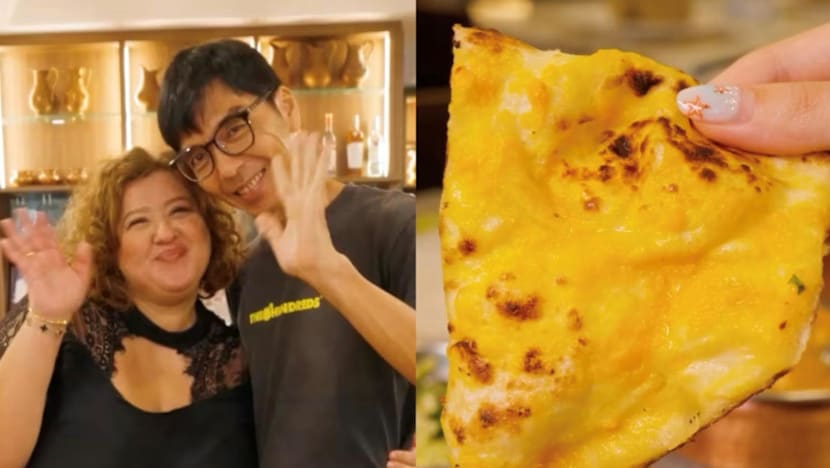
They sold their flat and invested S$500,000 to open Indian restaurant The Mango Tree despite having no F&B experience
Key Points
They sold their flat and invested S$500,000 to open Indian restaurant The Mango Tree despite having no F&B experience After several relocations over 25 years, the restaurant has returned to its original East Coast home, opposite the tree that inspired its name. If you frequent the East Coast area, you might have come across The Mango Tree, a casual 50-seat restaurant known for its coastal Indian fare, including signature dishes such as mango curry and naan, garlic crab and Alleppey fish...
They sold their flat and invested S$500,000 to open Indian restaurant The Mango Tree despite having no F&B experience
After several relocations over 25 years, the restaurant has returned to its original East Coast home, opposite the tree that inspired its name.
If you frequent the East Coast area, you might have come across The Mango Tree, a casual 50-seat restaurant known for its coastal Indian fare, including signature dishes such as mango curry and naan, garlic crab and Alleppey fish curry, a tangy dish from Kerala.
Over the past 25 years, the restaurant has operated at four locations around East Coast, including i12 Katong and Katong Square, relocating due to mall renovations and rental issues. Its regulars, however, continued following it from one outlet to another.
On Jul 18, it returned to its original home along East Coast Road, opening just opposite the mango tree that inspired its name.
But here's something you might not know about the people behind the restaurant: they're a Chinese-Malay couple who had little knowledge of Indian food when they first started out.
HIS MUM INITIALLY OBJECTED
Reeny Kosman, 50, and Chin Choon Kean, 56, who goes by Chin, first met when she was 16 and he was 22. They married two years later.
There was one hurdle: Reeny is Muslim, and Chin came from a Taoist family, so he had to convert to Islam.
“I told my mum, ‘I love [Reeny] and I would convert [to Islam]. You know me, I am very stubborn. If you don’t agree with me, then I will have to leave home. You can’t stop me’,’” Chin recalled.
His mother objected at first, and the heated discussion that followed was in Mandarin. “I didn’t understand anything they were saying,” Reeny said with a laugh.
But Chin eventually won his mother over by asking her to put herself in his shoes: “What if dad was the one you were dating?”
The disagreement was settled within an hour, Reeny recalled.
ELDEST DAUGHTER’S HEART DIAGNOSIS PROMPTED THEM TO QUIT THEIR JOBS
At the time, the newlyweds had stable jobs. Reeny worked at an American network hardware company, and Chin was a construction manager.
But when their eldest daughter, Raelene, was diagnosed with Ventricular Septal Defect (VSD), a condition commonly known as a hole in the heart, at just over a year old, Reeny eventually decided to leave her job to care for her.
“This was serious for us parents because [our daughter’s] body size and brain could stop growing and she would turn purple. We tried to get paediatric care, surgery and everything we could afford,” Reeny shared.
The medical bills quickly added up. Initial checks cost around S$7,000, surgery S$30,000 to S$40,000, and follow-up check-ups cost about S$500 each. On Reeny’s last day at work, her colleagues surprised her with S$13,000 they had pooled together to help with the expenses.
“Our daughter is doing well today after undergoing surgeries and regular check-ups,” Chin shared. By her teens, she was even playing soccer and netball.
With another child on the way, Chin became the family’s sole breadwinner. By the time he was 30, the couple had three young daughters to support. His profit-sharing payouts from his construction job were also dwindling, prompting him to consider starting a business.
Leaving his job was not easy. “We were scared because we had mouths to feed,” Chin recalled. “Starting a business is risky but I was a stubborn guy. I wanted to try.”
OPENED AN INDIAN RESTAURANT DESPITE NOT KNOWING HOW TO COOK
Around 2000, Chin spotted an empty unit along East Coast Road with a large mango tree growing outside it. The couple took it as a sign.
“The unit was so nice, it’s like someone listening to our chats and dreams!” Reeny recalled thinking.
They had initially considered opening a bakery franchise, but their plans changed when they learnt the landlord was specifically looking for someone to run an Indian restaurant.
Chin also saw an opportunity: “There were already a variety of restaurant cuisines and a lot of Indian locals in the area.”
There was one problem. The couple's knowledge of Indian food was limited to what they had eaten at mamak stalls (casual eateries that serve Tamil Muslim food). As Reeny put it: “We cannot cook!”
To close the gap, they hired an F&B consultant and spent around 12 days travelling around coastal India, sampling dishes and sourcing ingredients for the restaurant. In Mumbai, Reeny fell in love with garlic crab and prawn soup, both of which are still on the menu today, while Chin took a liking to Kerala's tangy fish curry, which reminded him of asam pedas.
They eventually settled on coastal Indian cuisine, which they felt suited their East Coast location, and brought in experienced chefs from India to develop the menu. Some of these chefs are still working at the restaurant today.
SOLD HDB FLAT AND INVESTED S$500,000 TO START THE RESTAURANT
Opening the restaurant was a considerable financial gamble. The couple invested about S$500,000 (US$387,500), including a S$280,000 loan and sold their four-room HDB flat to help finance the venture. After the sale, they moved into a rented place.
“No safety net, I really feared,” Chin recalled.
The decision also drew criticism from his family. “My mother and sister scolded me for selling the flat as it originally belonged to my mother,” he added.
There was also some concern about the large mango tree outside the premises.
“When Chin’s Chinese friends came to take a look at the place, they warned that the mango tree was blocking the fengshui,” Reeny shared. “But we’re not superstitious.”
“We later found out that mango trees are considered auspicious in Indian culture,” she added.
The couple eventually named their restaurant The Mango Tree after the very tree their friends had cautioned them about.
LEARNING THE ROPES
Neither Reeny nor Chin had any F&B experience, so they had to learn how to run the restaurant from the ground up.
In the early days, both worked as servers, and Chin also prepared drinks such as lassi and mocktails. Reeny promoted the restaurant to potential customers over the phone and distributed flyers along East Coast Road, even slipping them into the letterboxes of landed homes.
“It took a few months before the restaurant became stable,” she said.
The long hours meant sending their children to stay with their grandparents.
Another early challenge was getting the kitchen to work as a team. “The North Indian chefs spoke Hindi, while the South Indian chefs spoke [Malayalam]. They couldn't communicate and didn't speak to each other,” Chin shared. He had to step in to get them talking.
After hiring more staff and getting the restaurant on its feet about a year later, the couple gradually stepped back, visiting mainly on weekends. It took them about three years to break even.
Looking back, Chin has no regrets about leaving his construction job. “Once the restaurant was stable, we let [the staff] run it and we only came by from time to time,” he said.
THEIR ELDEST DAUGHTER NOW WORKS IN THE FAMILY BUSINESS
Today, Raelene, 30, works alongside her parents at The Mango Tree. She has an NUS business degree and could have pursued a corporate career, but chose the family business instead.
“I was upset when Chin offered her a job with us,” Reeny admited. “She’s a go-getter, she can get a job in an MNC!”
Raelene, however, wanted hands-on experience in running a business. She now handles everything from finances and marketing to serving customers.
Her two younger sisters are not involved in the business. Reeny thinks Raelene may eventually take over the restaurant.
Reeny and Chin no longer work at the restaurant daily, only visiting occasionally to check on the staff and ensure food quality. They have no immediate plans to expand, although they have considered opening outlets overseas in places such as Kuala Lumpur, London and Australia.
WHAT’S ON THE MENU
The restaurant specialises in coastal Indian cuisine, alongside North and South Indian fare. Some of its popular dishes include Cheese Naan (S$6.80), The Mango Tree Garlic Crab (from S$14 per 100g) with garlic butter marinade and French beans, and Alleppey Fish Curry (S$20.80), made with grey mullet, raw mangoes and coconut milk.
Among its mango-inspired offerings are the Mango Naan (S$6), glazed with house-made mango puree. We’re told the sweet, fruity flatbread is particularly popular with children.
Another highlight is the Mango Mapas (S$15.50), a coconut milk curry cooked with ripe mangoes, which gives the dish a tangy, slightly sour flavour.
While all meat and ingredients are halal-sourced, the restaurant is not halal-certified as it serves alcohol.
The Mango Tree is at 205 East Coast Rd, Singapore 428904. Open Mon to Thu, 11:30 am–2:30 pm, 6–10 pm, Fri 11:30 am–2:30 pm, 6–10:30 pm, Sat 11:30 am–10:30 pm and Sun 7:30–10:30 am, 11:30 am–10 pm. More info via website and Instagram.
This story was originally published in 8Days.
For more 8Days stories, visit https://www.8days.sg/.