
Health
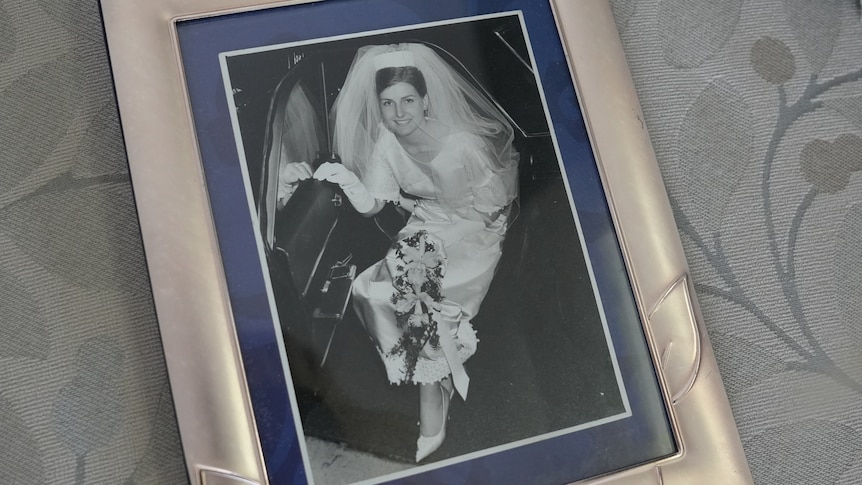
Sixty years ago, the public service 'marriage bar' lifted
Key Points
Marking 60 years since the 'marriage bar' was lifted, allowing married women in the public service When Elizabeth Scrivener said yes to a marriage proposal in 1966, she knew she would have to leave her job with the Australian Public Service (APS). Then, living in Sydney, Ms Scrivener had been employed at 17 by what was known as the Department of Navy, taking the ferry every weekday morning to Garden Island. She enjoyed the work, but she was not upset about leaving when she became engaged...
Marking 60 years since the 'marriage bar' was lifted, allowing married women in the public service
When Elizabeth Scrivener said yes to a marriage proposal in 1966, she knew she would have to leave her job with the Australian Public Service (APS).
Then, living in Sydney, Ms Scrivener had been employed at 17 by what was known as the Department of Navy, taking the ferry every weekday morning to Garden Island.
She enjoyed the work, but she was not upset about leaving when she became engaged about four years later — it was not unexpected.
By that stage, the law had changed to allow married women to work in the private sector, but the public service would not follow suit until November 1966, just months after her resignation.
"I had to retire and then had a honeymoon and I came back and thought, 'yes, I better get a job',"Ms Scrivener said.
Within weeks of her honeymoon, she was working for a stockbroker.
She went on to have children and also work in various roles, including for the Cancer Council during a time when they were campaigning to enforce the "slip, slop, slap" mantra in schools.
Today, she is thrilled to see how much society has changed for women in the workforce, but said in the 1960s, she saw the rule as having a practical purpose.
"Married women would probably, most likely have children,"she said.
"And of course [there weren't] the structures that there are today, any sort of help with childcare or with anything else, really no flexibility."
Covert work from home
It has been 60 years since the marriage bar was lifted within what was then known as the Commonwealth Public Service.
The ban had been enforced with the introduction of the Public Service Act 1902, which made the exclusion of married women legal.
Men were viewed as the breadwinners, and it was believed that a woman's primary role was to care for her family.
The removal of the ban radically changed the APS, and the number of women it employed tripled within three years.
Jane Bardwell, who runs the She Shapes History tour in Canberra, said many people came to her with stories about how the marriage bar affected them.
"There's always people who've got stories from their mum or their grandmother,"she said.
She said many women found ways around the ban and continued to work.
Notable among them was Pauline Fanning, who worked at the National Library of Australia prior to her marriage, when she was forced to leave.
Loading...But, Ms Bardwell said, the library had come to depend on her.
"They began to miss Pauline. They're kind of like, 'well, Pauline would know where this is, she would know how to do that'," Ms Bardwell said.
"Now a couple of years later, due to World War II, they started to ease some of the restrictions on the marriage bar to allow women to work in some capacity.
"So does this mean Pauline gets to go and sit at a desk at the National Library? No. What it means is that she gets to covertly work from home."
For 20 years, she said Mrs Fanning continued working at home on what is now the Australian bibliography, while also raising her children.
"Monday morning, work would be dropped off or mailed to her, and then Friday afternoon they would pick it up," Ms Bardwell said.
Mrs Fanning's story is a reminder to Ms Bardwell of what might have been.
"When the marriage bar was lifted, in 1966, she got to go back to work at the National Library," she said.
"She quickly rose through the ranks, and she became a principal librarian, she became the director of humanities, and she worked until about 1984 when she retired.
"I generally at this point ask people, what do you think Pauline could have done if she didn't have to covertly work from home for 20 years?"
'Things can change in the blink of an eye'
In marking the 60-year milestone, the Office for Women issued a statement saying the "work continues" to advance gender equality.
It named key priorities, including ending violence against women and girls, extending paid parental leave, and improving access to medication for women's health conditions.
While progress is being made, Australian women currently earn 80 cents for every dollar earned by men.
Natasha Stott Despoja, a former senator and now gender equality advocate, said the anniversary was a reminder of how quickly things could change.
"I think there'll be many younger people thinking, 'how on earth could this have only been 60 years ago that the bar was lifted?'" she said.
"Obviously, there's still a lot of reform to be done, but it is an important milestone, if only to remember just how we need to be vigilant about change.
"Things can change in the blink of an eye or the stroke of a legislative pen."
Elizabeth Scrivener (PERSON)
the Australian Public Service (ORG)
APS (ORG)
Sydney (LOCATION)
Ms Scrivener (PERSON)
the Department of Navy (ORG)
Garden Island (LOCATION)
Scrivener (PERSON)
the Cancer Council (ORG)
the Commonwealth Public Service (ORG)
the Public Service Act (ORG)
Jane Bardwell (PERSON)
Canberra (LOCATION)
Pauline Fanning (PERSON)
the National Library of Australia (ORG)