
Education
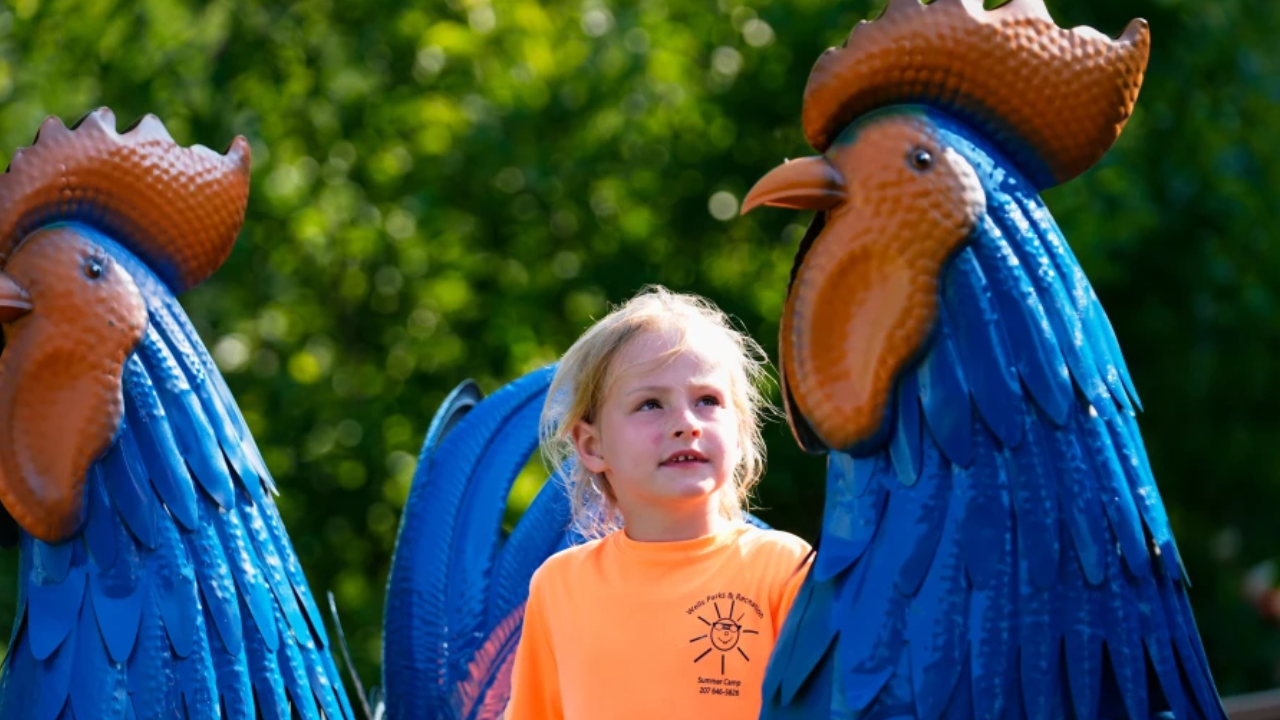
Maine couple fined $1,700 for giant roosters meant to comfort daughter; they sue
Key Points
What began as a way to make the daily journey to school less difficult for a young girl has turned into a legal battle over free speech, disability rights and the meaning of public art in a small Maine town. David and Sara LeBlanc, residents of Ogunquit, Maine, have filed a federal lawsuit against the town after officials repeatedly penalised them for displaying large metal rooster sculptures outside their home. The couple maintains that the decorations were put up for their six-year-old...
What began as a way to make the daily journey to school less difficult for a young girl has turned into a legal battle over free speech, disability rights and the meaning of public art in a small Maine town. David and Sara LeBlanc, residents of Ogunquit, Maine, have filed a federal lawsuit against the town after officials repeatedly penalised them for displaying large metal rooster sculptures outside their home. The couple maintains that the decorations were put up for their six-year-old daughter, Pyper, who has autism and has a particular fondness for roosters. However, town officials classified the figures as commercial advertising for the family’s restaurant, the Omelette Factory. According to reports by the Associated Press, Maine Public and the Portland Press Herald, the dispute has been unfolding for months, with the family now challenging the town’s enforcement of its sign regulations in court.
The story began in May 2025, when the LeBlancs brought home a six-foot-tall tin rooster. Pyper had always been fascinated by the bird, and her parents noticed that having the sculpture outside made her daily school routine easier.
For the young girl, the rooster gradually became part of a familiar ritual. She would spend time near it while waiting for her school bus and return to it after coming home. What started as a single decoration eventually grew into a collection of around two dozen sculptures, although the family says it generally displayed no more than eight at a time.
The figures were also decorated during different seasons and holidays, becoming a distinctive feature outside the family’s property. However, the arrangement attracted the attention of local authorities because the LeBlancs’ home is connected to their breakfast restaurant, the Omelette Factory. Officials argued that the rooster sculptures effectively advertised the business and therefore fell under Ogunquit’s municipal sign regulations.
In April 2026, the family received a notice directing them to remove the unpermitted displays. The dispute subsequently escalated, with the couple receiving multiple fines. WMTW reported that the penalties amounted to $1,700, while the Portland Press Herald reported that the total had exceeded $2,000.
The family also sought an accommodation under disability-related provisions. The town granted a variance allowing two roosters to remain, but stipulated that they had to be incorporated into a railing attached to the residence. Since the property did not have the specified railing, the couple instead chained the sculptures to posts near their entrance. Officials subsequently issued further citations.
The disagreement eventually left the family with little choice but to remove the original display. However, the sculptures did not disappear from the neighbourhood. Friends, neighbours and local businesses began taking in the roosters and displaying them on their own properties as a gesture of support for Pyper. The decorations have since become a recognisable symbol of community solidarity, with residents and supporters elsewhere also purchasing similar figures.
According to the Institute for Justice, the legal organisation representing the family, other property owners have been allowed to display identical rooster decorations without facing similar enforcement action. The organisation filed the federal lawsuit on November 16, arguing that the town’s interpretation and application of its sign code violate the family’s First Amendment rights. The complaint also raises concerns about whether officials can determine the meaning of a decorative object based on the identity of its owner or its proximity to a business.
The LeBlancs are seeking a court declaration that the enforcement was unconstitutional, along with an order preventing the town from issuing further penalties over the sculptures. The legal challenge is currently listed as an active case. The dispute has also drawn comparisons with a separate First Amendment case involving a bakery mural in Conway, New Hampshire. In 2025, a judge ruled in favour of a bakery owner after town officials attempted to regulate a mural painted by high school students, which featured doughnuts and other baked goods.
For Pyper, however, the controversy has a more personal dimension. Her parents have said that seeing other people display the roosters brings her happiness, even as she struggles to understand why the town objected to something that had become so important to her. Meanwhile, Ogunquit’s town officials have not publicly provided a response to the newly filed lawsuit, leaving the disagreement over the sculptures’ legal status to be settled in court.