
Science
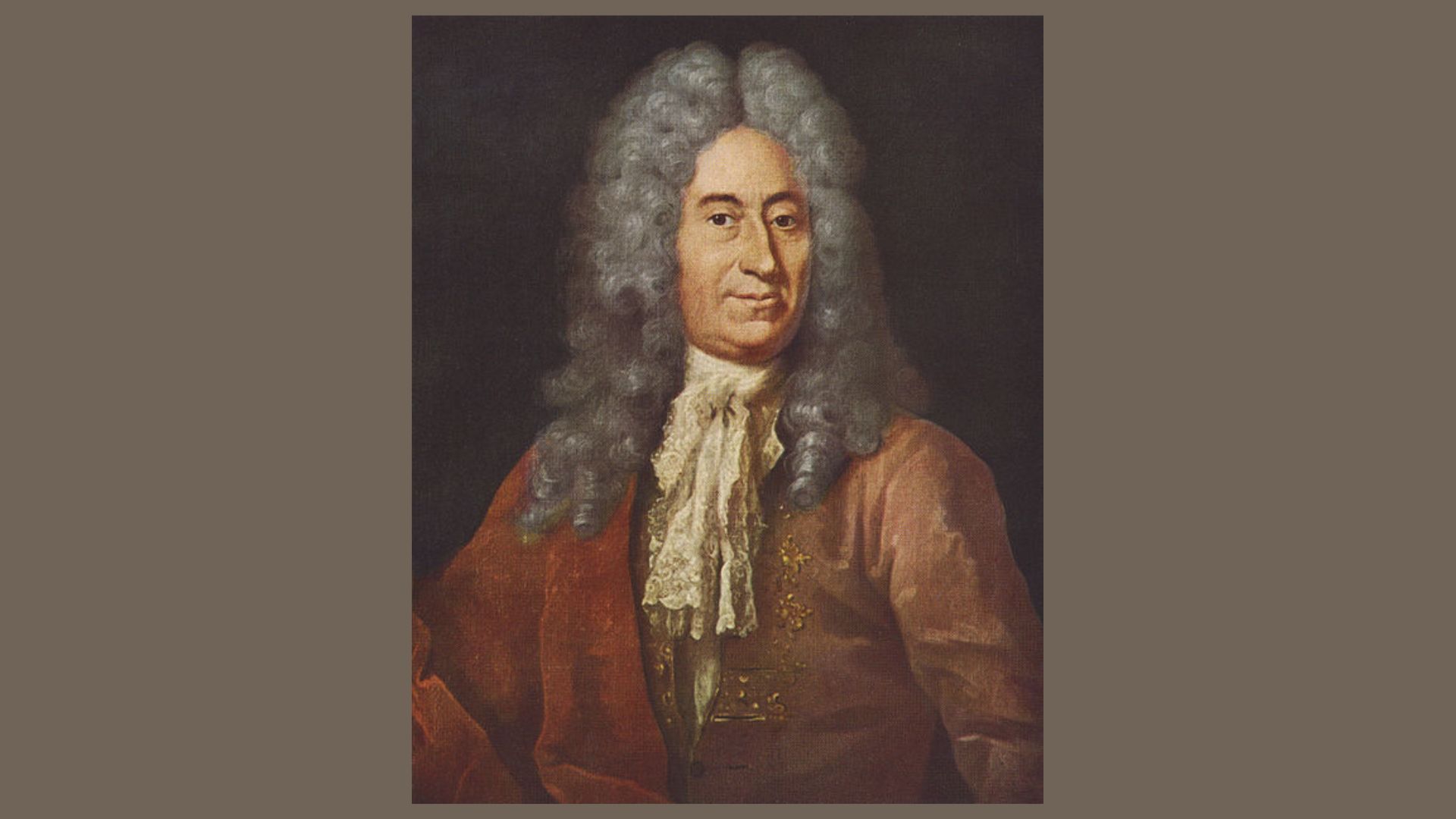
On this day in space! Nov. 21, 1676: Danish astronomer discovers speed of light — by accident — while observing Jupiter's moon Io
Key Points
On this day in space! Nov. 21, 1676: Danish astronomer discovers speed of light — by accident — while observing Jupiter's moon Io Before Rømer figured it out, scientists thought that light travels instantaneously, or infinitely fast. On Nov. 21, 1676, the Danish astronomer Ole Rømer discovered the speed of light.
On this day in space! Nov. 21, 1676: Danish astronomer discovers speed of light — by accident — while observing Jupiter's moon Io
Before Rømer figured it out, scientists thought that light travels instantaneously, or infinitely fast.
On Nov. 21, 1676, the Danish astronomer Ole Rømer discovered the speed of light. Before Rømer figured it out, scientists thought that light travels instantaneously, or infinitely fast.
Rømer disproved this almost by accident when he was studying Jupiter's moon Io. He was trying to figure out how long it takes Io to orbit Jupiter in hopes of using it as a cosmic clock. He watched Io disappear behind Jupiter and reappear on the other side. He did this over and over every 42 hours for years.
To his surprise, the timing of the eclipses was not consistent. When Earth was closest to Jupiter, the eclipses happened 11 minutes early. Likewise, when the two planets were farthest away, the eclipses were 11 minutes behind schedule.
Rømer figured out the pattern and made an accurate prediction for Io's eclipse on Nov. 9, 1676. Then on Nov. 21, he took his findings to the Royal Academy of Sciences and explained that a finite speed of light must be responsible.
Why it mattered
Understanding that the speed of light is a constant is the key that opened our ability to gauge the scale of the universe, as well as was central to developing modern physics.
"The speed of light becomes a sort of ultimate speed limit," Live Science explained in an article about why the speed of light matters. "In fact, objects with mass, be they cars or neutrinos, can't reach the speed of light because they would need infinite energy to do so."
Hanneke Weitering is a multimedia journalist in the Pacific Northwest reporting on the future of aviation at FutureFlight.aero and Aviation International News and was previously the Editor for Spaceflight and Astronomy news here at Space.com. As an editor with over 10 years of experience in science journalism she has previously written for Scholastic Classroom Magazines, MedPage Today and The Joint Institute for Computational Sciences at Oak Ridge National Laboratory. After studying physics at the University of Tennessee in her hometown of Knoxville, she earned her graduate degree in Science, Health and Environmental Reporting (SHERP) from New York University. Hanneke joined the Space.com team in 2016 as a staff writer and producer, covering topics including spaceflight and astronomy. She currently lives in Seattle, home of the Space Needle, with her cat and two snakes. In her spare time, Hanneke enjoys exploring the Rocky Mountains, basking in nature and looking for dark skies to gaze at the cosmos.
- Robert Z. Pearlman collectSPACE.com Editor, Space.com Contributor
You must confirm your public display name before commenting
Please logout and then login again, you will then be prompted to enter your display name.
Danish (ORG)
Jupiter (LOCATION)
Ole Rømer (PERSON)
Io (LOCATION)
Earth (LOCATION)
the Royal Academy of Sciences (ORG)
Hanneke Weitering (PERSON)
the Pacific Northwest (LOCATION)
FutureFlight.aero (ORG)
Aviation International News (ORG)
Space.com (ORG)
Scholastic Classroom Magazines (ORG)
MedPage Today (ORG)
The Joint Institute for Computational Sciences (ORG)
Oak Ridge National Laboratory (ORG)