
Weather
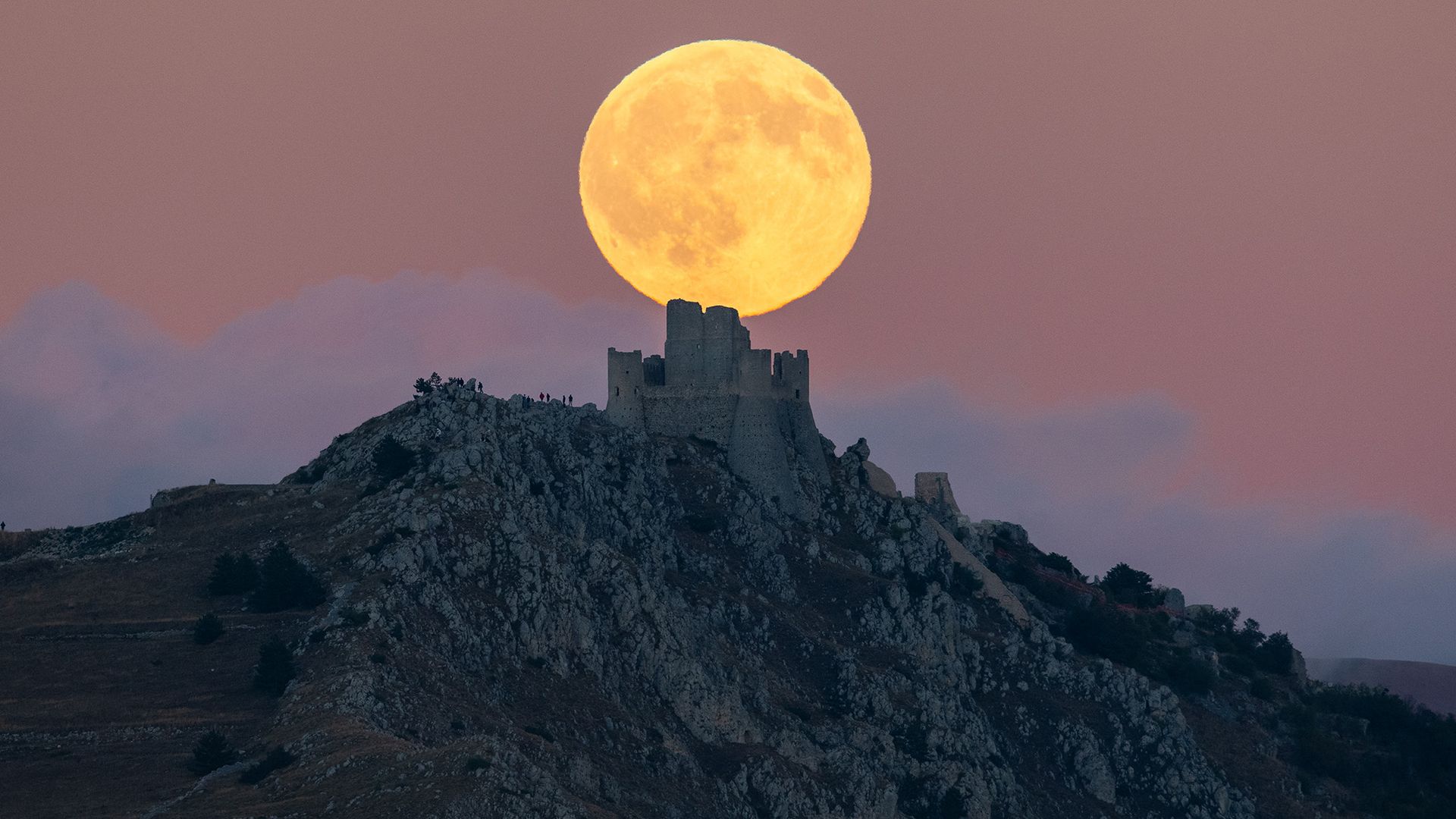
Beaver Moon 2026: When to see a full 'supermoon' rise this week, and another on Christmas Eve
Key Points
Beaver Moon 2026: When to see a full 'supermoon' rise this week, and another on Christmas Eve November's full Beaver Moon rises on Tuesday, Nov. 24, giving us a preview of the spectacular Christmas Eve supermoon coming next month. November’s full moon, known as the "Beaver Moon," will rise in the east at dusk on Tuesday (Nov. 24), marking the first of three consecutive supermoons. It will be the third and final full moon of fall in the Northern Hemisphere and the first in a series of...
Beaver Moon 2026: When to see a full 'supermoon' rise this week, and another on Christmas Eve
November's full Beaver Moon rises on Tuesday, Nov. 24, giving us a preview of the spectacular Christmas Eve supermoon coming next month.
November’s full moon, known as the "Beaver Moon," will rise in the east at dusk on Tuesday (Nov. 24), marking the first of three consecutive supermoons.
It will be the third and final full moon of fall in the Northern Hemisphere and the first in a series of unusually close full moons that includes December's spectacular Christmas supermoon — the closest full moon since 2018.
The Beaver Moon gets its name from the time of year when nocturnal beavers in North America traditionally build dams and prepare for winter under the full moon, according to TimeandDate. Other nicknames include the Frost Moon and Snow Moon, and the Anishinaabeg people in North America call it Baashkaakodin Giizis — the Freezing Moon — according to the Center for Native American Studies.
The moon will reach its full phase at 9:53 a.m. ET on Tuesday, when it will be below the horizon in North America. The best time to see the Beaver Moon is at moonrise that evening, as it rises in the east around the same time the sun sets in the west. That's when the moon will appear against a relatively bright twilight sky, making it easier to appreciate its size and color.
The moon will appear full on Monday and Wednesday as well, but Tuesday offers the best opportunity to see it rise during twilight.
The Beaver Moon will be the first of three consecutive supermoons, according to EarthSky. A supermoon occurs when a full moon coincides with the moon being relatively close to Earth in its elliptical orbit. The moon's distance from Earth changes throughout the month. On average, the moon is 238,900 miles (384,472 kilometers) from Earth. When a full moon occurs near perigee, or its closest point during its orbit, it appears slightly larger and brighter than usual. Here's what's coming up:
- Full Beaver Supermoon on Nov. 24, 2026 (224,170 miles / 360,768 km)
- Full Cold Supermoon on Dec. 24, 2026 (221,667 miles / 356,740 km)
- Full Wolf Supermoon on Jan. 22, 2027 (222,229 miles / 357,644 km)
November's Beaver Supermoon is just the beginning: It's the smallest of the three upcoming supermoons. December's full Cold Moon will be the closest, biggest and brightest full moon of 2026, bringing the moon closer to Earth than at any time since Jan. 2, 2018, according to late astrophysicist Fred Espenak.
Get the world’s most fascinating discoveries delivered straight to your inbox.
How much do you know about the moon? Test your lunar smarts with our moon quiz!
Jamie Carter is a Cardiff, U.K.-based freelance science journalist and a regular contributor to Live Science. He is the author of A Stargazing Program For Beginners and co-author of The Eclipse Effect, and leads international stargazing and eclipse-chasing tours. His work appears regularly in Space.com, Forbes, New Scientist, BBC Sky at Night, Sky & Telescope, and other major science and astronomy publications. He is also the editor of WhenIsTheNextEclipse.com.
You must confirm your public display name before commenting
Please logout and then login again, you will then be prompted to enter your display name.
Beaver Moon (LOCATION)
the Northern Hemisphere (LOCATION)
The Beaver Moon (PERSON)
North America (LOCATION)
TimeandDate (ORG)
Snow Moon (PERSON)
Anishinaabeg (ORG)
Baashkaakodin Giizis (PERSON)
the Center for Native American Studies (ORG)
ET (PERSON)
EarthSky (ORG)
Earth (LOCATION)
Cold Moon (EVENT)
Fred Espenak (PERSON)
moon (PERSON)