
Politics
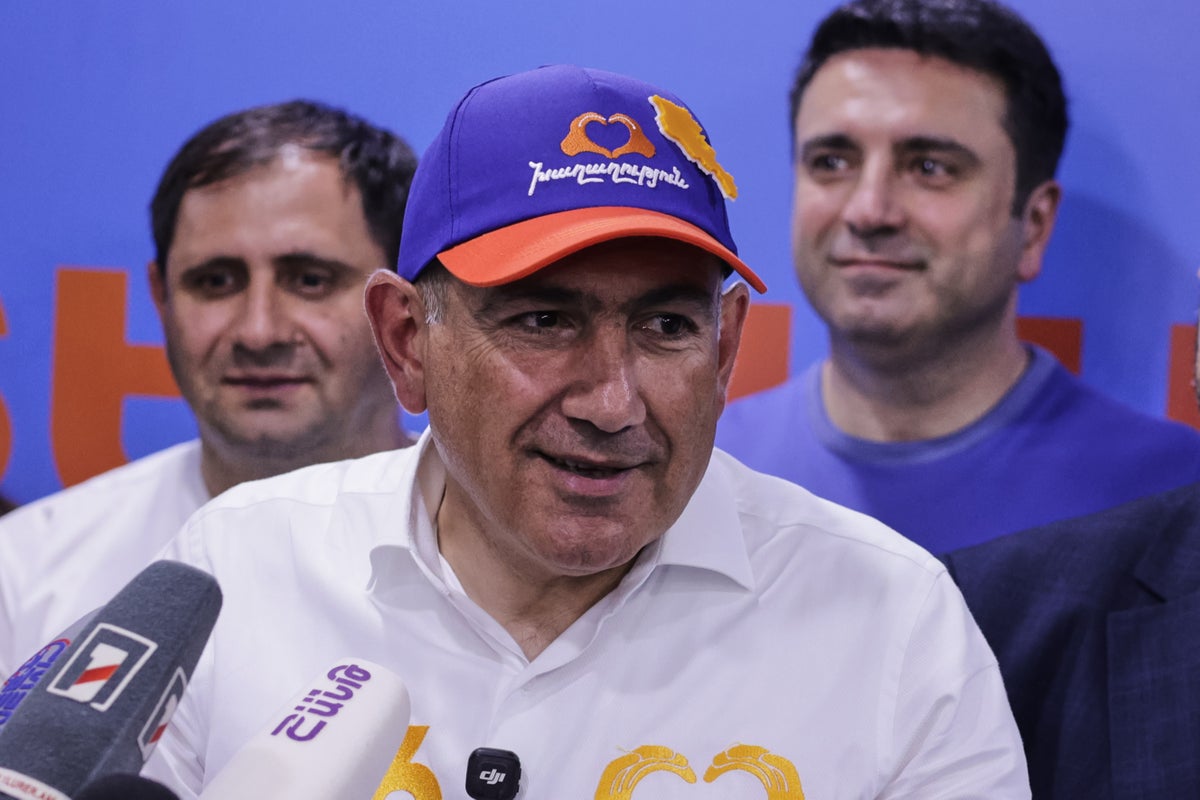
Armenian prime minister proposes new constitution in bid for peace with Azerbaijan
Key Points
Armenian prime minister proposes new constitution in bid for peace with Azerbaijan Armenian Prime Minister Nikol Pashinyan has presented a proposed draft version of the country’s new constitution in the latest step toward a peace agreement with neighboring Azerbaijan - Bookmark Become an Independent member to bookmark this article Already a member? Log in Armenian Prime Minister Nikol Pashinyan presented a proposed draft version of the country’s new constitution Monday in the latest step...
Armenian prime minister proposes new constitution in bid for peace with Azerbaijan
Armenian Prime Minister Nikol Pashinyan has presented a proposed draft version of the country’s new constitution in the latest step toward a peace agreement with neighboring Azerbaijan
- Bookmark
Become an Independent member to bookmark this article
Already a member? Log in
Armenian Prime Minister Nikol Pashinyan presented a proposed draft version of the country’s new constitution Monday in the latest step toward a peace agreement with longtime foe and neighbor Azerbaijan.
In an address to the nation, Pashinyan said that after the proposed document is adopted, a treaty with Azerbaijan will be signed and ratified, ensuring “an institutional, lasting and irreversible peace.”
“I am staking all of my political, personal and moral credibility on this issue,” said Pashinyan, who was reelected in July. He has vowed to resign if the new constitution was not approved in a referendum — and not to run in the next election in 2031 if it is approved.
Setting a referendum needs to gain the approval of Armenia’s parliament with a two-thirds majority. Pashinyan’s Civil Contract party holds 64 of the 105 seats in parliament, six short of the required minimum. The opposition has refused to back the proposed constitution, calling it a concession to Azerbaijan.
Pashinyan, who came to power in 2018, has been trying to steer the South Caucasus nation toward closer relations with the European Union and the United States despite longstanding ties with Russia that have been championed by his critics.
The proposed draft rewrites the constitution’s preamble and removes references to Armenia’s 1990 Declaration of Independence that mentions Azerbaijan's Karabakh region, known at the time as Nagorno-Karabakh.
Azerbaijan’s government insisted that the constitution be amended to remove what it viewed as claims to its territory before a peace treaty could be finalized by both sides, which have been locked in conflict over the region for nearly four decades.
Azerbaijan's Karabakh region, internationally known as Nagorno-Karabakh, had been under the control of ethnic Armenian forces backed by Armenia for more than a quarter century until a war in 2020 that resulted in Azerbaijan regaining control of parts of the region and the surrounding areas.
That war ended with a Russia-brokered ceasefire that called for placing about 2,000 Russian peacekeeping troops to monitor the truce. The forces’ duties were to include ensuring free passage on the sole road connecting Karabakh with Armenia.
Azerbaijan began blocking the road in late 2022, alleging Armenians were using it for weapons shipments and to smuggle minerals, and the Russian forces did not intervene.
After months of increasingly dire food and medicine shortages in Karabakh due to the blockade, Azerbaijan launched a campaign in September 2023 that forced the separatist Armenian authorities to capitulate after one day of hostilities.
After Azerbaijan regained full control of Karabakh, most of its 120,000 Armenian residents fled to Armenia despite Azerbaijani promises that their human rights would be respected.
The draft constitution also expands the powers of the president and reinforces residency requirements for Armenians who wish to vote, limiting the influence of the Armenian diaspora in Russia and elsewhere.
It would also enshrine a requirement for the relationship between the Armenian Apostolic Church and the Armenian state to be regulated by law.
Relations between the powerful church and Pashinyan’s government have deteriorated rapidly since 2024, when tens of thousands of demonstrators, led by a high-ranking cleric, called for his ouster.
___
Karmanau reported from Tallinn, Estonia.
Armenian (ORG)
Azerbaijan (LOCATION)
Nikol Pashinyan (PERSON)
Independent (ORG)
Pashinyan (PERSON)
Armenia (LOCATION)
Civil Contract party (ORG)
South Caucasus (ORG)
the European Union (ORG)
the United States (LOCATION)
Russia (LOCATION)
Karabakh (PERSON)
Nagorno-Karabakh (ORG)
Russian (ORG)
Armenians (ORG)