
Science
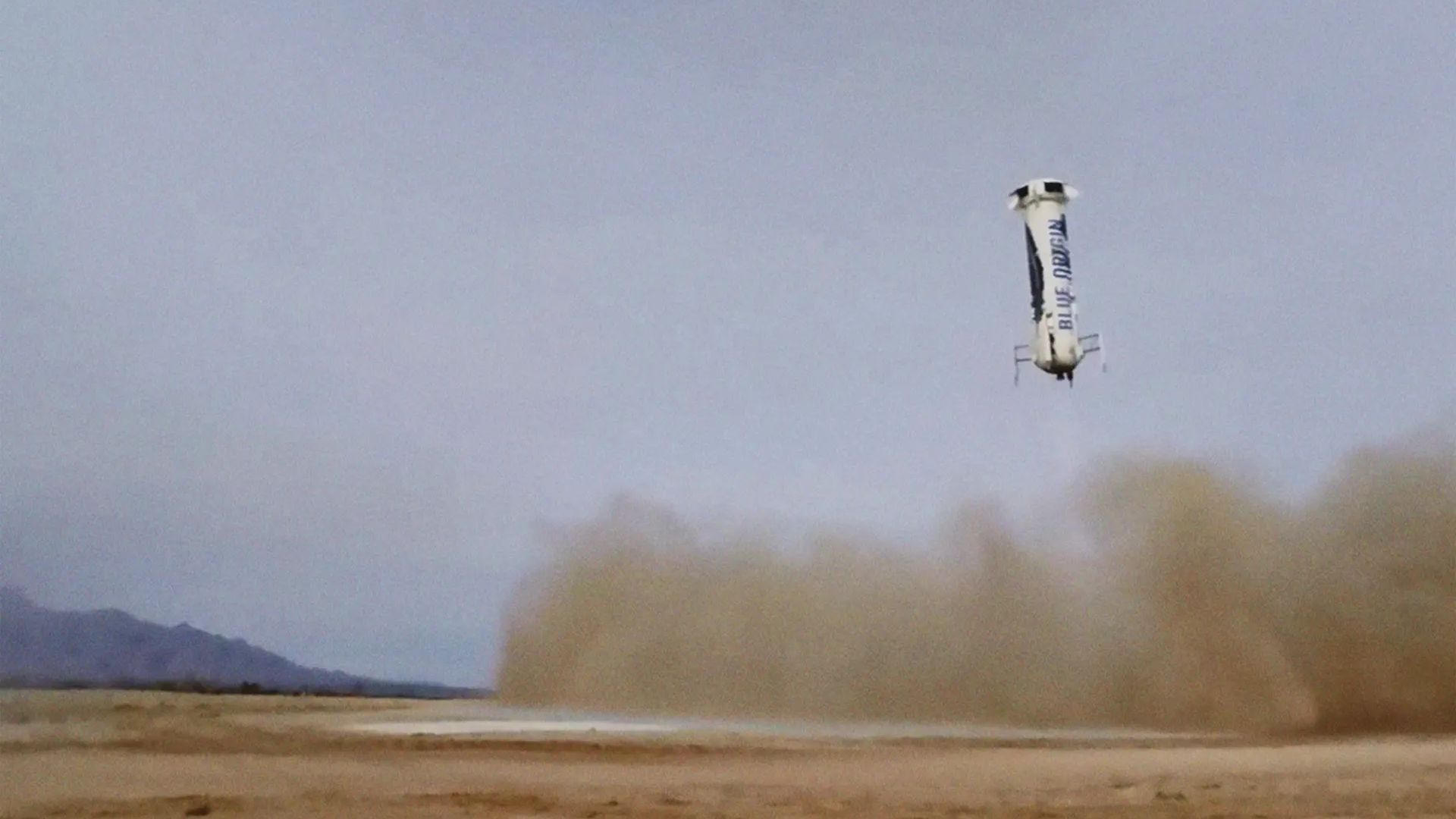
On this day in space! Nov. 23, 2015: Blue Origin sticks 1st-ever rocket landing from space with its suborbital New Shepard rocket
Key Points
On this day in space! Nov. 23, 2015: Blue Origin sticks 1st-ever rocket landing from space with its suborbital New Shepard rocket Before New Shepard all boosters were single-use only — even SpaceX's rockets. On Nov. 23, 2015, a Blue Origin rocket made a historic landing.
On this day in space! Nov. 23, 2015: Blue Origin sticks 1st-ever rocket landing from space with its suborbital New Shepard rocket
Before New Shepard all boosters were single-use only — even SpaceX's rockets.
On Nov. 23, 2015, a Blue Origin rocket made a historic landing. Before this time, all rockets were single-use only — even SpaceX's rockets. Blue Origin changed the concept forever.
After launching the New Shepard capsule safely into space, the rocket started heading back to Earth. It flew towards a landing pad, reignited its engine to slow down and touched down softly on the ground. This was the first successful vertical landing from space in history.
The Blue Origin milestone meant that rockets could be reused for multiple missions, which saves money and reduces waste.
Why it mattered
Today, SpaceX may be the most well-known for landing its Falcon 9 rocket boosters from orbit. The company's triple-core Falcon Heavy boosters can also land vertically and its massive Starship megarocket can even return to the launch site to be caught by giant metal arms.
But in the end, Blue Origin did it first.
Blue Origin's New Shepard booster landing kicked off an era of vertical launch and vertical landings for rockets that continues to this day. It may have even outlasted the New Shepard rocket.
Since that first landing, Blue Origin has launched 17 suborbital astronaut flights with New Shepard, and 21 more uncrewed flights for a total of 38 missions between April 2015 and 2026. The company reused its New Shepard boosters repeatedly (though it did lose one during an uncrewed launch after a technical issue.) But in January 2026, the company announced a pause in New Shepard flights for two years so that it could focus on moon lander projects.
But Blue Origin did not abandon rocket landings. Indeed, the company's success with New Shepard led it to build vertical landing into its larger orbital rocket, New Glenn, which made its first successful landing 2025 — nearly 10 years after that first touchdown.
Blue Origin has since reflown a New Glenn booster, and is developing a new rocket engine called Northstar for even better performance.
Want more space history? Check out our full On This Day In Space Story archive and watch our On This Day In Space videos on YouTube.
Hanneke Weitering is a multimedia journalist in the Pacific Northwest reporting on the future of aviation at FutureFlight.aero and Aviation International News and was previously the Editor for Spaceflight and Astronomy news here at Space.com. As an editor with over 10 years of experience in science journalism she has previously written for Scholastic Classroom Magazines, MedPage Today and The Joint Institute for Computational Sciences at Oak Ridge National Laboratory. After studying physics at the University of Tennessee in her hometown of Knoxville, she earned her graduate degree in Science, Health and Environmental Reporting (SHERP) from New York University. Hanneke joined the Space.com team in 2016 as a staff writer and producer, covering topics including spaceflight and astronomy. She currently lives in Seattle, home of the Space Needle, with her cat and two snakes. In her spare time, Hanneke enjoys exploring the Rocky Mountains, basking in nature and looking for dark skies to gaze at the cosmos.
- Tariq Malik Editor-in-Chief
You must confirm your public display name before commenting
Please logout and then login again, you will then be prompted to enter your display name.
Blue Origin (ORG)
New Shepard (LOCATION)
SpaceX (ORG)
Earth (LOCATION)
Falcon (ORG)
Falcon Heavy (ORG)
Blue Origin's (ORG)
moon lander (LOCATION)
New Glenn (LOCATION)
Northstar (ORG)
YouTube (PERSON)
Hanneke Weitering (PERSON)
the Pacific Northwest (LOCATION)
FutureFlight.aero (ORG)
Aviation International News (ORG)