
Health
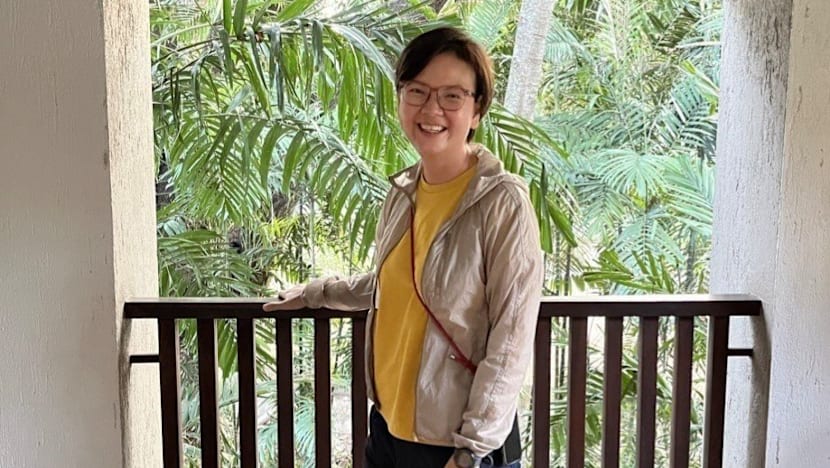
She lost her womb to cancer at 32 – now she helps younger people with cancer navigate recovery and work
Key Points
She lost her womb to cancer at 32 – now she helps younger people with cancer navigate recovery and work Diagnosed with endometrial cancer, Rebecca Oh thought the hardest part would be treatment. But surviving the disease was only part of it – navigating life as a young cancer patient was harder, a gap she now fills through Strong Olive, the community she founded. Rebecca Oh was just days away from embryo implantation when her doctor spotted a tiny polyp in her uterus during a routine...
She lost her womb to cancer at 32 – now she helps younger people with cancer navigate recovery and work
Diagnosed with endometrial cancer, Rebecca Oh thought the hardest part would be treatment. But surviving the disease was only part of it – navigating life as a young cancer patient was harder, a gap she now fills through Strong Olive, the community she founded.
Rebecca Oh was just days away from embryo implantation when her doctor spotted a tiny polyp in her uterus during a routine ultrasound in her in-vitro fertilisation journey. It was removed and sent for biopsy.
A few days later, a nurse called asking her to come into the clinic urgently. She and her husband assumed something had gone wrong with the embryos. Instead, Oh was told she had Stage One endometrial cancer, also known as uterine or womb cancer.
“Cancer came in like a wrecking ball,” said Oh, of the 2020 diagnosis. “We went from comfortable to chaos.” She was then 32.
Because she already had embryos stored, her doctors offered fertility-sparing treatment in the hope of controlling the cancer while preserving her chance of pregnancy.
That marked the start of a two-year marathon of medication, scans and repeated dilation and curettage procedures, as well as side effects like sleeplessness, lethargy and gaining 25kg. Through it all, Oh, a counsellor, kept working – full-time at first, then part-time as treatment intensified.
HOPES FOR A FUTURE PREGNANCY DASHED
Eventually, doctors told her nothing was working. She would need a radical hysterectomy – removal of the uterus, cervix and surrounding tissues; nearby lymph nodes may also be removed.
Her reaction was a mixture of devastation and relief. The treatment had taken a heavy physical and emotional toll, she said, so part of her felt relieved that the prolonged uncertainty would finally end.
At the same time, the surgery brought a painful sense of finality, as it meant accepting that she would no longer be able to get pregnant.
Oh thought the hysterectomy would mark the end of cancer treatment, but during the surgery, doctors discovered the disease had spread to her lymph nodes. She now had Stage 3C1 endometrial cancer and would need chemotherapy, radiation and targeted therapy, designed to interfere with cancer cell growth.
“Receiving the news that it had spread hit me harder than the original diagnosis,” Oh said. “It felt like the lowest point in the whole journey.”
Her weekly treatments were accompanied by nausea, constipation and severe fatigue. Radiation was “hell”, though she joked that finishing it made her feel “like a champion”.
She completed active treatment in 2023 and targeted therapy in early 2025. More than a year on, she still experiences severe cancer-related fatigue – at one point, she could not finish cooking her instant noodles and had to lie down.
To manage her fatigue, she plans her schedule carefully, conserving energy for what matters most, and is strict about sleep – to bed by 9.30pm. She makes sure to eat and hydrate well, and does regular morning walks and meditates. Yet, there are still days when she struggles to walk more than 1,000 steps and can’t get out of bed, she said.
THE INVISIBLE LABOUR OF BEING THE PATIENT
The most unexpected strain of Oh’s treatment was not the treatment itself.
“During treatment, life was structured,” she said. “After treatment, you’re kind of on your own to figure out the next steps. There is no guidebook for what survivorship looks like.”
Oh found herself managing not only cancer, but everyone else’s feelings about it. Her father, who accompanied her to her first chemotherapy session, was so distressed she asked him not to return. Aunties at church would offer to pray over her tummy for children, unaware she had undergone a hysterectomy.
The person who stepped in was her 30-year-old younger brother who became a pillar of stability for their parents and Oh’s husband.
“I was very proud of [my brother]. He [even] wrote my husband a very long text, ‘threatening’ him if he didn’t take care of me,” said Oh, laughing.
With everyone else, Oh defaulted to “I’m okay” because she felt the full answer would traumatise them.
During chemotherapy, when fatigue made getting out of bed a negotiation, watering her plants was what anchored her. The small garden outside her Housing Development Board flat became the avid gardener’s one steady commitment.
No matter how tired she was, she made herself get up to water them.
“I’m so glad my plants stayed alive,” she said. “It was the only consistent thing I had in my life at that time.”
BEING THE YOUNGEST SURVIVOR IN THE ROOM
Cancer is often seen as an older person’s disease. But for younger adults with cancer, a diagnosis can collide with life at full speed: careers being built, relationships taking shape, mortgages in motion, plans to have children just beginning.
Singapore’s established cancer support groups, Oh found, were open to all ages but designed around older patients.
“I was often mistaken for the volunteer or the facilitator,” she said. “Then, the other patients would ask: how come you, so young, got cancer?”
Conversations slid into advice-giving rather than connection. At one session on intimacy, she was the only participant willing to engage with the topic; the older members kept steering the conversation elsewhere.
“I was there for my own processing,” she said. “Not to have people explain my situation to me.”
She eventually found comfort at a United States-based Facebook group for young women with endometrial cancer. “It was like a bible for me,” she said. The group ran Zoom calls; Oh would set her alarm for 4am to join.
“That was the switch that set me on fire to start Strong Olive,” she said.
BUILDING THE SUPPORT SHE NEEDED
“With a dad as an engineer-entrepreneur, I just couldn’t sit back when I saw a gap,” said Oh. “We can do more for this community [of younger cancer patients].”
Oh started Strong Olive in 2023, with just an Instagram account aimed at reaching younger people living with cancer. She spent 2024 trying to convince hospitals, charities and clinicians that this group needed their own support pathway.
Her funding applications to the healthcare community were rejected, likely because the patient group was too small, Oh said. The Singapore Cancer Registry Annual Report 2023, published in January 2026, showed that between 2019 and 2023, there were 4,995 cancer diagnoses among those under 40.
Cancer in younger patients is not cancer on a smaller scale, Oh said. “When you’re 75 and diagnosed, the runway is shorter,” she added. “When you’re 30 and diagnosed, you heal, and then you have many more years ahead during which a second cancer could happen. That’s scary.”
The fear of relapse runs alongside everything else younger patients must manage. Body image is one of the first concerns Oh sees – not about beauty, but something as simple as fitting into your favourite clothes. One community member recently cried while packing away her old wardrobe after weight gain from treatment.
Career questions cut deep, too. Another member, an engineer in her late 20s, came to Strong Olive eight months after completing treatment for lymphoma. She had returned to work to find her peers promoted, a long project handed to someone else, and herself expected to slot back in as if she’d been on extended leave.
Other fears include not being able to find work after treatment, not being able to date or find a partner.
THE COMMUNITY AHEAD
Oh kept making her case until someone finally paid attention. 365 Cancer Prevention Society, the cancer charity where she had received nutrition and counselling support during chemotherapy, agreed to collaborate.
Strong Olive was launched on Mar 12, 2026, as a dedicated initiative for cancer patients aged 18 to 45. 365 Cancer Prevention Society provides its operational infrastructure – counsellors, dietitians, physiotherapists, marketing, service facilities, and spaces for cancer patients to meet. Oh works full-time at Strong Olive.
Oh named the initiative after the olive tree, which grows slowly and bears fruit in harsh conditions, she said. “Strong Olive represents strength that isn’t loud but deeply rooted.”
She also left out the word ‘cancer’ from the name, so members could wear branded merchandise in public without having to field awkward questions. The community currently has more than 160 members.
The initiative provides what Oh calls ‘strong olive guides’ – staff attached to each member from diagnosis through recovery – along with home visits, counselling, a walking club, and a rehabilitation programme aimed at cancer-related fatigue that makes returning to work challenging. Private chat groups organise members by life stage and cancer type, and all the services are free.
Oh has learned that there are two kinds of younger cancer patients: the ones who are excited to get help, and those who are not ready to engage. “People seek help in their own time,” she said. “When they’re ready, we’re here.”
She hopes to expand Strong Olive’s reach beyond patients themselves to include caregivers, family members, and even employers – people who support someone through a cancer diagnosis. All of them, in her view, are part of the community Strong Olive is trying to build.
The message she carries is the one she wishes someone had told her in 2020.
“Your story didn’t end – it just took an unexpected turn,” she said. “You may not be able to change the diagnosis, but you are still allowed to live meaningfully beyond it. Reach out. Join a community. No one has to go through this on their own.”
CNA Women is a section on CNA Lifestyle that seeks to inform, empower and inspire the modern woman. If you have women-related news, issues and ideas to share with us, email CNAWomen [at] mediacorp.com.sg.