
Health
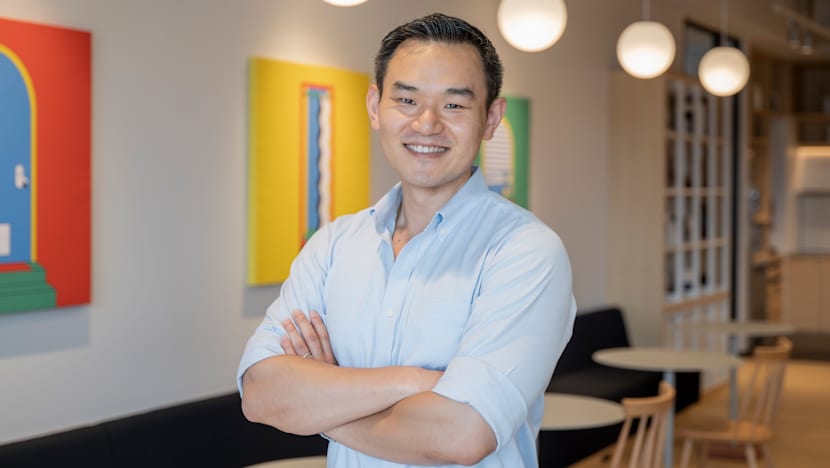
Meet the CEO of Section L, the apartment-hotel brand that’s rethinking extended stays in Japan
Key Points
Meet the CEO of Section L, the apartment-hotel brand that’s rethinking extended stays in Japan Tested by fire through the COVID-19 pandemic, Section L is all about breezy extended stays that feel like home, enhanced by efficient technology. Section L’s colourful website with cheeky photos of travellers crossing roads in Pokemon garb and blowing bubbles in bed gives a hint of what to expect when you stay with the Japanese apartment-hotel brand. Co-founder and CEO Howard Ho opened Section L in...
Meet the CEO of Section L, the apartment-hotel brand that’s rethinking extended stays in Japan
Tested by fire through the COVID-19 pandemic, Section L is all about breezy extended stays that feel like home, enhanced by efficient technology.
Section L’s colourful website with cheeky photos of travellers crossing roads in Pokemon garb and blowing bubbles in bed gives a hint of what to expect when you stay with the Japanese apartment-hotel brand.
Co-founder and CEO Howard Ho opened Section L in Tokyo with the vision of “hotels without strangers” at the cusp of the COVID-19 pandemic in February 2020 – unwittingly, of course. It has grown from one 28-key property to 14 properties with a total of 340 rooms, including an upcoming opening in Shibuya-Hatagaya in July 2026.
Ambitious expansion plans are afoot: Ho is targeting to hit 5,000 rooms in the next five years, with the addition of Kumamoto, Kyushu, Fukuoka and Kyoto to the portfolio.
Born in Taiwan, Ho spent several years there and in Vancouver for his education before attending the Nolan School of Hotel Administration at Cornell University in New York. One for adventure and pushing boundaries, it was a wine class in the curriculum that had caught the then 18-year-old’s eye – under a special New York state by-law, those under 21 could drink alcohol when it is served in an educational context.
He never took that class. Ho said: “As soon as I entered hotel school, I was swept up in everything else. I enjoyed it so much, especially the behind-the-scenes of how a hotel runs.”
OPERATIONALISING A HEALTHY HOSPITALITY CULTURE
Upon graduation, Ho started off as a management trainee with the Four Seasons Aviara in San Diego before landing senior roles in asset management and branding under several hospitality groups, including The Shangri-La Group, where he was part of the team that created and launched the Hotel Jen brand.
These formative years taught him that corporate culture could be operationalised. He recalled resetting a hotel ballroom during his time at Four Seasons. It was 3am and a 1000-person wedding banquet had left rose petals all over the floor. He said: “My team leader worked with us to cover every inch of the ballroom. He made sure the whole carpet was cleaned, and every scuffed corner was fixed. I saw the kind of pride that could permeate an organisation from the front to the back of house.”
In 2017, Ho moved to Japan and spent three years scaling a Japanese rental startup into a management company with an inventory of hotel and rental units on homestay and experiences platform Airbnb. It was a eureka moment: a lodging didn’t need to look like a hotel – reception counters and on-site restaurants were no longer deal breakers.
He said: “I realised if I were to start a hotel business, I don't necessarily need to raise all this capital and have a full service five-star hotel with expensive staff. All I needed was to help existing owners better utilise their residential assets.”
INTERNATIONAL QUALITY, LOCAL CONNECTIONS
This was how Section L came to straddle “the dependability of an international chain and the warmth and hospitality of an Airbnb,” said Ho.
Every unit in the brand’s 10 apartment-hotels and four long-stay residences is equipped with a washer-dryer, a living-dining area and a fully stocked kitchenette.
But it wasn’t just solid hardware. For Ho, who has even done stand-up comedy stints in a Tokyo club, human and cultural connections were important. Social events such as daily happy-hour gatherings, Hanami picnics during sakura season and Easter egg hunts enabled guests to make friends. Quirky features like a Super Nintendo console in the lobby and a suite equipped with a Finnish sauna added to the fun residential appeal.
Before each property’s opening, the team will visit 10 to 15 small businesses – restaurants, shops, cafes – surrounding the hotel. Ho explained: “On the first visit, we introduce ourselves. The second time, we go back with a professional photographer to do a proper photo shoot of the place, print everything on postcards and give them to the owner as a gift. We also use these postcards to promote the places. When guests check in, they know about our city.”
While COVID-19 was a blip in Section L’s trajectory, Ho now considers the pandemic the crucial fire that moulded the brand. He shared: “It informed our perspective about the extended stay business and that we were on the right track; even during COVID we were running at 80 per cent occupancy even though it was at lower rates and filled by domestic guests.”
Ho said: “The customer mindset is shifting; when they book a hotel, they don't just want to stay somewhere. They want to continue living as they would at home. They want to maintain certain aspects of their lifestyle.
“A typical profile for us would be an international guest’s first or second time in Japan. By day two or three, they're thinking to themselves: ‘If I have to eat another bowl of rice, I'm going lose it. I want some comfort food.’ And the apartment hotel allows you to do things like make your own scrambled eggs whenever you want.” For those particular about how their bread are toasted, there are even Balmuda toasters in the units of Section L Residences Asakusa East.
"The customer mindset is shifting; when they book a hotel, they don't just want to stay somewhere. They want to continue living as they would at home."
EFFICIENT TECHNOLOGY, HUMAN INTERACTIONS
The apartment-hotels have staff on-site 24/7 while the residences have a more independent, residential-style experience where guests check in, access their rooms and communicate with the staff digitally.
Ho shared: “Initially we thought that having to memorise and input a code might be a point of friction for the guests, but it turned out that people don’t mind it at all. The residences allowed people to continue their lifestyle as if they were in their own homes.”
Guest queries are handled face-to-face or through Section L’s own purpose-built online platform. Ho shared that the aim is to respond within the hour to all guest queries, even in the wee hours. For residence properties without dedicated on-site staffing, nearby teams remotely assess situations – from leaking pipes to guests being accidentally locked out of their rooms – and coordinate assistance where necessary.
He said: “In many cases, we’ve already built systems that empower guests to resolve issues independently, such as emergency key retrieval points, but when physical support is needed, our nearby teams are always ready to step in.”
Problem solving will be even quicker in the future when their operational processes are integrated with artificial intelligence (AI), said Ho. When a customer has an issue that the staff cannot resolve immediately, instead of messaging the company’s Slack channel and waiting for an operations manager to provide the solution, the AI will run the issue against the company’s operating processes and suggest the appropriate course of action immediately.
He added: “Eventually, we’ll get to the point where the customer can send a voice query on the website and get an answer directly instead of submitting a form. With the operational aspects sorted out efficiently, our staff can do more on the human touch points.”
Group stays have been increasing and the father of two boys aged two and four has ensured that some properties provide cribs and booster seats. Six new builds will have connecting rooms.
In Section L, employees have increased from five to 80 across 25 different nationalities in the past six years. Convinced that good service starts with a healthy corporate culture, Ho has mapped out a career development model where new entrants can see progression every 12 to 18 months and there are regular gatherings to foster camaraderie among the staff.
Ho said: “It comes down to this: togetherness and laughter. If we can count on each other, laugh through difficulties and make things lighter and more palatable, we can work through anything. I also want to make sure that the culture we build is not just of belonging but of accountability. Culture brings people together, but accountability drives a company’s performance.”