
Environment
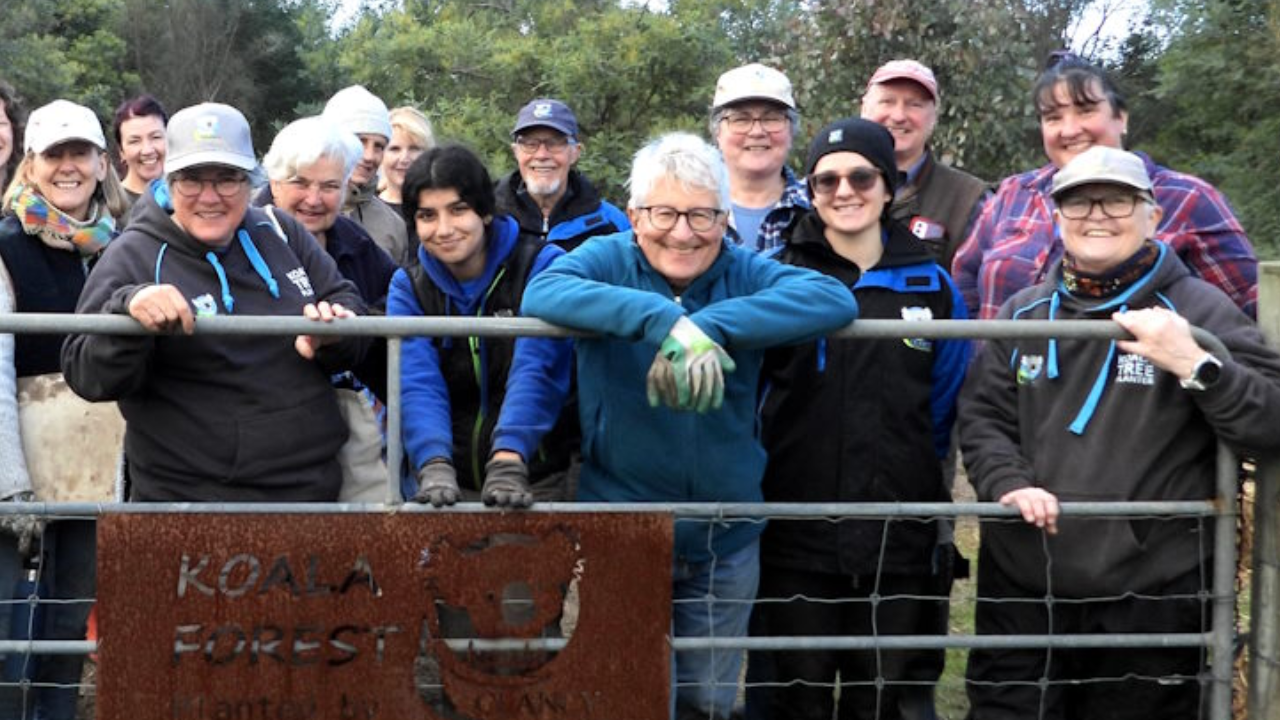
200,000th Koala Tree: Foundation plants milestone; koala calls triple at restored habitat
Key Points
Two decades after losing 27 koalas to a devastating bushfire in Australia’s Brisbane Ranges, conservationist Janine Duffy has reached a milestone in her efforts to restore their habitat. The president of the Koala Clancy Foundation recently helped plant the organisation’s 200,000th koala tree, marking a remarkable turnaround from the tragedy that first inspired her conservation work. According to the foundation’s account, alongside reports from the International Fund for Animal Welfare...
Two decades after losing 27 koalas to a devastating bushfire in Australia’s Brisbane Ranges, conservationist Janine Duffy has reached a milestone in her efforts to restore their habitat. The president of the Koala Clancy Foundation recently helped plant the organisation’s 200,000th koala tree, marking a remarkable turnaround from the tragedy that first inspired her conservation work. According to the foundation’s account, alongside reports from the International Fund for Animal Welfare (IFAW) and Australian Rural & Regional News, the organisation is now working towards planting 300,000 trees and plants by 2030. Duffy’s journey began in January 2006, when a bushfire destroyed a koala population she had spent seven years monitoring in Victoria’s Brisbane Ranges. Of the 30 animals she had followed, only three survived. The loss became a turning point, eventually prompting her to move beyond monitoring wildlife and focus on rebuilding the habitat that koalas depend on.
The bushfire that changed her life
Duffy had been observing the koalas and documenting their families, movements and home ranges since 1999.
The January 2006 fire wiped out almost the entire population over the course of a week. She spent days walking through the burnt landscape, searching first for survivors and then for the animals that had died.
The destruction extended beyond the loss of individual koalas. The fire had transformed the surrounding habitat, leaving behind a landscape of blackened trees and damaged vegetation. Duffy continued visiting the area for another two years, looking for the three remaining koalas, before eventually turning her attention towards a longer-term conservation effort. The experience also changed how she approached wildlife protection. Rather than relying on the hope that damaged habitats would recover on their own, she began working towards practical ways to restore them.
From a few hundred trees to a conservation movement
In 2015, Duffy helped establish the Koala Clancy Foundation, and the following year the organisation began its first tree-planting project in Victoria. The early efforts were modest. The team initially purchased a few hundred River Red Gum saplings and relied on volunteers, basic equipment and recycled tree guards. Planting was particularly difficult in the region’s hard, rocky soil, and many of the first saplings did not survive.
Over time, the organisation improved its methods, introducing better weed control, machinery for digging planting holes and stronger protective guards. It also began growing its own seedlings, involving volunteers in collecting and sowing eucalyptus seeds. The 2019-2020 Black Summer bushfires brought renewed attention to the importance of protecting koala habitats. Interest in the foundation’s planting activities grew considerably, prompting the team to expand its projects. In 2020, it committed to planting 300,000 koala trees and other plants by 2030. Duffy subsequently left her job to dedicate herself full-time to the conservation organisation.
The 200,000th tree marks a major milestone
The latest milestone was achieved during a July 2026 planting event in Stonehaven, west of Geelong, where volunteers planted 2,236 trees, shrubs and wildflowers in just three hours. Among them was the foundation’s 200,000th koala tree. The organisation’s approach has also evolved considerably since its early projects. Instead of concentrating on just a handful of tree varieties, its current plantings include an average of 40 different species. These include eucalyptus trees that provide food for koalas, wattles that help improve soil conditions and wildflowers that attract insects and support wider biodiversity. According to the foundation, its annual planting numbers have grown from approximately 9,000 in 2020 to more than 30,000 today. It expects to reach its 300,000-plant target by winter 2029, ahead of its original 2030 deadline.
Koala activity increases at a restored habitat
There are also encouraging signs that habitat restoration is beginning to benefit wildlife. In a separate project along Victoria’s Moorabool River, the Koala Clancy Foundation and IFAW planted more than 11,300 koala trees and shrubs during 2023 and 2024. As reported by IFAW in May 2026, monitoring at the restored site recorded a threefold increase in koala calls between the first and second years of observation. The first year produced four recorded calls, while subsequent monitoring detected several male koalas and even a mating pair.
The monitoring was conducted using audio recorders, a non-invasive method that helps researchers detect koala activity, particularly during the breeding season. The findings offered an early indication that koalas were beginning to use the restored landscape, even while the newly planted trees were still relatively young. The results are particularly significant for an area that had lost much of its original koala habitat through agricultural clearing.
IFAW and the foundation believe the findings demonstrate how restoring suitable vegetation can encourage wildlife to return to landscapes where natural habitat has been reduced.
For Duffy, however, the 200,000-tree milestone is not the end of the effort. The organisation is already looking at ways to protect its growing plantations from bushfires, droughts and heatwaves, with plans to establish more resilient habitats over the next decade. The longer-term ambition is to create established forests that can support not only koalas but also birds, insects, reptiles and other native wildlife.