
Environment
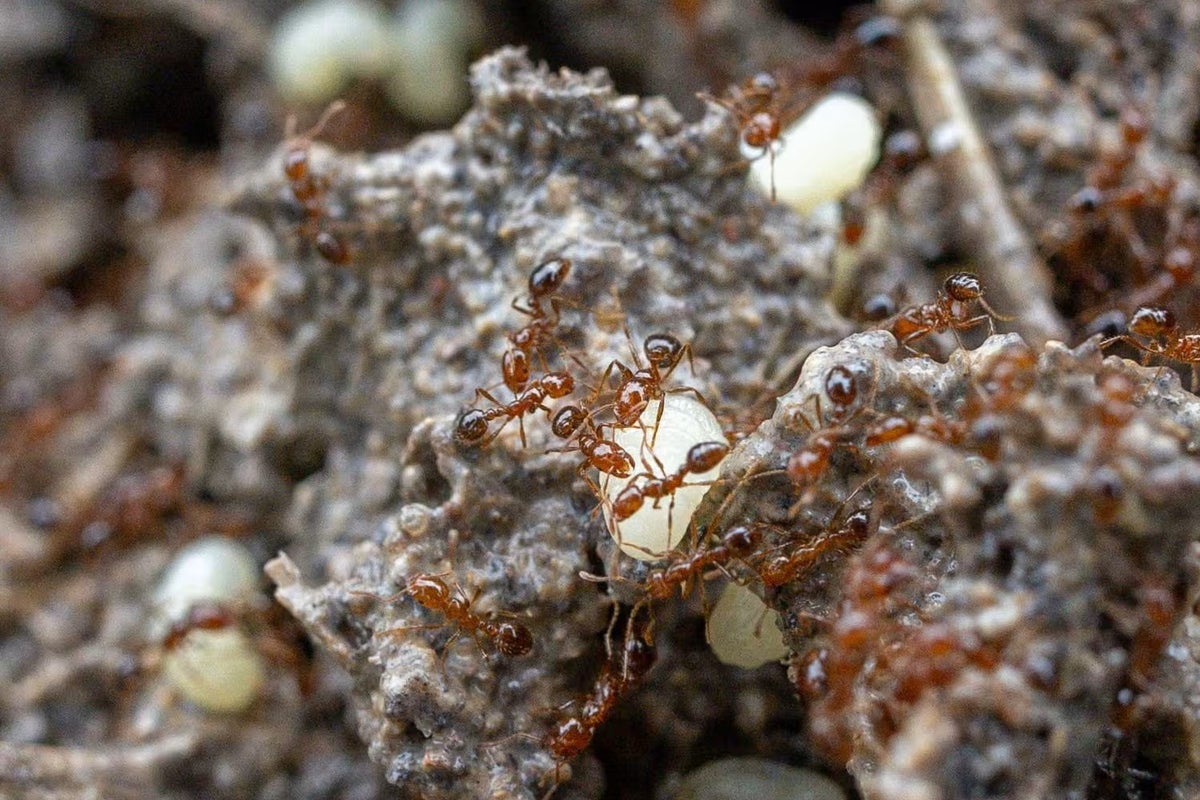
Experts raise alarm after nest of highly invasive fire ants found in Sydney
Key Points
Experts raise alarm after nest of highly invasive fire ants found in Sydney World's most destructive invasive species poses serious threats to humans, pets, agriculture, wildlife, and biodiversity - Bookmark - CommentsGo to comments Become an Independent member to bookmark this article Already a member? Log in Australian authorities destroyed a nest of red fire ants in Sydney, sparking concerns about the spread of a highly invasive species that packs a painful bite. The red fire ants are the...
Experts raise alarm after nest of highly invasive fire ants found in Sydney
World's most destructive invasive species poses serious threats to humans, pets, agriculture, wildlife, and biodiversity
- Bookmark
- CommentsGo to comments
Become an Independent member to bookmark this article
Already a member? Log in
Australian authorities destroyed a nest of red fire ants in Sydney, sparking concerns about the spread of a highly invasive species that packs a painful bite.
The red fire ants are the world's most destructive invasive species, posing serious threats to humans, pets, agriculture, wildlife, and biodiversity.
Native to South America, the ants have been introduced via shipping to several countries across Asia, Australasia, Europe, North America, and the Caribbean.
In Australia, they were first discovered in Brisbane in 2001. They have since spread across the greater Brisbane area and southeast Queensland. Isolated nests have also been found in New South Wales.
A single colony counts 200,000 or more worker ants, which are highly aggressive and swarm when disturbed.
The ants measure 2.4mm to 6mm long, appear reddish-brown with a darker brown to black abdomen.
They grip human or animal skin with their jaws and sting several times.
Multiple workers sting the same target simultaneously, delivering venom that can cause severe allergic reactions. Experts say children with insect venom allergies are at particular risk.
The injection of the venom causes an immediate burning sensation followed by a characteristic white pustule.
The fire ants can also damage crops and threaten livestock.
The ants are adept at surviving floods, forming living rafts of linked ants that can float for days or even weeks and disperse to new areas when the waters recede.
Fertile male and queen ants spread to new areas by flight during mating, shed their wings, and dig underground nests to start new colonies.
Genetic studies have suggested that the main Brisbane population of the ants introduced in 2001 has spread to an area covering 8,300sq km, comparable to the size of Puerto Rico or Cyprus.
“The ability of the red fire ant to spread naturally by flight or by budding from existing colonies as well as via transport of infested goods and materials, makes containing and eradicating this species particularly challenging,” a recent study published in the Journal of Economic Entomology said.
“It’s instructive to consider the current 830,000 hectares infestation in southeast Queensland originated from just a few S invicta queens as shown by genetics.”
NSW agriculture minister Tara Moriarty noted that human movement of materials was the primary way the fire ants spread, and urged Australians to “stay alert and report anything suspicious”.
“Everyone has a part to play in biosecurity,” Ms Moriarty said.
Australian experts warn that if the ants spread nationwide, households face over $1 billion per year in medical, veterinary, and pest management costs.
“Broader economic costs, including impacts to agriculture and the environment, could exceed $22 billion by the 2040s,” entomologist Giovanni Ramón-Cabrera said in a statement.
“The recent detection of a second nest, two months after one was found at Enfield, is a concerning development.”
The National Fire Ant Eradication Program is working to eliminate the species before it spreads further.
Public vigilance plays a critical role in the defence against this invasive species, Mr Ramón-Cabrera said, urging people to report any sightings to authorities. “If you suspect you have found a fire ant mound, do not disturb it. Report it immediately,” the entomologist said.
Government guidelines urge people who spot colonies of the red fire ants to not treat the nest.
“Avoid disturbing fire ants to prevent injury and further spread. Safely take a clear photo or video for identification,” the Australian Museum said. “Call the NSW Biosecurity Hotline.”
Join our commenting forum
Join thought-provoking conversations, follow other Independent readers and see their replies
Comments
Sydney (LOCATION)
Sydney World's (ORG)
Independent (ORG)
Australian (ORG)
South America (LOCATION)
Asia (LOCATION)
Australasia (LOCATION)
Europe (LOCATION)
North America (LOCATION)
Caribbean (LOCATION)
Australia (LOCATION)
Brisbane (LOCATION)
Queensland (LOCATION)
New South Wales (LOCATION)
Puerto Rico (LOCATION)