
Science
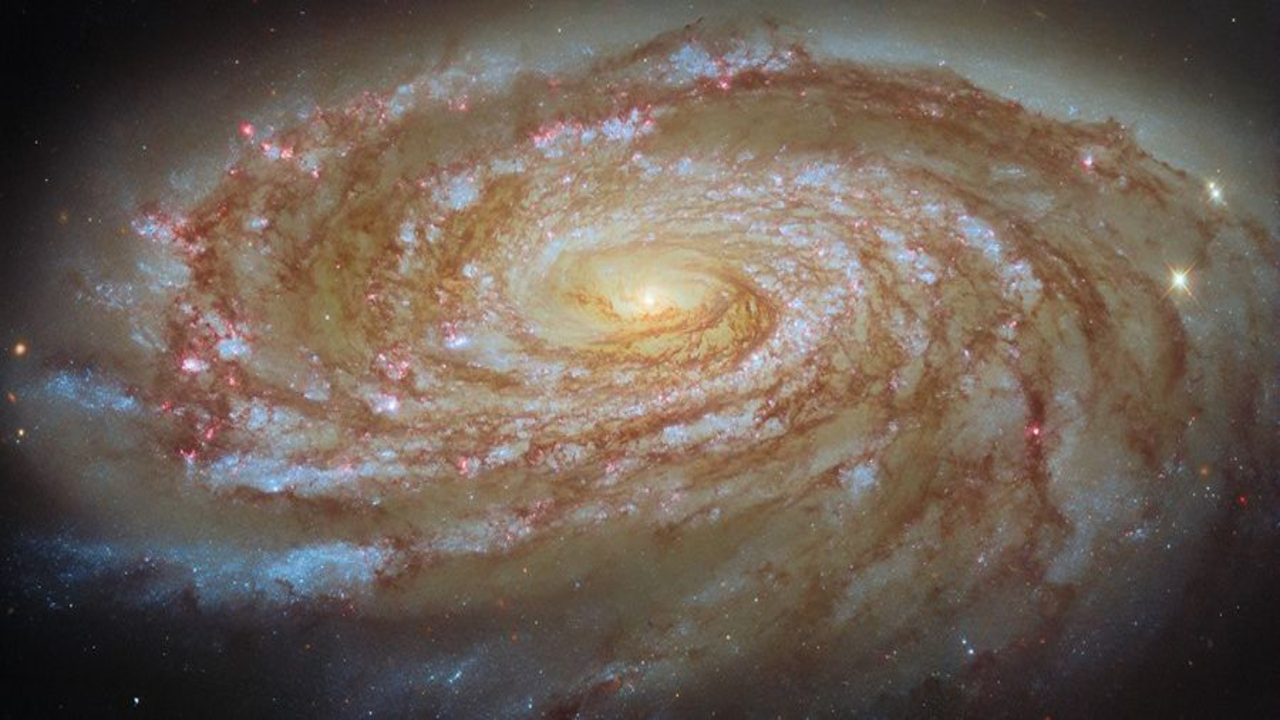
Swirling spiral galaxy will hypnotize you | Space photo of the day for June 10, 2026
Key Points
Swirling spiral galaxy will hypnotize you | Space photo of the day for June 10, 2026 This new Hubble image of galaxy M88 is downright mesmerizing. Be careful: if you stare at this galaxy for too long you might end up hypnotized.
Swirling spiral galaxy will hypnotize you | Space photo of the day for June 10, 2026
This new Hubble image of galaxy M88 is downright mesmerizing.
Be careful: if you stare at this galaxy for too long you might end up hypnotized.
This new image captured by the Hubble Space Telescope shows the Messier 88 (M88) galaxy, also known as NGC 4501, in all of its swirling glory.
What is it?
M88 is an active galaxy, meaning at its center is a supermassive black hole whose inescapable gravity pulls in enormous amounts of gas and dust from surrounding space. It is also a spiral galaxy, meaning it has spiral "arms" that reach out from its center, which is clear from this spiraling, swirling image.
The galaxy is a member of the Virgo Cluster, a cluster of over 1,000 galaxies in the Virgo constellation. M88 can also be found roughly 63 million light-years away in the constellation Coma Berenices, or "Berenice's Hair."
Why is it incredible?
Astronomers captured this image while observing M88 as part of a larger investigation into spiral galaxies and how they operate in different environments, according to a statement. This work was done using Hubble's Wide Field Camera 3, which can see tens of millions of light-years into the universe while still managing to capture incredible details of objects like M88.
The Hubble Space Telescope has been looking out at the cosmos since 1990. For over 36 years, the space telescope has truly opened our eyes to the cosmos, showing the far reaches of our universe in spectacular detail that we had only previously dreamed of.
While the James Webb Space Telescope and the upcoming Nancy Grace Roman Space Telescope serve unique purposes to expand our understanding of the universe, Hubble remains an incredibly powerful tool to look beyond what we know and explore what we hope to understand.
You must confirm your public display name before commenting
Please logout and then login again, you will then be prompted to enter your display name.
Chelsea Gohd served as a Senior Writer for Space.com from 2018 to 2022 before returning in 2026, covering everything from climate change to planetary science and human spaceflight in both articles and on-camera in videos. With a M.S. in Biology, Chelsea has written and worked for institutions including NASA JPL, the American Museum of Natural History, Scientific American, Discover Magazine Blog, Astronomy Magazine, and Live Science. When not writing, editing or filming something space-y, Gohd is writing music and performing as Foxanne, even launching a song to space in 2021 with Inspiration4. You can follow her online @chelsea.gohd and @foxanne.music
Hubble (LOCATION)
the Hubble Space Telescope (LOCATION)
the Virgo Cluster (ORG)
M88 (ORG)
Hubble's Wide Field Camera 3 (ORG)
the James Webb Space Telescope (ORG)
Chelsea Gohd (PERSON)
Space.com (ORG)
M.S. (LOCATION)
Biology (LOCATION)
Chelsea (ORG)
NASA (ORG)
JPL (ORG)
the American Museum of Natural History (ORG)
Scientific American (PERSON)