
Science
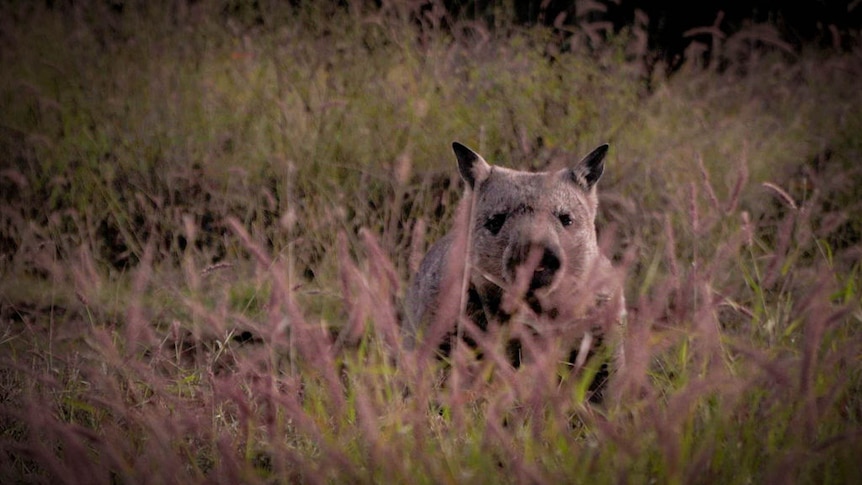
Underground discovery could help save one of the world's rarest mammals
Key Points
Northern hairy-nosed wombats are 'picky' with their homes, but they may survive in other habitats Thu 18 Jun 2026 at 5:43am In short: One of the world's most critically endangered animals may be able to live in more areas than conservationists previously realised. A study of northern hairy-nosed wombat burrows found the species can adapt to different soil conditions, challenging long-held beliefs about its habitat needs. Researchers hope the findings will help identify new locations where...
Northern hairy-nosed wombats are 'picky' with their homes, but they may survive in other habitats
Thu 18 Jun 2026 at 5:43am
In short:
One of the world's most critically endangered animals may be able to live in more areas than conservationists previously realised.
A study of northern hairy-nosed wombat burrows found the species can adapt to different soil conditions, challenging long-held beliefs about its habitat needs.
What's next?
Researchers hope the findings will help identify new locations where future populations could be established.
One of the world's rarest mammals may be able to survive in a wider range of habitats than previously thought, new research suggests, expanding options for future conservation sites.
There are about 450 northern hairy-nosed wombats remaining across three protected sites in Queensland, making the species one of Australia's most critically endangered animals.
It is the largest of Australia's three wombat species and the world's largest burrowing marsupial.
A study published in Australian Mammalogy found the critically endangered species can construct burrows in a broader range of soil types than previously understood, with researchers saying the findings could help them identify future sites for additional populations.
In the 1980s, there were only an estimated 35 wombats left at Epping Forest National Park near Clermont in central Queensland.
A second population was established at the Richard Underwood Nature Refuge (RUNR), north of St George in southern Queensland, in the mid-2000s.
A third site was established at Dhuny Yumba National Park — formerly Powrunna State Forest — also near St George in 2024.
Bush Heritage Australia ecologist Andy Howe worked on the study while he was a senior field ecologist with Australian Wildlife Conservancy.
The research used more advanced ground-penetrating radar technology to create detailed underground maps of five wombat burrows at Richard Underwood Nature Refuge.
Mr Howe said much of what conservationists understood about northern hairy-nosed wombat burrows had come from studies conducted at Epping Forest National Park.
"One of the things we set out to do was to see if there was a difference between how the wombats construct their burrows at Richard Underwood compared to their other populations that exist in Queensland," he said.
"It's one of these vital bits of data and assumptions that we don't know as conversationists and conservation managers: how this varies throughout their distribution."
The study found burrows at RUNR were generally shallower than those previously recorded at Epping Forest National Park — with sandy loam soils at RUNR believe to be providing greater structural stability than the deeper sandy soils at Epping.
Wombats 'really picky'
Mr Howe said the findings suggested the species may be able to occupy a broader range of suitable habitat than previously thought.
"Northern hairy-nosed wombats are really picky about the soil profile in which they dig their burrows," he said.
"The research showed that the burrow structures differed in different soil types.
"One of the encouraging signs is that the total depth of the burrows at Richard Underwood was slightly shallower than what they were at the other population at Epping Forest.
"That's really helpful in terms of we use that information to then look at other areas across the distribution area where they've since become extinct, and we can use this information to determine where's best to look at new translocation sites."
There is a species recovery plan for the northern hairy-nosed wombat, led by Queensland's Department of Environment, alongside stakeholders like Australian Wildlife Conservancy and the Wombat Foundation.
Wombat Foundation ambassador Leanne Brosnan said the research provided a more detailed understanding of how the animals used different landscapes.
"It makes me extremely optimistic [for the specie's future] because finding habitat for the northern hairy-nosed wombat that hasn't been fragmented by development of one sort or the other is very challenging," she said.
"This research enables us to look at different habitat with sandy soils that aren't quite as deep as we thought they needed to be in the past."
Wombats breeding
Last year, several joeys were sighted at Dhuny Yumba — which translates to home of the wombat, while Australian Wildlife Conservancy also recorded signs of pregnant wombat at RUNR this year.
"We're all very excited about the images because every new joey adds to the overall population of the species, giving us hope that they'll persist well beyond the near future," AWC ecologist Ben Stepkovitch said.
"We anticipate that the joey will emerge from the pouch by October when it's about nine months old."
All three northern hairy-nosed wombat sites are protected scientific conservation areas and are not open to the public.
Northern (LOCATION)
Queensland (LOCATION)
Australia (LOCATION)
Australian Mammalogy (ORG)
Epping Forest National Park (LOCATION)
Clermont (LOCATION)
the Richard Underwood Nature Refuge (RUNR (ORG)
St George (LOCATION)
Dhuny Yumba National Park (ORG)
Powrunna State Forest (ORG)
Bush Heritage Australia (ORG)
Andy Howe (PERSON)
Australian Wildlife Conservancy (ORG)
Richard Underwood Nature Refuge (LOCATION)
Howe (PERSON)