
Politics
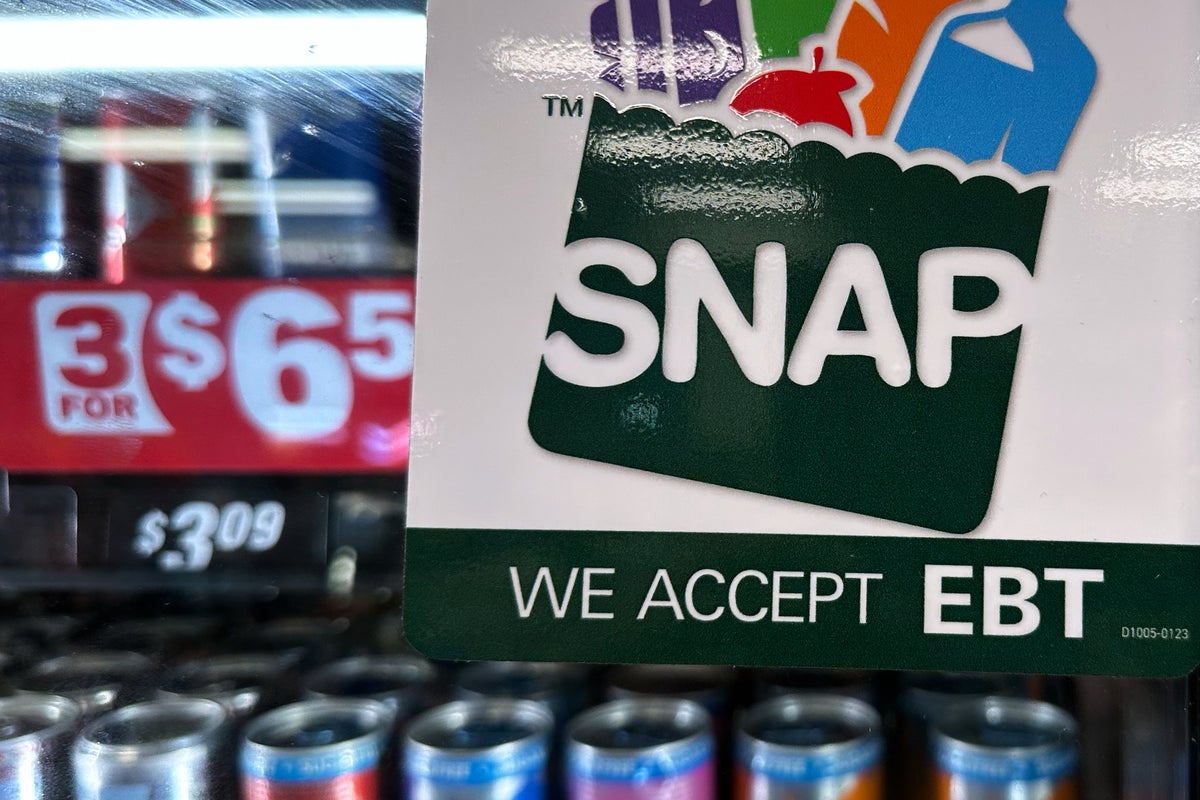
Trump’s new SNAP rule could leave states scrambling to protect food assistance programs
Key Points
Trump’s new SNAP rule could leave states scrambling to protect food assistance programs Several dozen states might need to pay millions for food aid if they don't reduce errors in the Supplemental Nutrition Assistance Program - Bookmark Dozens of states could be hit with millions of dollars in new costs to keep food assistance flowing to lower-income residents after new U.S. Department of Agriculture (USDA) data revealed which states may benefit — and which could face major financial...
Trump’s new SNAP rule could leave states scrambling to protect food assistance programs
Several dozen states might need to pay millions for food aid if they don't reduce errors in the Supplemental Nutrition Assistance Program
- Bookmark
Dozens of states could be hit with millions of dollars in new costs to keep food assistance flowing to lower-income residents after new U.S. Department of Agriculture (USDA) data revealed which states may benefit — and which could face major financial pressure — under a new federal law targeting payment errors in the Supplemental Nutrition Assistance Program (SNAP).
The legislation, signed by President Donald Trump, requires states with high SNAP payment error rates to eventually cover a share of benefits themselves. The cost-sharing rule, set to begin in October 2027, is designed to hold states accountable for administrative mistakes while generating federal savings to help offset new tax cuts.
A SNAP “error rate” measures the percentage of benefits incorrectly issued, whether recipients receive too much or too little, largely due to administrative failures.
States with high error rates could face difficult choices: shifting money away from priorities such as public schools, law enforcement, or mental health services; tightening eligibility rules; or potentially leaving the decades-old federal food assistance program.
“There are billions of dollars that are at stake that states will have to find the money to be able to pay if they want to continue to operate a SNAP program,” said Chloe Green, assistant director for policy at the American Public Human Services Association.
SNAP, often called food stamps, provides monthly financial assistance to help eligible low-income Americans buy groceries.
Preliminary USDA figures show more than 37 million people received SNAP benefits in March, down 11% from the previous year. The decline follows the expansion of work, volunteer, and job training requirements for many adult recipients, enacted last July.
Currently, the federal government covers the full cost of SNAP benefits.
That will change for states with higher error rates beginning in October 2027. The USDA’s newly released error rates for fiscal year 2025 will determine which states face future costs, though states may use either their 2025 or 2026 rates.
Nine states will avoid the new financial burden because their error rates remain below the 6% threshold.
South Dakota recorded the lowest rate at roughly 2.5%, while Nebraska narrowly escaped at 5.9%. Other states below the cutoff include Idaho, Iowa, Kentucky, Vermont, Utah, Wisconsin, and Wyoming.
The law creates a sliding scale for state payments:
States with error rates between 6% and 8% must cover 5% of benefit costs, states at 8%-10% must cover 10% and states above 10% must cover 15%.
The potential costs could be substantial. Missouri, which reported an 8.7% error rate last year, could owe 10% of its SNAP benefit costs if the rate does not improve.
Based on 2024 figures showing Missouri residents received about $1.5 billion in SNAP benefits, the state’s annual share could reach roughly $150 million — more than the operating budgets of several state prisons.
Some of the states with the worst error rates will get temporary relief. States exceeding a 13.34% error rate last year — including Alaska, which topped 23%, as well as Delaware, Georgia, Illinois, New Mexico, Oregon, and the District of Columbia — will have their cost-sharing requirements delayed until at least fiscal year 2029.
Further delays may be available if their 2026 error rates remain high.
A recent survey of state SNAP agencies found that while most are investigating the causes behind payment mistakes, many are also preparing for possible budget cuts. More than a quarter of states said they may tighten eligibility rules, while four states indicated they are considering leaving SNAP altogether.
Agriculture Secretary Brooke Rollins criticized current error rates, saying, “These payment error rates are further proof that state accountability is severely lacking in SNAP.”
With billions of dollars potentially on the line, states now face pressure to reduce payment mistakes — or find the money to cover the cost.
[Image text:] TM
SNAP
3$65
$309
WE ACCEPT
EBT
D1005-0123
Trump (ORG)
the Supplemental Nutrition Assistance Program - Bookmark (ORG)
U.S. Department of Agriculture (USDA (ORG)
the Supplemental Nutrition Assistance Program (ORG)
Donald Trump (PERSON)
Chloe Green (PERSON)
the American Public Human Services Association (ORG)
Americans (ORG)
USDA (ORG)
South Dakota (LOCATION)
Nebraska (LOCATION)
Idaho (LOCATION)
Iowa (LOCATION)
Kentucky (LOCATION)
Vermont (LOCATION)