
Health
Windsor case: What families should know about nursing home red flags
Key Points
Windsor case: What families should know about nursing home red flags The revocation of Windsor Convalescent Home’s licence has sparked broader questions about how nursing homes are regulated in Singapore. SINGAPORE: When Adrian decided to move his family member out of Windsor Convalescent Home last year, he thought he was simply taking up an opportunity for a better care arrangement. The move came after months of growing unease.
Windsor case: What families should know about nursing home red flags
The revocation of Windsor Convalescent Home’s licence has sparked broader questions about how nursing homes are regulated in Singapore.
SINGAPORE: When Adrian decided to move his family member out of Windsor Convalescent Home last year, he thought he was simply taking up an opportunity for a better care arrangement.
The move came after months of growing unease.
His family had initially chosen the nursing home for its affordability and convenient location. But over time, Adrian – who is 61 and asked to remain anonymous, along with details that could identify his relative – grew increasingly concerned about the standard of care his family member was receiving.
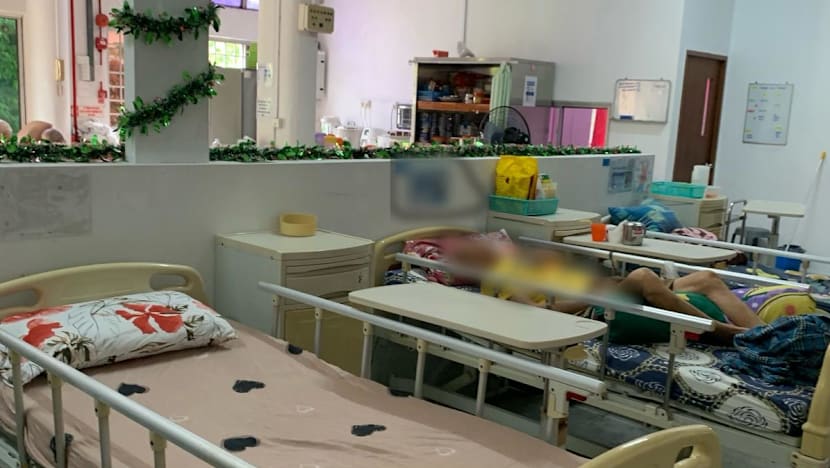
He described the nursing home as run-down and cramped, with little space for residents to move around. His relative had nothing to do but watch television, became inactive and put on weight.
The food preparation area was located next to residents' beds rather than in an enclosed space. “When they prepared food in the morning, it was very noisy and would disrupt their sleep,” Adrian said.
The facility also lacked a lift. Located on the second floor, the home instead used a chair fitted with rubber tracks to transport residents up and down the stairs. When he raised this with the staff, he was told a lift was not a requirement.
Adrian also questioned whether his relative's medication was being properly managed and said he encountered difficulties getting clear explanations about incidents involving his family member.
His concerns mirror some of the deficiencies later uncovered by regulators, including lapses in medication management, residents' care plans and basic nursing care.
Adrian said he and his family were not even aware an audit had been conducted or that lapses had been found, and felt they should have been informed so they could have monitored the situation more closely.
CNA made multiple attempts to reach Windsor Convalescent Home for comment – by phone, email and in person – and also visited the registered residential address of its director, but received no response.
In response to CNA's queries, the Ministry of Health (MOH) said it would not comment on specific concerns raised by an unnamed relative of a former Windsor resident, noting that key audit findings had already been set out in its earlier announcement of the licence revocation.
Audit findings are shared directly with the licensee, which is responsible for implementing the necessary rectifications promptly and effectively to ensure resident safety, the ministry said.
Because audit findings may result in regulatory proceedings governed by statutory procedure, MOH does not inform residents and their families before any regulatory action is confirmed, it added.
"ARE OPERATORS COMPLYING WITH STANDARDS?"
The case has drawn public attention to care standards in Singapore's nursing homes and raised questions about whether existing safeguards are sufficient.
However, eldercare advocates CNA spoke to said the issue is not a lack of regulations, but whether they are consistently followed.
"Singapore is very strictly regulated," said Ms Karen Wee, executive director of Lions Befrienders Service Association. "So then the question becomes: are operators complying with the standards?"
Under the Healthcare Services Act (HCSA), providers must meet requirements covering patient care, staffing, governance, infection control, medication management and incident reporting.
Nursing homes are audited before licences are issued or renewed, and may also face routine audits, off-cycle inspections and complaint investigations.
They must appoint qualified clinical leadership, ensure staff providing direct care are trained and competent, and conduct comprehensive assessments of residents shortly after admission.
They are also required to report allegations of physical, sexual or psychological abuse to the Ministry of Health and maintain safeguards against medication errors – including having a pharmacist audit their medication management system at least once every six months – and provide adequate equipment, protection of residents' belongings and sufficient clean linen.
Despite the extensive regulatory framework, Ms Wee said the Windsor case will inevitably lead families to ask whether audits are sufficient to detect problems before they escalate. She called for more unannounced inspections.
"This will help to catch the weak ones," she said, drawing an analogy to a classroom: students who do their homework consistently would have little trouble with a surprise test, while those who are unprepared are more likely to struggle.
Dr Mary Ann Tsao, founder and chairwoman of the Tsao Foundation, said serious lapses in nursing homes can arise from insufficient manpower, inadequate staff training, weak quality monitoring and cost-cutting measures.
"A good nursing home is expensive to run as it's labour-intensive," she said. "To optimise profit, there would be temptation to cut corners and inappropriate cost-saving measures."
LOOKING OUT FOR RED FLAGS
While regulators are responsible for oversight, both experts said families remain an important line of defence.
Dr Tsao said families should assess the level of professional support available, including access to appropriately trained physicians, nursing staff ratios and the overall standard of health monitoring.
She also recommended observing how staff interact with residents and whether residents have any meaningful choices in their daily lives.
Ms Wee said families should also pay attention to the physical condition of a home.
"The first thing when you enter, you should look at is the infrastructure – does it look run down? Are things like the bed missing a wheel, or does the drawer have a broken handle? Are the bedrail guards dirty?
"Put it this way – if you won't touch it yourself, then you know it's not okay."
Families should also watch for poor hygiene, persistent odours and whether residents who call for help receive prompt attention, she added.
Regular visits are equally important. "If you go there every week to visit, you will know (if there are any issues). You cannot just park (your loved one) there and only go once every few months."
The clearest signals often come from the residents themselves, Ms Wee said.
Sudden changes in mood, appetite, behaviour or cognition should not be dismissed as normal ageing. Residents who become withdrawn, distressed, unusually quiet or desperate to leave may be signalling something deeper.
"We should all be asking ourselves – what kind of care would we want for ourselves and our loved ones?" she said.