
Politics
Senate will pass Trump’s pick to replace Tulsi Gabbard ... for all the wrong reasons
Key Points
Senate will pass Trump’s pick to replace Tulsi Gabbard ... for all the wrong reasons The ‘YOLO’ Republicans have a standard: No J6 supporters, writes John Bowden. So why doesn’t that extend to nominees who are wishy-washy about 2020? - Bookmark - CommentsGo to comments Donald Trump’s nominee to take over the Office of the Director of National Intelligence, Jay Clayton, seems poised for confirmation.
Senate will pass Trump’s pick to replace Tulsi Gabbard ... for all the wrong reasons
The ‘YOLO’ Republicans have a standard: No J6 supporters, writes John Bowden. So why doesn’t that extend to nominees who are wishy-washy about 2020?
- Bookmark
- CommentsGo to comments
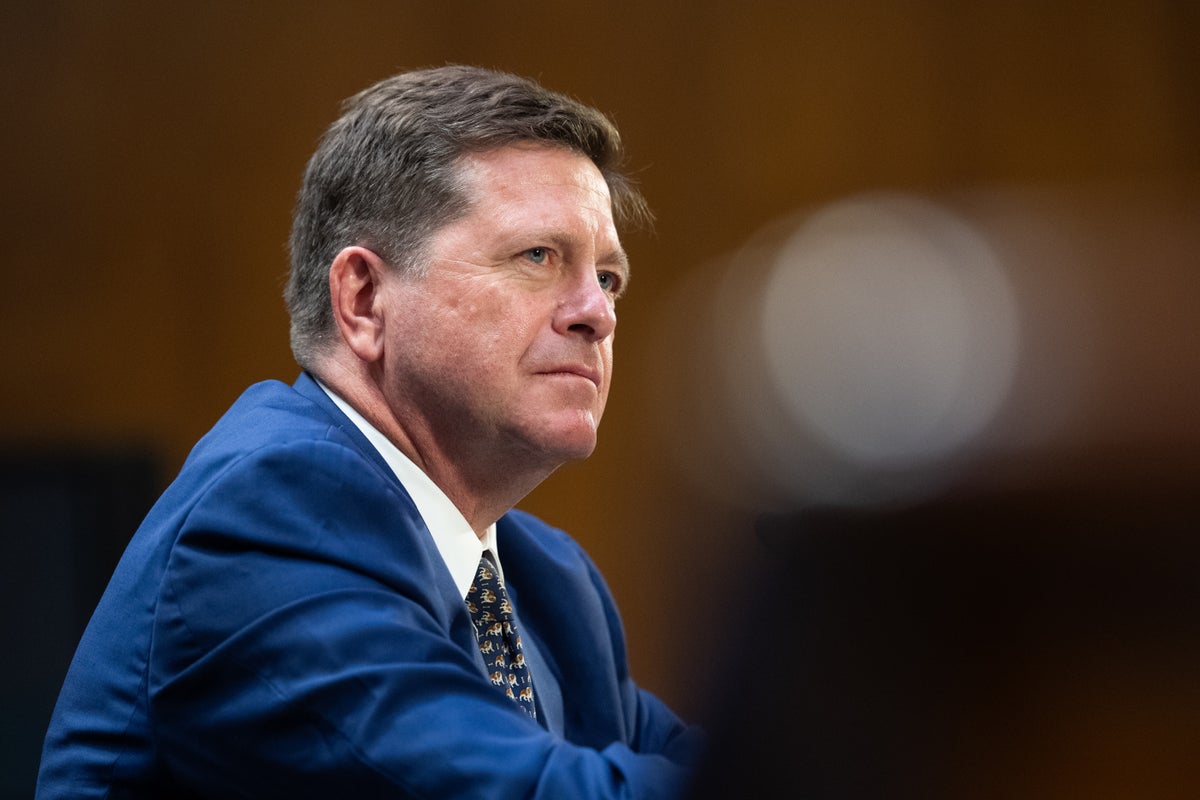
Donald Trump’s nominee to take over the Office of the Director of National Intelligence, Jay Clayton, seems poised for confirmation.
Clayton advanced through committee this week, with senators set for a full vote on his nomination sometime next week, before the August recess. Clayton, 60, formerly chaired the Securities and Exchange Commission (SEC) and now serves as U.S. Attorney for the Southern District of New York.
An impactful resume, but one that comes with an asterisk: Clayton, another Trump loyalist, refuses, like many in the administration, to say that Donald Trump was duly defeated in the 2020 presidential election (or, conversely, that Joe Biden was elected president). A seemingly unrelated side question: this has become the litmus test for every Trump nominee in Washington. Do you side with reality, or hedge your bets?
Clayton, during a contentious hearing last Tuesday, did the latter. He repeatedly maintained that Biden was “certified” the victor of the 2020 election, while refusing to go so far as to say he was duly elected.
“I am not an election denier,” the ODNI nominee told senators on the Intelligence Committee, while denying their requests for him to simply acknowledge that Biden won more votes.
But while Clayton is clearly playing a political game with his responses, his nomination is still likely to succeed next week. It would require defections from several Republicans to fail, and with the support of Sen. Thom Tillis (R-N.C.) in committee, Clayton’s chances of picking up even wayward Republicans who occasionally resist the White House seem strong.
Tillis’ support was disappointing for some Democrats, who disagree with his conservative politics but have strongly supported his refusal to back any of Trump’s nominees who showed support of any kind for Jan. 6 protesters or the attempts to overturn the 2020 election. That pledge led him to oppose the nomination of Ed Martin, Trump former pick to be U.S. Attorney for the District of Columbia.
Writing on X last month, Tillis was strongly supportive of Clayton, citing his record: “Jay Clayton is an OUTSTANDING choice by President Trump to serve as Director of National Intelligence. Jay is a proven leader with a distinguished record of public service and sound judgment needed to lead our intelligence community. I look forward to working with my colleagues to ensure his swift confirmation.”
That support did not diminish last week, after Clayton’s battle with Democrats at the committee hearing. Tillis was far more reserved at the hearing than he’d been when he clashed with Acting Attorney General Todd Blanche at a separate hearing last week, when he challenged Blanche to meet with survivors of Jeffrey Epstein. He avoided a confrontation with Clayton over January 6 or the 2020 election, focusing instead on intelligence matters.
Part of the reason that Clayton seems to have escaped the scrutiny of the GOP’s rebel Republicans is his record. But the main reason is that Bill Pulte, the man Clayton is due to replace if confirmed, currently sits as acting director of national intelligence. Pulte, formerly with the Federal Housing Finance Agency, has no background in intelligence, no background in national security, and is chiefly known as a Trump loyalist political operative who used his previous role to target Democrats with mortgage fraud investigations that, as of yet, haven’t gone anywhere.
His nomination for the role was met with exasperation across the aisle in the upper chamber and outright opposition from several GOP senators.
Tillis and other senators have actively sought to streamline Clayton’s nomination as a means of pushing Pulte out of the post. Pulte’s selection for the position set of alarms in the Senate and resulted in Democrats refusing to reauthorize a critical piece of spying legislation, the Foreign Intelligence Surveillance Act (FISA), until Pulte was replaced. FISA remains “dark” to this day, even after national security hawks argued that it was critical for the security umbrella surrounding the World Cup events held across the U.S. this summer.
Clayton’s nomination was set up for success once before — last month, when he was initially nominated by the president and looked poised for a quick confirmation process. His nomination was pulled, not by Senate Republicans but by the president himself, who seemed distasteful of the idea that Democrats’ refusal to reauthorize FISA could force his hand in any way. But Trump has now officially backed down, and the Senate will do just that when it confirms Clayton next week.
By confirming Clayton quickly, the wayward Senate Republican members like Tillis are at once asserting their power and setting it aside. By refusing to press him on matters of election security — or his predecessor’s role in advancing Donald Trump’s false claims about 2020, the very claims that led to Jan. 6 — these senators are showing the limits of their scrutiny just as their party is making the argument that a Democratic senate majority isn’t necessary to put real restraints on a so-far largely uninhibited president.
Join our commenting forum
Join thought-provoking conversations, follow other Independent readers and see their replies
Comments
Senate (ORG)
Trump (ORG)
Tulsi Gabbard (PERSON)
Republicans (ORG)
John Bowden (PERSON)
Donald Trump (PERSON)
the Office of the Director of (ORG)
National Intelligence (ORG)
Jay Clayton (PERSON)
Clayton (PERSON)
the Securities and Exchange Commission (ORG)
SEC (ORG)
U.S. (LOCATION)
the Southern District (LOCATION)
New York (LOCATION)