
Science
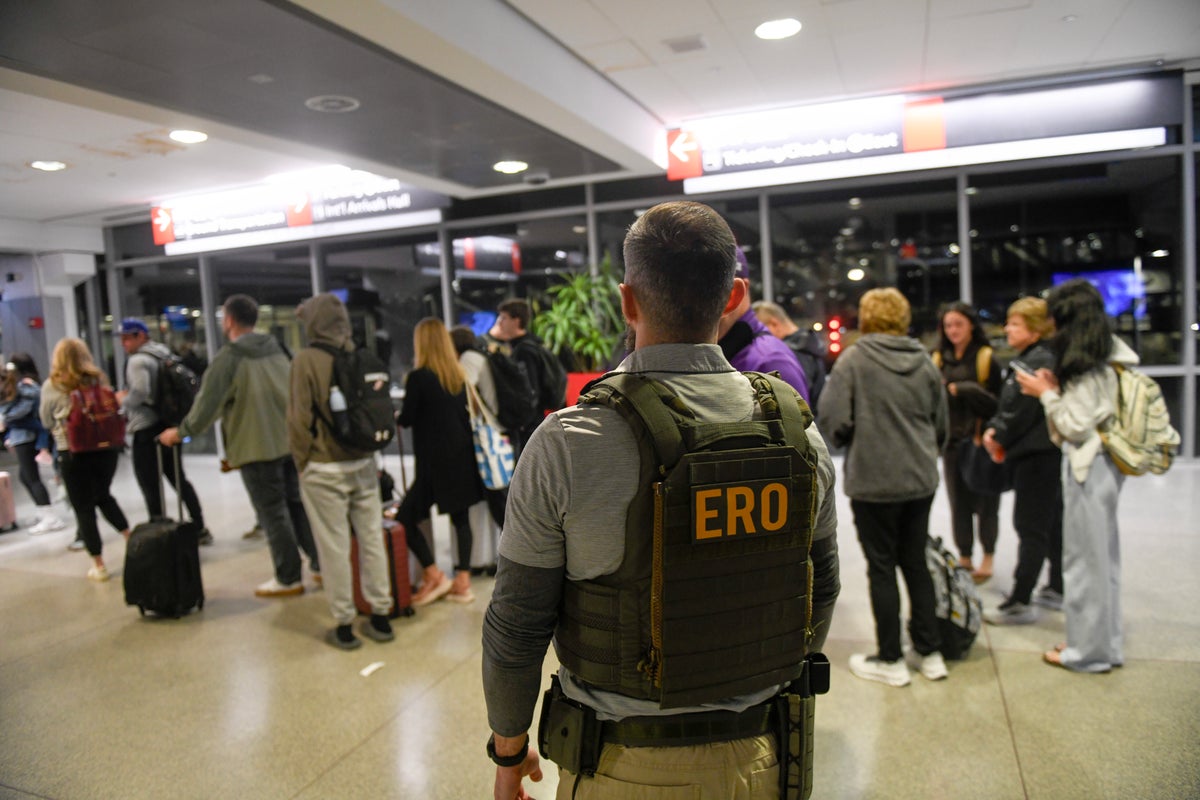
Johns Hopkins researcher arrested by ICE at Baltimore airport
Key Points
Johns Hopkins researcher arrested by ICE at Baltimore airport A recent surge in airport arrests follows growing coordination between TSA and ICE to target immigrants in American airports - Bookmark - CommentsGo to comments A public health researcher at Johns Hopkins University is locked up in an Immigration and Customs Enforcement detention center in Louisiana after her arrest by federal agents while boarding a domestic flight in Baltimore this week Fatima Ameaka, a senior analyst at the...
Johns Hopkins researcher arrested by ICE at Baltimore airport
A recent surge in airport arrests follows growing coordination between TSA and ICE to target immigrants in American airports
- Bookmark
- CommentsGo to comments
A public health researcher at Johns Hopkins University is locked up in an Immigration and Customs Enforcement detention center in Louisiana after her arrest by federal agents while boarding a domestic flight in Baltimore this week
Fatima Ameaka, a senior analyst at the Center for Outbreak Response Innovation in the Bloomberg School of Public Health, is a former Fulbright scholar originally from Cameroon. Immigration officers arrested her at the Baltimore-Washington International Thurgood Marshall Airport for allegedly overstaying a visa.
She was most recently being held at the South Louisiana ICE Processing Center roughly 90 miles from Baton Rouge, according to the agency’s detainee locator system.
Her arrest and detention, first reported by The Baltimore Banner, follows a spike in airport arrests and a growing coordination between ICE and the Transportation Security Administration, with recently unveiled memorandums detailing a data-sharing agreement that grants officers access to passenger information for “aviation security.”
There are myriad reasons why an otherwise “legal” immigrant may have “overstayed” with an expired visa, including time lapsed while navigating the byzantine bureaucracy of visa renewals and seeking permanent legal status. But Donald Trump’s administration has prioritized virtually every case for arrest and removal under the president’s government-wide efforts to deport 1 million people from the country each year.
The Department of Homeland Security claims Nkempu entered the U.S. on a visa in June 2023 allowing her to stay in the country legally until mid-2024. “Being in detention is a choice,” an agency spokesperson said in a statement.
Her detention also follows a streak of arrests targeting international scholars at prominent institutions across the country.
Johns Hopkins is “deeply concerned” about her arrest, according to a statement from university spokesperson Doug Donovan.
“The university understands the fear and concern this instills in members of our community,” he wrote. “Dr. Ameaka was traveling in a personal capacity, and though we cannot comment on the specifics of her situation, we want to assure our community that the university is actively working to provide support for Dr. Ameaka, including ensuring she has access to legal representation.
A surge of immigration arrests at U.S. airports, some of which have been captured in viral videos, appear to have followed increased coordination between ICE and airport authorities who maintain and share information and “tips” about noncitizen travelers, even if they do not have criminal records.
TSA is providing ICE with the names and birth dates of travelers believed to have been ordered out of the country by an immigration court judge, allowing officers to quickly identify and arrest people in airport terminals.
Newly disclosed agreements obtained by watchdog group American Oversight reveal that ICE and TSA have been working together since at least May 2025, appearing to contradict congressional testimony from Acting TSA Administrator Ha Nguyen McNeill about the agencies’ work.
Rep. Dan Goldman asked McNeill if ICE shares information with TSA to determine whether passengers have been ordered removed from the country.
“That is not what is occurring,” she said. “We don’t send the information to ICE, we help ICE check against information.”
The agency is working “within our authorities to share information within the Department of Homeland Security to further the national security mission,” she said.
A memo obtained by American Oversight shows the agencies had established more formal data-sharing information and outlined procedures for ICE to retain information obtained from TSA.
David Cummins, Trump’s nominee for TSA administrator, did not detail the terms of the agreement when pressed during his Senate confirmation hearing this week.
“This agreement pulls back the curtain on the formal partnership between TSA and ICE that the administration refused to explain to the public,” American Oversight Executive Director Chioma Chukwu said in a statement this week.
“Americans provide their personal information to board a plane safely, not to become part of an immigration enforcement system or a government surveillance network,” Chukwu added.
Join our commenting forum
Join thought-provoking conversations, follow other Independent readers and see their replies
Comments
Johns Hopkins (ORG)
Baltimore (LOCATION)
TSA (ORG)
American (ORG)
Johns Hopkins University (ORG)
an Immigration and Customs Enforcement (ORG)
Louisiana (LOCATION)
Fatima Ameaka (PERSON)
the Center for Outbreak Response Innovation (ORG)
the Bloomberg School of Public Health (ORG)
Fulbright (ORG)
Cameroon (LOCATION)
Thurgood Marshall Airport (PERSON)
the South Louisiana ICE Processing Center (LOCATION)
Baton Rouge (LOCATION)