
Technology
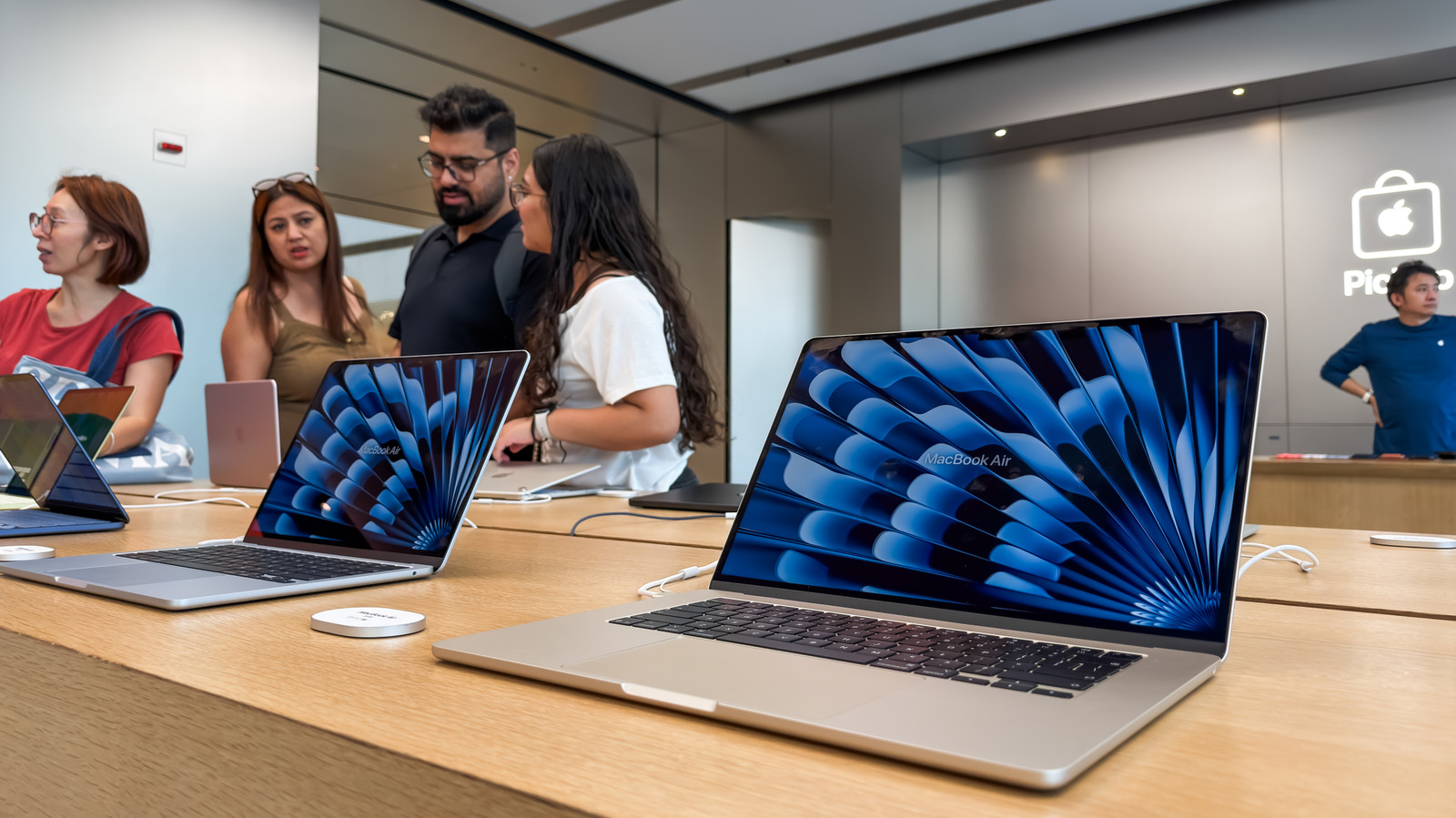
How long is a new MacBook actually supposed to last?
Key Points
How long is a new MacBook actually supposed to last? What usage and Apple’s support timeline means for your MacBook To set expectations right away: there's no single answer to how long you should expect a MacBook to last. A base MacBook Neo will likely run into bottlenecks before a fully decked-out MacBook Pro does.
How long is a new MacBook actually supposed to last?
What usage and Apple’s support timeline means for your MacBook
To set expectations right away: there's no single answer to how long you should expect a MacBook to last. A base MacBook Neo will likely run into bottlenecks before a fully decked-out MacBook Pro does. But what you do with the machine and how often you use it play a big part in the longevity of a laptop, too.
While there's no perfect timeline to show how long your new MacBook will work for, we do have many ways to estimate this. No matter if it's the machine's hardware becoming obsolete, a loss of support from Apple, or a culmination of little issues that take your MacBook out, Apple's laptop line has been around for long enough that we can get a good idea from the past. Given how expensive MacBooks are, this is an important factor to know whether you're considering a purchase or determining how much more life your current one has.
The primary factor: macOS support
The easiest way to determine when any MacBook should be replaced is when it's no longer eligible for OS updates. Every year when Apple releases a major macOS version, the hardware in some older laptops is too weak to support the upgrade or work with modern security features. In many cases, the MacBooks left behind are simply too old, as it's not feasible for any company to test every OS update on hundreds of machines.
Looking at historical trends provides a good idea of what to expect for today's MacBooks. macOS 27 Golden Gate, expected to arrive in fall 2026, is compatible with all Macs running Apple silicon chips. The oldest of these are the M1 MacBook Air and M1 MacBook Pro, released in 2020. In addition to the latest macOS release, Apple currently supports the prior two releases with security patches. At present, macOS 14 Sonoma is the oldest supported version, and the oldest MacBooks that Sonoma works with are 2018 models.
From this, we can estimate roughly eight years of first-party software life from most MacBooks: six years getting the latest macOS release, plus an additional two years of security patches. After that, your laptop is still usable, but it's on an unsupported operating system that may warrant upgrading. Depending on what programs you use, third-party app compatibility can become an issue once your MacBook is no longer supported. For instance, Photoshop won't run on anything older than macOS 14, which is the oldest version Apple currently supports.
Hardware bottlenecks
More practically, your MacBook will only last as long as the hardware inside does what you need it to. This depends greatly on what you use your laptop for. If you only do light browsing, document editing, and video calls, then even a base MacBook Neo should last you until it loses macOS support. But if you edit and render video all day, you have much more to gain from upgrading every few years.
Unfortunately, today's MacBooks are essentially impossible to upgrade yourself, so it's important to configure a new laptop with suitable specs when buying. Be aware of your needs for the processor, storage, and RAM, as they are where people usually run into problems. A weak processor means intensive tasks like rendering video become choppy; even heavy app multitasking can become an issue when your CPU is weaker. Having low RAM limits how much your system can do at once. This is the internal component most worth upgrading beyond the base to future-proof your laptop. Juggling low storage isn't fun, but cloud storage and external drives can help.
The battery is another area where you'll notice a MacBook's age. All modern MacBook batteries are rated for 1,000 cycles before they are considered consumed and should be replaced. If you often work away from a charger, you'll notice a huge drop in battery life past this mark.
How Apple defines what's outdated
Another angle in the MacBook lifespan question is when Apple drops support for the products, which is slightly different than macOS compatibility. Apple's page on post-warranty service names two categories: vintage and obsolete. The former applies to devices Apple stopped distributing more than five but less than seven years ago. Authorized Apple repair locations (including Apple Stores) will still work on vintage products as long as the parts are available. The newest vintage MacBook at the time of writing is the 2020 Intel MacBook Air.
In contrast, obsolete products are those Apple stopped selling more than seven years ago. The company no longer offers hardware support for these, except for some MacBook batteries. If you need a hardware fix for an obsolete MacBook, you'll have to visit a third-party repair shop, which may not use genuine Apple parts. For reference, the newest obsolete MacBooks are 2017 MacBook Pro models.
You don't need to jump ship as soon as your MacBook becomes vintage, but once it hits obsolete status, you should start thinking about an upgrade. By that time, you likely won't be able to update to the latest macOS anyway, and if your laptop's hardware fails or breaks, you won't have many repair options.
What about my current Mac?
Determining your current MacBook's lifespan is particularly interesting right now because Apple is completing the transition from Intel CPUs to Apple silicon. macOS 27 Golden Gate is the first version that lacks support for all Intel models. Thus, if you don't have at least an M1 chip in your MacBook, you should plan to upgrade soon, as even critical security support is ending in 2028. Apple silicon CPUs offer massive improvements over older Intel models, so you aren't getting the best experience on your current machine. Once all supported Macs are Apple silicon models, we might see longer compatibility periods than we have in the past.
Your daily experience on your MacBook is worth taking into account when considering an upgrade. If your laptop has become a huge hassle to use because the charging port is finicky, the keyboard sticks, you're constantly juggling free space, or you're facing other issues with overall usability, eventually you hit a point where it's time for an upgrade. You can deal with one or two minor annoyances, but you don't want to fight against your computer at every step. And when it's time, make sure you get the best MacBook for your needs.
[Image text:] MacBookAi
Pic