
Weather
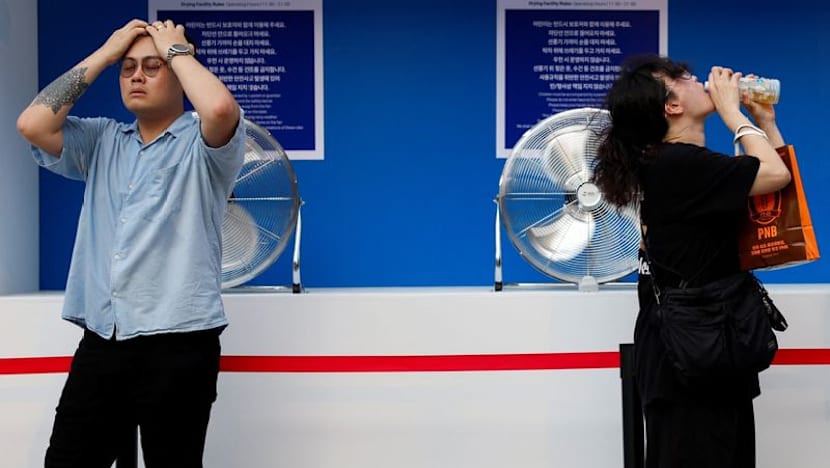
South Korea records its highest-ever temperature of 42.5°C
Key Points
South Korea records its highest-ever temperature of 42.5°C Much of the country has been placed under heat warnings, with many cities seeing temperatures climb into the high 30s. SEOUL: South Korea on Sunday (Aug 2) registered its highest temperature since records began more than a century ago, according to the state weather agency. The south-eastern city of Yangsan recorded a temperature of 42.5°C at 1.26pm, the Korea Meteorological Administration (KMA) said on its website.
South Korea records its highest-ever temperature of 42.5°C
Much of the country has been placed under heat warnings, with many cities seeing temperatures climb into the high 30s.
SEOUL: South Korea on Sunday (Aug 2) registered its highest temperature since records began more than a century ago, according to the state weather agency.
The south-eastern city of Yangsan recorded a temperature of 42.5°C at 1.26pm, the Korea Meteorological Administration (KMA) said on its website.
Yangsan has been the epicentre of the ongoing heatwave, with temperatures exceeding 40°C for a fifth consecutive day on Aug 2.
Much of South Korea has been placed under heat warnings, with many cities seeing temperatures climb into the high 30s.
Related:
On Aug 2, more than 20 localities were under emergency heatwave alerts - a new warning category introduced in 2026 to better address rising temperatures.
An emergency alert is issued when areas experiencing a heatwave are forecast to hit perceived temperatures of 38°C or an actual temperature of 39°C for one day.
KMA data shows the average annual number of heatwave days in the country has more than doubled to 19 over the past five years, from eight in the 1970s.
A heatwave day is defined as one with a maximum temperature of at least 33°C, while a tropical night is when the overnight low remains at 25°C or above.
Scientists warn that extreme weather events such as heatwaves are becoming more frequent and intense as a result of human-induced climate change.