
Health
Exposure to pesticides at work could raise risk of ALS, study finds
Key Points
Workplace pesticide exposure linked to motor neurone disease risk Thu 6 Aug 2026 at 7:37am In short: Scientists say there are links between pesticide exposure at work and the risk of developing fatal ALS. The disease is the most common form of motor neurone disease. Farmers say pesticides are critical for food production.
Workplace pesticide exposure linked to motor neurone disease risk
Thu 6 Aug 2026 at 7:37am
In short:
Scientists say there are links between pesticide exposure at work and the risk of developing fatal ALS.
The disease is the most common form of motor neurone disease.
Farmers say pesticides are critical for food production.
Workers exposed to pesticides could have up to a 70 per cent greater risk of developing the fatal motor neurone disease ALS, a study has found.
Researchers say global rates of amyotrophic lateral sclerosis (ALS) have increased along with the use of pesticides, as pressures on food systems grow.
The study comes after Australia's chemical regulator brought in new restrictions on the use of the herbicide paraquat, which has previously been linked to Parkinson's disease.
Men who have been exposed to pesticides at work may be twice as likely to develop the disease as those with no exposure, the scientists found after reviewing data relating to ALS.
There was no apparent increase in risk for women, according to the paper published in the international medical journal, the BMJ.
The authors said while the causes of ALS were not well understood, their results "add to the evidence suggesting that occupational exposure to pesticides may increase the risk of ALS".
Chemicals subject of lawsuits
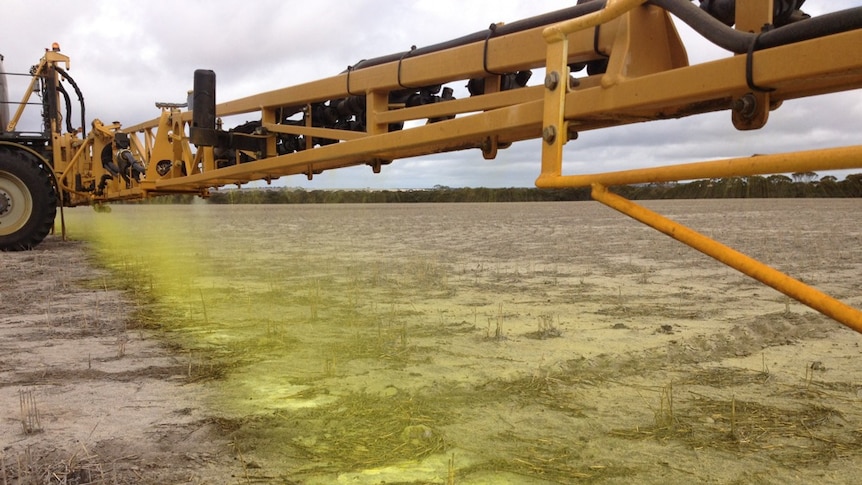
Pesticides are a range of chemical substances used to destroy weeds, insects and other organisms such as fungi, diseases or rodents.
Farming industries such as grains and horticulture are heavily reliant on synthetic pesticides such as paraquat and glyphosate, which have been subject to scrutiny in recent decades.
Tens of thousands of lawsuits alleging links between glyphosate and cancer have been filed in the United States, while Australia's Federal Court considered a class action against Bayer, which produces the glyphosate product Roundup.
While few law courts — including the Federal Court — have found the scientific links between chemical contact and disease to be proven, dozens of countries have banned or restricted the use of glyphosate.
In June, Australia's chemical regulator announced new restrictions to the use of the herbicide paraquat, which some neurologists have linked to Parkinson's disease.
The Australian Pesticides and Veterinary Medicines Authority said "the weight of evidence does not show that paraquat exposure through approved uses increases the risk of developing Parkinson's disease".
But the regulator imposed "significant" restrictions on the pesticide's use, including lower application rates, to safeguard the environment and wildlife.
In response, major paraquat manufacturer Syngenta announced it was pulling the herbicide from sale in Australia, blaming "regulatory constraints … and [an] increasingly expensive supply chain".
Pesticides critical for agriculture
Australia's peak agriculture group says many farmers who are reliant on chemical pesticides support further health research.
National Farmers' Federation president Hamish McIntyre said agricultural workers were conscious of the risks of working with chemicals.
But he said farm chemicals were critical to maintain food and fibre production.
"I've been working with pesticides since the early 1980s and we've been trained appropriately and we continue to improve our skills and training with pesticides," Mr McIntyre said.
"We support continued research into all areas around pesticide application and its effectiveness, and also how it's interacting with our environment."
'Not a eureka moment'
Associate professor Rachel Tan, a motor neurone disease specialist not involved in the study published in the BMJ, said the findings supported the case that workplace pesticide exposure was linked to a higher risk of ALS.
But she said further research was needed around which specific chemicals may be responsible.
"The overall evidence base is not entirely consistent, some studies are finding no clear association, some studies are finding that this association is more driven by men than women," Dr Tan said.
"Some of the most important questions that we will need to find out is what components of pesticides might increase the person's risk, whether longer exposure to pesticides increased that risk further."
RMIT professor of analytical chemistry, Oliver Jones, said people "don't need to panic" over the study's findings, which he said relied on previous studies and contained no new experimental data.
He said there was "unlikely" to be a single cause of motor neurone diseases.
"While reducing exposure to pesticides is a sensible general precaution, the paper is not a eureka moment about the risks of pesticide exposure," Dr Jones said.
ALS (ORG)
Australia (LOCATION)
the international medical journal (ORG)
BMJ (ORG)
the United States (LOCATION)
Federal Court (ORG)
Bayer (ORG)
Roundup (ORG)
the Federal Court (ORG)
The Australian Pesticides and Veterinary Medicines Authority (ORG)
Syngenta (ORG)
National Farmers' Federation (ORG)
Hamish (PERSON)