
UK News
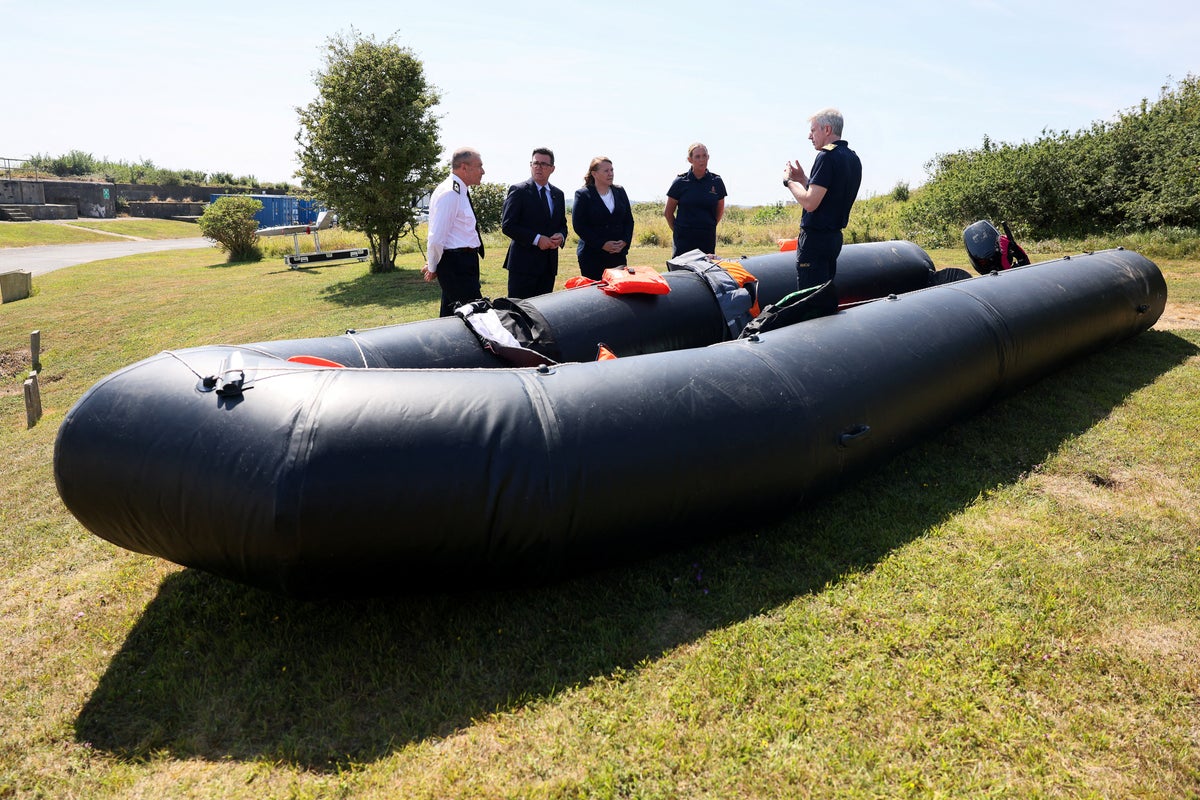
The rise of the ‘mega-dinghy’: Why Channel crossing tactics are changing
Key Points
The rise of the ‘mega-dinghy’: Why Channel crossing tactics are changing A staggering 230 people crossed the Channel in a single boat on Monday, eclipsing a record of 165 set just last month. Home affairs correspondent Holly Bancroft takes a closer look at the changing face of Channel crossings – and why it could be more dangerous for asylum seekers, and possibly even more lucrative for people-smugglers - Bookmark - CommentsGo to comments More than 200 migrants crossed the Channel in a...
The rise of the ‘mega-dinghy’: Why Channel crossing tactics are changing
A staggering 230 people crossed the Channel in a single boat on Monday, eclipsing a record of 165 set just last month. Home affairs correspondent Holly Bancroft takes a closer look at the changing face of Channel crossings – and why it could be more dangerous for asylum seekers, and possibly even more lucrative for people-smugglers
- Bookmark
- CommentsGo to comments
More than 200 migrants crossed the Channel in a single dinghy for the first time on Monday morning – a clear demonstration of the trend by people-smugglers to cram growing numbers of people onto the flimsy vessels.
With French authorities better resourced than ever before, people-smugglers in northern France are turning to larger vessels to pick up migrants off shore, where immigration officers find it harder to intervene.
Launches are also taking place further afield, and some even in Belgium, as criminals seek to evade French authorities.
The trend to larger vessels has been happening over recent years, but the last few months have seen record-breaking numbers of people crammed onto the dinghies.
In mid-July, a new record was set with 128 individuals on one single boat, breaking the previous record of 125 in September 2025.
This was quickly overtaken on 24 July when 165 migrants reached the UK on a “mega-dinghy” - estimated to be the same size as a standard bus. And now 230 people have been crammed onto one boat arriving on Monday.
Downing Street criticised “ruthless” people-smuggling gangs “prepared to risk human lives for profit” on Monday, after news broke of 230 people crossing the Channel on one boat.
Recent reported prices paid to people-smugglers for facilitating the journeys range from £513 per person to £1,350 – meaning one mega-dinghy journey could net criminals more than £300,000.
Small boat arrivals in 2026 have been down compared to the same period in 2025, with some 14,000 people making the journey so far. Data from previous years shows that while the numbers of migrants arriving has been on the rise, this has not meant more boats.
In 2025, 41,472 people arrived on 672 boats, compared to 36,816 people in 695 boats in 2024.
The dangerous numbers of people being put on larger vessels comes with new risks, such as people being crushed under the weight of other passengers. The first known death to have occurred this way, was in 2023 when Wudanese, a 24-year-old Eritrean woman was killed inside a dinghy.
Greater surveillance on the French beaches and restrictions on purchasing inflatable kayaks has also meant that it is harder to launch independent journeys across the Channel, with the numbers of these crossings dropping in 2024, according to analysis by immigration experts.
This has led migrants, who previously would have attempted solo crossings because they can’t afford to pay smugglers, to rush the dinghies at the last minute in an attempt to squeeze onto the already overcrowded vessels.
Police pressure has also led to the emergence of “taxi boats”, which pick up migrants from water just off shore, and are more dangerous than launching dinghies from beaches.
The UK agreed earlier this year to provide £662m to France in a three-year deal to boost the numbers of border force officers patrolling beaches and to fund special riot-trained police.
Small boats are thought to be manufactured in China, along with their accompanying outboard engines. Some are then transported through Turkey to Europe, with recent boats discovered at the border with Bulgaria.
However others have been known to be shipping directly from China to the UK.
Bulgarian customs officers have been working with the UK’s National Crime Agency to track consignments of small boat equipment being shipped through the country.
Boats destined for the Channel have been stopped at the Lesovo border crossing, an entry point into Bulgaria from Turkey.
In June, 20 boats were found in a lorry at the crossing, with the dinghies being shipped to Germany. Germany is a well-known storage location and staging post for the equipment needed by people-smugglers facilitating the Channel crossings, the NCA have said.
In another recent seizure by UK officers, at least 25 inflatable boats and 25 outboard engines were found at the Port of Felixstowe, in a shipment from China.
The rubber boats, which were ten-metres long, were in a shipping container. Although they had been shipped from China to the UK, investigators believe the boats were on their way to Hamburg, Germany to be unloaded.
Join our commenting forum
Join thought-provoking conversations, follow other Independent readers and see their replies
Comments