
Health
Unprecedented penguin vaccine program begins, but is it too late?
Key Points
Race begins to vaccinate Phillip Island's famous little penguin colony Victorian wildlife officers will spend the coming weeks catching and vaccinating penguins against the devastating strain of bird flu spreading through Australia, in a mammoth effort said to be unprecedented in its scale. It is a race to save a world-famous penguin colony from a worst-case prediction that the H5 bird flu strain could kill thousands of birds. But the time-critical program was dealt a significant blow over...
Race begins to vaccinate Phillip Island's famous little penguin colony
Victorian wildlife officers will spend the coming weeks catching and vaccinating penguins against the devastating strain of bird flu spreading through Australia, in a mammoth effort said to be unprecedented in its scale.
It is a race to save a world-famous penguin colony from a worst-case prediction that the H5 bird flu strain could kill thousands of birds.
But the time-critical program was dealt a significant blow over the weekend, with confirmation the virus had killed a little penguin days before the vaccine rollout got underway.
Here is what is at stake, and what else we know.
What is special about the penguins?
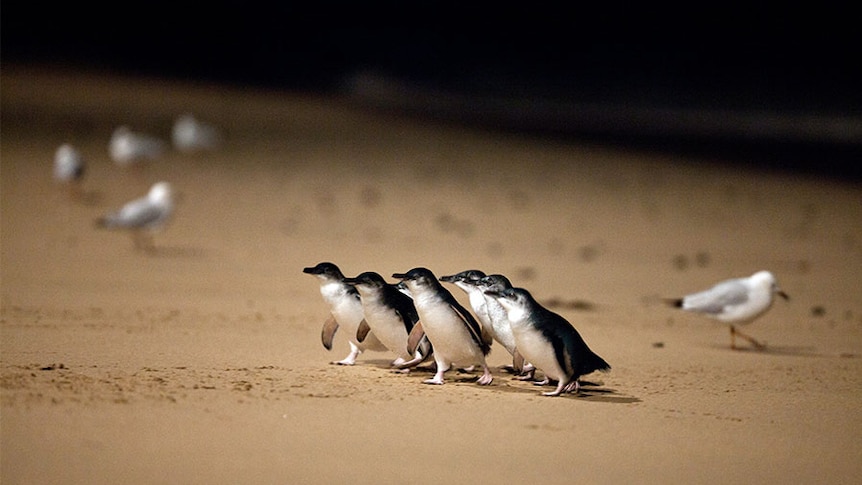
The world's smallest penguin species, little penguins have been the focus of significant conservation efforts that saw their Phillip Island colony grow to one of the largest in the world.
Today, the birds' nightly return to the island south-east of Melbourne is a major ecotourism drawcard for tourists from near and far.
More than 700,000 people travelled to watch the birds hobble up the coastline and to their burrows last year, with millions pumped into the economy.
A smaller colony in St Kilda stars in a similar show that regularly books out.
"The Phillip Island penguin parade is something like 40 per cent of our business turnover," private tour operator John Stapleton said.
"People come to Victoria especially to see the Phillip Island penguins."
A May 2025 research paper produced by the state government modelled the threat that H5N1 posed to the 40,000-bird Phillip Island colony, and the tourism economy that relies on it.
It warned that between 8,000 and 16,000 of the penguins could be killed under a worst-case scenario.
The penguins are at special risk of spreading bird flu because they nest and congregate in groups.
How do you vaccinate a penguin?
The vaccination program unveiled last week — and beginning today — is unique because of its focus on wild animals.
With a target of more than 5,000 vaccinated penguins across St Kilda and Phillip Island, Victorian officials say the scale is unprecedented for wildlife.
"One of the challenges of vaccinating wild animals is they need two doses," Victoria's chief biodiversity officer James Todd said on Sunday.
"In most cases, that's impractical and likely impossible for wild animals."
The number of staff participating will be limited in a bid to reduce biosecurity risks to humans and penguins alike.
The penguin parade birds being prioritised are used to human interaction and have predictable movement patterns, which should assist efforts.
"It's a night-time operation," Dr Todd said.
"As the penguins come to shore, they'll essentially be corralled into an area where they're administered with a first dose of the vaccine and also microchipped, and then they'll be able to proceed back to their nesting burrows."
Dr Todd said the nightly penguin parade shows would continue for the time being.
Is it too late?
Attention turned to the timing of the vaccine rollout after the virus, first detected in Victoria's south-west about two-and-a-half weeks ago, spread to Phillip Island and killed a little penguin.
The bird was found in a different part of the island to the penguin parade, but its death has nonetheless caused alarm.
That is partly because the May 2025 modelling warned vaccinating the Phillip Island colony after the virus was detected would most likely be too late, "because significant mortality is likely to occur before adequate vaccine coverage is achieved".
Jack Gough from the Invasive Species Council said Phillip Island was "probably the most-prepared place in Australia", but governments could have prepared more quickly for the arrival of H5N1, which has been decimating wildlife populations overseas.
"That's meant there has been a slow process of rollout, for example, of the vaccinations," he said.
"Really this is something we should've been doing a year ago."
The broader vaccine program was unveiled by the federal government last Monday following Australia's first detection in June, and state officials have said the vaccines were rolled out as quickly as possible once approvals were in place.
"The detection of H5 in a little penguin is obviously of concern, but the advice we're getting from experts is we should continue to proceed as quickly and safely as possible," Dr Todd said when asked about the May 2025 paper.
Experts have also warned that vaccination is not a silver bullet, but a targeted tool that can reduce the impact of the virus.
Mr Gough urged governments to invest more in mitigating other threats that could increase stress for affected animals.
What happens next?
Victoria's Premier Ben Carroll on Sunday said he had been in regular contact with wildlife officials and would meet them again today.
"We are fast-tracking our vaccination process," he said.
"This is very concerning, what's occurred with the penguins."
Wildlife officials are also considering whether to expand the vaccination program to vulnerable species in captivity.
Dr Todd warned more species were coming under threat as the virus continued to spread along Victoria's coastline and into the state's east.
"The experience with H5 overseas has seen large deaths, or proportions of deaths, in populations of seabirds and seals," he said.
"I think we can reasonably expect to see that there will be more wildlife losses and there may in fact be mortality events that the public is confronted with.
"It will be distressing for people having to deal with some of those situations."