
Science
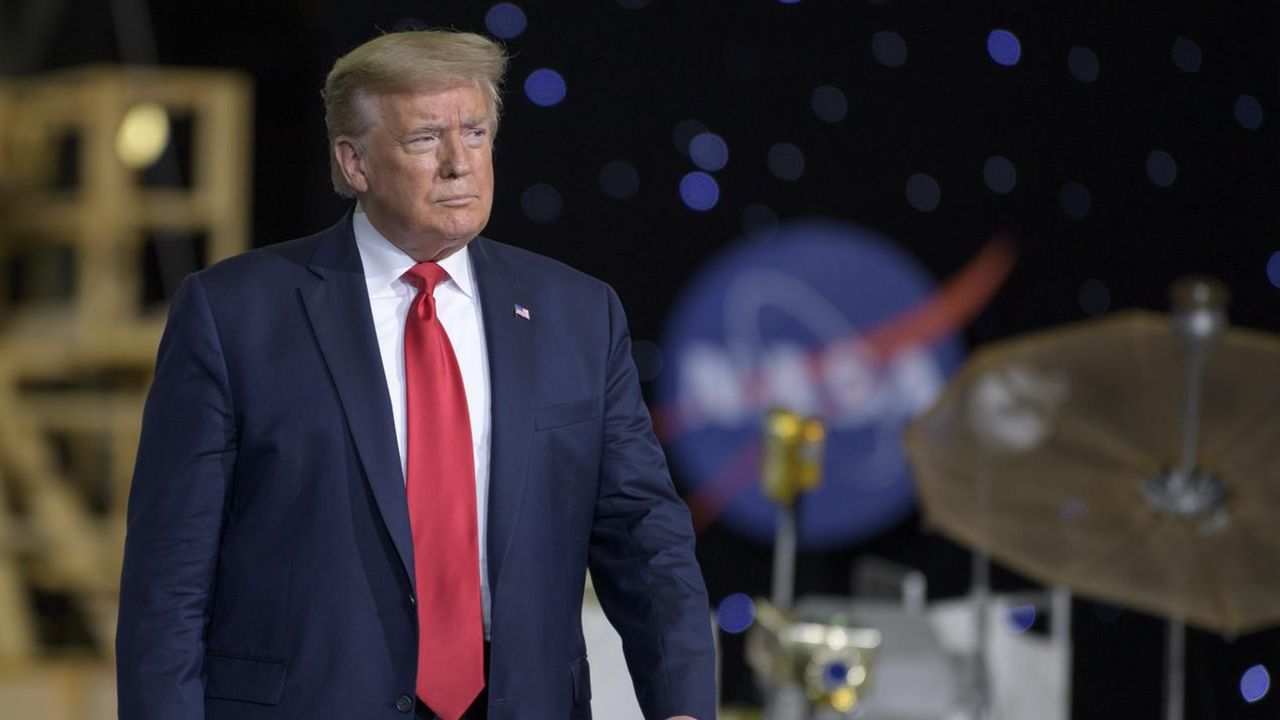
Trump signs new national space policy to enable 1,000 US rocket launches per year
Key Points
Trump signs new national space policy to enable 1,000 US rocket launches per year The new policy calls for a major expansion to U.S. space infrastructure. The United States is updating its approach to managing spaceflights that lift off and land within its borders, and aims to expand the nation's capabilities to support more than 1,000 rocket launches per year by 2030. President Donald Trump just signed a new National Space Transportation Policy that lays out priorities for commercial, civil...
Trump signs new national space policy to enable 1,000 US rocket launches per year
The new policy calls for a major expansion to U.S. space infrastructure.
The United States is updating its approach to managing spaceflights that lift off and land within its borders, and aims to expand the nation's capabilities to support more than 1,000 rocket launches per year by 2030.
President Donald Trump just signed a new National Space Transportation Policy that lays out priorities for commercial, civil and national security missions to orbit. The memorandum, published Thursday (Aug. 20), introduces the first update to the policy since 2013, and comes as commercial operators such as SpaceX have driven U.S. launch cadences up more than 800% since 2015.
The policy centers on expanding the infrastructure and procedures needed to support a much busier space industry. It directs federal agencies to identify and broaden commercial access to additional launch and reentry sites, and to incorporate spaceflight operations and critical launch corridors into air traffic control management and modernization efforts. The document gives agencies a deadline to get the work started.
Within 180 days of the memo's publication, NASA, the Department of Transportation (DOT) and the Department of Defense (DOD) are directed to begin identifying potential locations for future launch activities, as well as existing facilities that could be upgraded to further increase capacity. Agencies were also directed to establish leases and commercial investment opportunities to incentivize the co-development of new launch sites. The new properties can be funded, in part, by the same private entities that are lined up to use them.
Rocket landing sites are getting extra attention, with the president's policy designating agencies to identify federal lands available for development as independent launch vehicle reentry sites within the next 90 days. It also reinforces a framework to expedite environmental review processes first laid out in a commercial space executive order that Trump signed in August 2025, which sought to remove regulatory hurdles for commercial launches and spaceport construction.
SpaceX is already planning for launch rates far beyond the administration’s 2030 target. The company's Starship rocket, which remains in development, is poised to become the first fully reusable launch vehicle in history. In response to the new policy on Thursday, SpaceX CEO Elon Musk said his company is aiming to launch 30 or more Starship flights a day by 2030, which equates to more than 10,000 flights per year.
For government missions, the strategy also emphasizes having more than one ride to orbit, with NASA and DOD tasked with maintaining multiple launch options and developing adaptable interfaces that would allow payloads to move between rockets from varying providers.
Commercial launch services are already standard for most NASA and DOD missions, but the memorandum broadens that approach to transportation after reaching orbit, including spacecraft servicing and logistics. And the DOD is specifically being asked to investigate commercial options for in-space transportation and more diverse orbital delivery systems, like space planes.
Speed is particularly important for national security launches, and the new policy addresses one effort already ongoing by the Pentagon: achieving consistently dependable access to space within a 48-hour timeframe. The Space Force's Space Systems Command has been testing that capability through its Tactically Responsive Space program, launching the Victus Nox mission with Firefly Aerospace with 27 hours' notice in 2023 and the Victus Haze mission in June, which Rocket Lab launched within just 17 hours.
The White House highlighted some of the economic benefits beyond transportation that the policy is poised to impact in a fact sheet accompanying its publication. According to that fact sheet, the new policy will lead to advancements in things like in-space manufacturing and the development of pharmaceuticals and "high-value materials," while improvements to satellite positioning, navigation and timing services could support more precise agricultural operations and weather forecasts on Earth.
The transportation strategy also extends far beyond low Earth orbit. NASA is being asked to develop a commercial lunar logistics architecture capable of moving cargo and other payloads to and from the moon's surface. The agency is already engaged in these efforts through its Commercial Lunar Payload Services (CLPS) and Artemis programs, which share a complementary focus of returning astronauts to the lunar surface and building out the infrastructure necessary to sustain a lunar base, and is now tasked with extending that reach much farther.
Trump's policy directs the space agency to develop partnerships to facilitate commercial robotic access to Mars and, down the road, architectures capable of carrying astronauts to the Martian surface and back to Earth.
You must confirm your public display name before commenting
Please logout and then login again, you will then be prompted to enter your display name.
Josh Dinner is Space.com's Spaceflight Staff Writer. He is a writer and photographer with a passion for science and space exploration, and has been working the space beat since 2016. Josh has covered the evolution of NASA's Artemis program and humanity's return to the moon, commercial spaceflight partnerships and crewed missions from the Space Coast, NASA science missions and more. He also enjoys building 1:144-scale model rockets and spacecraft. Find some of Josh's launch photography on Instagram, and follow him on X, where he mostly posts in haiku.