
Politics
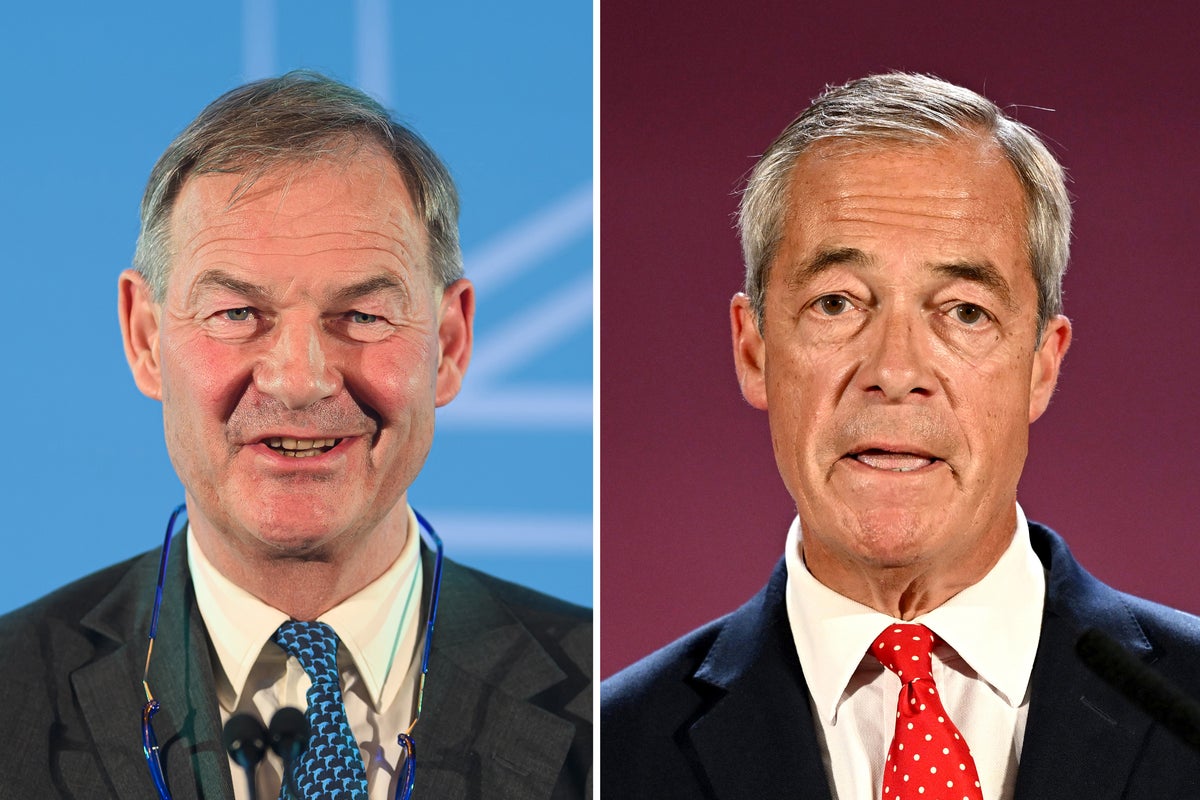
Restore Britain is being taken seriously by pollsters – and it’s bad news for Farage
Key Points
Restore Britain is being taken seriously by pollsters – and it’s bad news for Farage Political Editor David Maddox explains why the decision by pollsters to start specifically asking voters if they support Rupert Lowe’s Restore Britain is a highly significant development in the UK’s fragmented politics - Bookmark - CommentsGo to comments It was in autumn 2022 when political pollsters began officially including Reform UK in their surveys, alongside the main political parties. The significant...
Restore Britain is being taken seriously by pollsters – and it’s bad news for Farage
Political Editor David Maddox explains why the decision by pollsters to start specifically asking voters if they support Rupert Lowe’s Restore Britain is a highly significant development in the UK’s fragmented politics
- Bookmark
- CommentsGo to comments
It was in autumn 2022 when political pollsters began officially including Reform UK in their surveys, alongside the main political parties. The significant move meant Reform were added to the list of parties put in front of voters when asked who they support – throwing them into the same bracket as Labour, the Tories, Lib Dems and Greens.
At that point, Nigel Farage’s party were polling at around 5 to 7 per cent. What happened next is well-known. Reform UK had a surge in popularity and went on to secure 15 per cent in the general election. They then held a lead in the polls for the next 18 months, making Mr Farage a serious contender for Number 10.
Now, pollsters have made the same move with Rupert Lowe’s rightwing Restore Britain. It is a highly significant moment – and also very bad news for Mr Farage.
In its first poll including Mr Lowe’s party, More in Common survey found 4 per cent of people are already saying they would support Restore.
Not surprisingly some of that support has come from Reform who are down two points to 23 per cent now four points behind Labour unchanged on 27 per cent.
Reform’s vote share – probably not coincidently – is at its lowest point for 18 months.
The other two points for Restore appear to have come from the “other” or “don’t know” category, with the Tories also unchanged on 22 per cent.
While 4 per cent is about half what Mr Lowe claims is the real support for his party, it is nevertheless a sizeable share for a new party. But it also confirms what More in Common’s director Luke Tryl describes as “the fragmentation of the right” in British politics.
Fans of Monty Python’s Life of Brian may well be reminded of the scene involving the Judean People’s Front describing the People’s Front of Judea as “splitters!” And they would not be far wrong.
After all, Restore is made up of discontents from Reform. Mr Lowe himself was thrown out after a row with former Reform chairman Zia Yusuf went badly wrong and the police were even called. Others, like Reform’s former London mayor candidate Howard Cox, have also joined Restore.
It may be slightly alarming that 4 per cent of people support a party which wants to champion “white Britons” who the party defines as having both parents born in Britain which, of course, would exclude King Charles – a point Mr Lowe refused to be drawn on during a fractious BBC interview earlier this month.
But there is one supporter of Restore who is more important than anyone else – Elon Musk, the owner of X and world’s richest man.
Mr Musk rejected Mr Farage’s attempts to woo him in favour of Mr Lowe, partly because of Mr Farage’s refusal to take a more sympathetic stance on Tommy Robinson.
But the backing of the tech billionaire has meant there is a platform whose algorithms are helping out Restore.
Now we are seeing the effect in the polls.
Mr Tryl explained that the reason More in Common had decided to prompt for Restore was because of its recent strong performances in by-elections.
He said: “We often get questions about why we prompt for certain parties and not others in our polling. In deciding which parties to prompt for we broadly consider three things.”
These are, in the realm of elections, the actual performance, as well as local, parliamentary, regional and by-elections, including the strength of performance and the geographic or regional breadth and consistency.
It also looks at focus groups – how often new parties are raised without being prompted, the awareness of them and what they stand for and how widespread that awareness is.
And, in polls, how often parties are written about in the 'other please specify’ section.
He noted: “The party this question has most applied to recently is Restore Britain. Following Makerfield, Greater Manchester mayoral election and Norfolk PCC by-elections, where the party performed better than some parties, our research team reviewed Restore against those criteria again and concluded their support is currently at a threshold where we will prompt for the party in our weekly voting intention poll.”
In Makerfield, Restore got 6.8 per cent and in Manchester, the party secured 8.7 per cent of the vote, beating the Tories in both. In Norfolk, where Mr Lowe has his Great Yarmouth seat, Restore got 10.9 per cent.
All of this is eating into the Reform vote at a time when Mr Farage’s party is on the slide amid sleaze and questions over donations.
No wonder Mr Farage has now said he is open to a deal with Mr Lowe in an apparently desperate move to shore up the right.
Senior Reform figures, though, have claimed that Restore is a deliberate wrecking party as part of a conspiracy to stop Mr Farage becoming prime minister.
They point to a deal the Tories did with Mr Lowe – giving him one of their seats on the Public Accounts Committee in parliament – while senior Tory MP Esther McVey (once a Reform defection target) has played a role in Mr Lowe’s inquiry into grooming gangs.
With the Tories still a busted brand for many voters, particularly on the right, and growing questions about Mr Farage and Reform, particularly after the Clacton by-election farce, Restore appears to be a go-to point for unhappy voters – and mainly ones who once supported Reform.
Fragmentation on the right means Mr Farage’s hopes of winning an election, which were already dwindling, could disappear altogether.
He now appears to be looking at second place with the Tories edging closer. And, if he wants to win back Restore votes, it is likely his rhetoric on migrants will have to become even more extreme. But, with that, he will lose more voters from the centre.
One ally of Mr Farage has seen this before when the boot was on the other foot.
They told The Independent: “Restore has become for Reform what Ukip became for the Tories before the EU referendum. It is pulling away votes and ensuring Reform cannot win – just as Ukip did to the Tories when Nigel was leader.
“The Tories dealt with that threat by having a referendum on the EU but there is no easy way to deal with Restore – especially while Rupert is getting help from Elon.”
Join our commenting forum
Join thought-provoking conversations, follow other Independent readers and see their replies
Comments