
Science
More hidden adults emerging in Singapore as social workers take outreach online
Key Points
More hidden adults emerging in Singapore as social workers take outreach online Social service agencies are seeing more adults withdraw from society for months or even years. Reaching them can be difficult, prompting some social workers to venture into online games and platforms to make first contact. SINGAPORE: On screen, Ms Stephanie Tan navigates a long-haired wanderer through the sprawling world of Where Winds Meet, an action-adventure role-playing game.
More hidden adults emerging in Singapore as social workers take outreach online
Social service agencies are seeing more adults withdraw from society for months or even years. Reaching them can be difficult, prompting some social workers to venture into online games and platforms to make first contact.
SINGAPORE: On screen, Ms Stephanie Tan navigates a long-haired wanderer through the sprawling world of Where Winds Meet, an action-adventure role-playing game.
While completing quests and battling bosses, her character also stops to chat with other players.
But Ms Tan is not simply there to play.
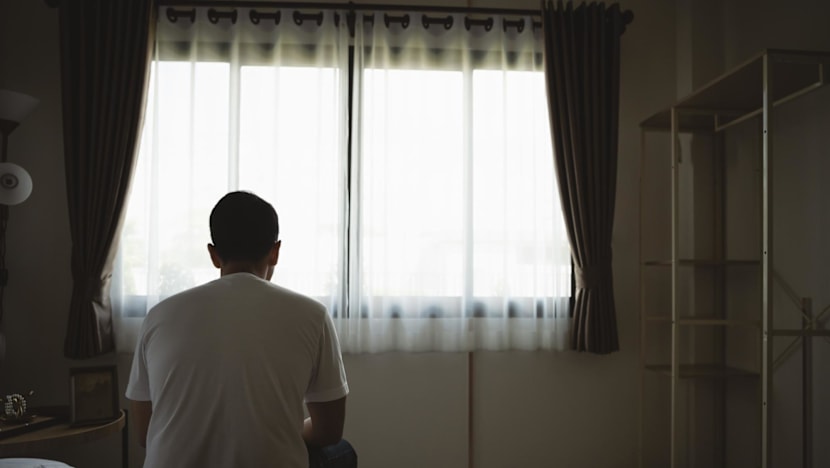
The social worker is trying to reach so-called “hidden adults” – people who have withdrawn from society for prolonged periods and may rarely leave their homes or even their rooms.
She builds rapport with them in online games – spaces where some feel most at ease.
Social service agencies say they are seeing more cases involving hidden adults in Singapore.
Fei Yue Community Services has helped about 40 cases to date, twice the roughly 20 cases it had encountered when it began working on the issue in 2024.
TOUCH Community Services received about 250 enquiries last year involving socially withdrawn individuals, more than double the number in 2022.
Reaching them, however, can be difficult. Many avoid face-to-face interaction and are more comfortable communicating online.
That has prompted organisations such as Youth Guidance Outreach Services (YGOS), where Ms Tan works, to venture into online games and platforms such as Twitch and Discord to find and engage them.
When Ms Tan and her team spot someone who may be socially withdrawn, they approach the person through direct messages and gradually build trust.
Sometimes, that eventually progresses to a voice chat or a meal outside. But the process can take a long time.
“At the end of the day, if they have anything they want to talk to us about, whether it's friendship problems or family problems, they can come to us and share,” she said.
MORE CASES OF HIDDEN ADULTS
For David (not his real name), depression and anxiety were major factors behind his withdrawal.
“The anxiety caused me to be fearful of attempting new things as I don't want to make any mistakes,” he told CNA through WhatsApp messages relayed by his social worker, Mr Bryan Wong from Fei Yue.
“When I am overwhelmed by such feelings, I end up choosing to do nothing (so as) to protect myself from making any wrong decisions. Choosing to be reclusive was the safest decision for me.”
Mr Wong has been supporting David since April last year. They meet in person once a month for counselling, giving David a reason to venture outdoors. He said the sessions have helped him manage his depression and anxiety better.
After two years of isolation, David made progress and found a job. But his anxiety persisted and he eventually quit a few months ago.
“I feel like I've went back to square one,” said David.
“I still don't know what I really want to do in life and I feel like I have no purpose. It takes a lot out of me to find some things to do, like pursue my interests or look for other jobs, as I often feel a lack of motivation.”
Still, David believes it helps for socially withdrawn adults to know they are not alone. He suggested that programmes built around their interests and skills could give them a reason to venture outside again.
WHAT MAKES A HIDDEN ADULT?
There is no clinical definition of a hidden adult, although prolonged withdrawal from society of between three to six months is a key characteristic, experts say.
Those experiencing severe social withdrawal also exist on a spectrum – some may leave home occasionally for essential errands such as buying groceries, while others rarely leave their rooms and rely on family members to leave meals outside their doors.
At the most extreme end, some become almost completely isolated from the outside world.
Counsellors say they have encountered those who cope by binge eating, gaming or doom scrolling for hours. Some may also self-harm.
“Many of these hidden youths or hidden adults have associated psychiatric conditions like social anxiety (and) depression,” said Professor John Wong, a senior consultant at the National University Hospital's department of psychological medicine.
“Some of them may have autistic traits, and all these tend to drive the individual to be more comfortable to be socially withdrawn.”
Technology can complicate the picture. Online games and communities can provide important social connections, but experts say they can also make it easier for someone to remain physically withdrawn.
WHEN HIDDEN YOUTHS GROW UP
Experts warn that prolonged withdrawal during adolescence and young adulthood can have lasting consequences.
Prof Wong said youth is a critical period when people move towards independence, receive education or vocational training and begin their careers.
“If they miss some of these milestones, it may impact their development in education, professional career or vocational skill. Once they miss this important window, it is difficult for them to catch up,” he said.
Social withdrawal can also deprive young people of opportunities to build relationships with their peers and the wider community, potentially affecting their prospects for employment, relationships and family life, Prof Wong added.
Some hidden adults are hidden youths who have grown older without their underlying problems addressed.
Adult cases can be particularly difficult to detect because they are no longer within systems such as schools, where prolonged absences or behavioural changes may be more easily noticed.
Dr Patrick Lin, an associate professor of psychology at James Cook University’s Singapore campus, said some hidden adults may also mask their withdrawal.
“Sometimes we are seeing them out there, but they might not be seen as socially withdrawn,” he said.
“They are at a high tendency of wanting to withdraw, but because society needs them to work, their parents want them to work or study, we will have them out there and we won’t know.”
The triggers can also differ according to age.
Youths may withdraw because of school stress or family conflict, while adults may struggle with workplace burnout, divorce, career setbacks, unresolved childhood trauma or a sense that they have failed to meet society’s expectations.
EARLY INTERVENTION CRUCIAL
Experts said men may be particularly susceptible to social withdrawal, in part because those who experience trauma may be less likely to seek help.
Dr Lin also pointed to expectations traditionally placed on men in Asian societies to provide for their families.
“A lot of time it’s because in Asian societies … males are supposed to be helping the family more, and parents do (have) more expectations,” he said. “And perhaps of that stress, of that expectation … if they feel that they cannot meet that expectation, they tend to just withdraw.”
Without intervention, the repercussions can stretch into later life.
Adults who remain socially isolated may eventually become isolated seniors, while ageing parents can face mounting pressure as they continue caring for their adult children.
There could also be broader consequences for Singapore's workforce.
“This is an issue that we all need to address because these are people living in our society and they make up the fabric of the society,” said Mr Sean Ravie, centre manager of YGOS’ Jurong branch.
“So, if there are weak points, then it's going to be harder for all of us to grow together. We (must) all come together to support these individuals and progress together as a country.”
GOING WHERE HIDDEN ADULTS ARE
One of the biggest challenges for social workers is simply finding hidden adults.
Agencies rely heavily on referrals from families and friends, but some are experimenting with ways to reach people in the spaces where they already spend their time.
YGOS, for instance, has changed its outreach efforts considerably over the years.
Before the COVID-19 pandemic, the organisation operated a retrofitted van as a mobile centre, travelling to places where young people congregated at night.
With fewer young people hanging out on the streets after the pandemic, much of that outreach has shifted to social media, online multiplayer games and chat platforms.
YGOS also provides families with an invitation to “Sanctum”, a private Discord group where participants can play games, chat and make friends in a setting that may feel less intimidating than meeting people face to face.
Once a referred individual joins, they complete a short screening survey that helps social workers assess their level of isolation and willingness to engage.
Questions explore their views on work and school, whether they find meaning in employment and whether they have difficulties interacting with other people.
PARENTS ON THE OTHER SIDE OF THE DOOR
For Jake (not his real name), years of bullying contributed to his retreat from society. The trauma disrupted his education and ambitions, while video games became an escape.
“There was that sense of anger. It was small at first, but it sort of grew over time, until it reached a boiling point,” he said.
At one point, he lashed out at his parents before spiralling further into isolation.
But his parents continued supporting him, including when he decided to give his studies another try in his 30s.
It proved to be a turning point. Jake now spends much less time gaming and more time studying.
“My family never gave up on me. As a result, my core beliefs weren't completely shattered and because of that, I felt the need to continue on,” he said.
Families can be a crucial link between hidden adults and the outside world, social workers said. But caregivers themselves can struggle with how best to help – and may need support of their own.
Fei Yue conducted support sessions for about 15 families, where parents learn about social withdrawal and how to communicate without putting additional pressure on their children.
“They’ll learn not to ask too many questions because often, asking questions can cause stress or pressure on the child to need to reply,” said Mr Benjamin Yeo, a lead social worker at Fei Yue.
“It's not about getting them out of the house, but about showing that they are available, they care about their well-being and respect their boundaries.”
A LONG ROAD OUT OF ISOLATION
Parents may also inadvertently reinforce their child's withdrawal while trying to care for them, said experts.
Ms Andrea Chan, head of counselling and psychological services at TOUCH, described one case involving a young man who became discouraged after several job interviews damaged his confidence.
Eventually, he stopped sending out resumes and spent his days gaming at home, while his family continued providing for his daily needs.
“Oftentimes, parents feel very helpless, but they feel they cannot be heartless,” said Ms Chan.
‘But when we continue feeding them … that actually enables them as … (they’re) not spending a cent, (they’re) being fed, there’s no need (for them) to do anything.”
Continuing to meet all of a withdrawn person's needs can remove reasons for them to leave the house or become more independent, she added.
Support groups can also reassure caregivers that they are not struggling alone.
“Very often, parents find relief after knowing that what they are going through is not unique and that other families are going through similar things,” said Mr Yeo.
One father, who wanted to be known only as Mr Tan, knows how difficult it can be – his 24-year-old son began withdrawing after completing his A-levels and National Service.
What began as university burnout developed into anxiety. He eventually dropped out and isolated himself in his bedroom.
“Every time we wanted to engage him, we had to knock on his door and wait for him to reply. (He) was very non-responsive. We were very worried, anxious about all this. We didn’t know what his future is going to be like,” said Mr Tan.
“His room would be very messy because he rarely cleaned it. There would be leftover food, empty packaging and other things left in his room. He also wouldn't shower very often.”
For a long time, the family struggled alone before approaching Fei Yue for help.
Social workers suggested an unexpected solution – adopting a pet.
“We got a dog and then now our son is taking care of the dog and it's kind of regulated his lifestyle already,” said Mr Tan.
“He’s waking up early. Nowadays his door is open because the dog wants to go into his room, and (with) the whole family taking care of the dog, it really helps.”
The family also began doing more together – eating meals, going for walks, visiting different places and playing games.
“As parents, no matter what, we still love him. We wish him all the best that he can walk out his room, of the house and get back into society,” said Mr Tan.
Social service agencies say the process takes time. When hidden adults are ready to step outside, social workers can help them prepare for interviews and explore job opportunities.
HOW MANY HIDDEN ADULTS ARE THERE?
Despite growing attention, there is no national study establishing how many hidden adults there are in Singapore.
That leaves social service agencies without a clear picture of the scale of the phenomenon.
Mr Yeo said there is currently no dedicated funding for work involving hidden adults and their caregivers. Fei Yue said funding would allow it to recruit social workers and develop programmes to engage hidden adults and help reintegrate them into society.
Other countries have attempted to quantify severe social withdrawal.
In Japan, where the phenomenon is often associated with the term hikikomori, about 1.4 million people have been estimated to be living in social isolation.
In South Korea, about 5 per cent of young adults are estimated to be in deep social isolation.
In Italy, about 100,000 cases have been documented and China has seen a trend of “lying flat”, where people live off parents and withdraw from society.
In Singapore, however, the true number remains unknown.
Social workers expect reported cases to continue rising as awareness grows.
They also stress that families should not wait until someone has been isolated for months before seeking advice.
Early intervention can be crucial, experts said, particularly because the causes of withdrawal are rarely straightforward.
For YGOS' Ms Tan, reaching hidden adults means meeting them where they are – even if that means spending hours inside an online game.
The aim is not to immediately persuade them to leave their homes, but to build enough trust for them to eventually take that step themselves.
“It's about being consistent in journeying with them,” she said.
“Our end goal is to be able to bring them out of isolation, for them to adapt in this society and find a job to support themselves. It’s about showing them that a safe space can be found in the physical world.”