
Health
'Heard voices': 2 workers make it out alive 9 days after Nepal floods hit tunnel
Key Points
Rescuers in Nepal pulled two workers alive from a tunnel at the Trishuli 3A hydropower project on Friday, nine days after devastating floods and landslides trapped hundreds of workers inside tunnels across several hydropower sites. The rescue brought a dramatic breakthrough to a desperate operation, but hopes of finding more survivors rose further after rescuers heard voices coming from inside the tunnel, according to Bipin Regmi, police chief in the flood-hit district of Nuwakot. “Rescuers...
Rescuers in Nepal pulled two workers alive from a tunnel at the Trishuli 3A hydropower project on Friday, nine days after devastating floods and landslides trapped hundreds of workers inside tunnels across several hydropower sites.
The rescue brought a dramatic breakthrough to a desperate operation, but hopes of finding more survivors rose further after rescuers heard voices coming from inside the tunnel, according to Bipin Regmi, police chief in the flood-hit district of Nuwakot.
“Rescuers heard voices,” Regmi told CNN, adding that a medical team was on its way to the site.
The two workers were pulled out in quick succession from inside the Trishuli 3A plant, where rescuers have been boring into a tunnel in an effort to reach 42 workers who had remained unaccounted for.
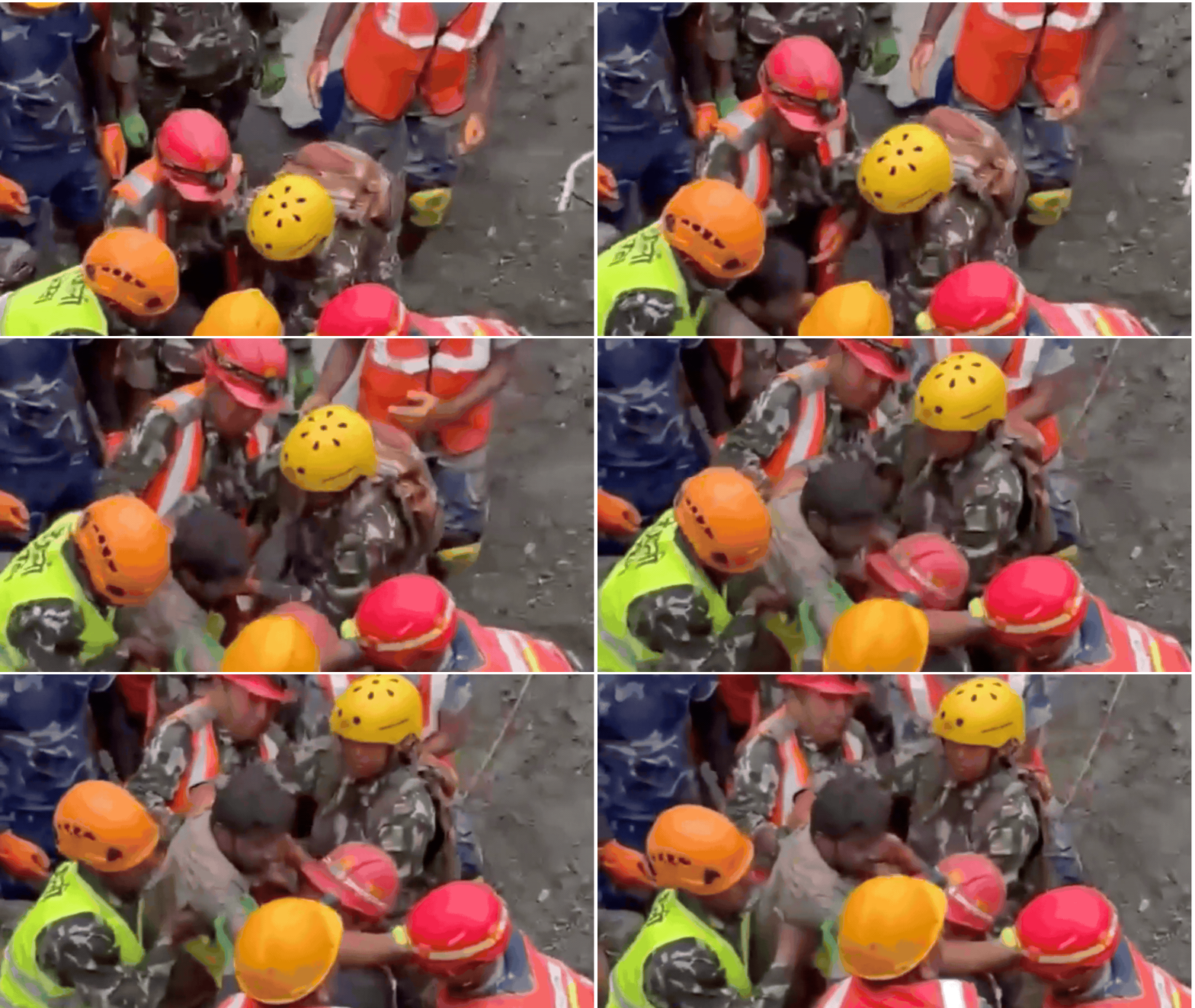
Video showed about a dozen rescuers pulling one man through a small opening in the ground and clapping as he emerged. The mud-covered worker was then carried away on a rescuer’s shoulder, while a medical team checked on him.
Nepal Army spokesperson Brig. Gen. Raja Ram Basnet confirmed the first rescue during the operation. Nepal lawmaker Shri Ram Neupane later said a second worker had also been rescued alive.
The tunnel leading to the underground powerhouse is more than 4 kilometres (2.5 miles) long.
Dozens of workers were inside when the catastrophic flooding hit the area.
About 900 workers are missing from 12 hydropower projects in Nepal, according to local authorities, with roughly 500 believed to be trapped inside tunnels. Among those unaccounted for are workers from China, South Korea and India.
The rescue effort has continued under treacherous conditions since Aug. 26, when massive floods and landslides tore through parts of Nepal, likely after a glacier collapse. At least 1,259 people have been killed and more than 5,000 remain missing, according to Nepal’s disaster management agency.
On the Tibet side of the border, China said late Wednesday that 21 people had been killed and 541 were missing.
The chances of finding survivors have become increasingly uncertain with each passing day. Indian Army Colonel Parikshit Mehra, who was involved in the rescue operation at the Trishuli 3A site, said earlier this week that the first 48 hours are the most crucial in a tunnel rescue.
“People who are stuck tend to panic much more than when they are outside in the open,” Mehra told CNN’s Anderson Cooper.
“Getting stuck in a tunnel you can’t see anything. Generally if you stay in the dark you get disoriented in about 24-25 hours,” he said.
“Beyond that, (after) 48 hours, you start hallucinating. And then I think from there on it’s always a fight.”
Yet, even as the operation entered its ninth day, Mehra offered a note of hope saying, “There have been miracles.”