
Health
Zika virus mosquitos found breeding in Britain. What doctors say about the risk
Key Points
Zika virus mosquitos found breeding in Britain. What doctors say about the risk The invasive mosquito species aedes aegypti was found in East London - Bookmark - CommentsGo to comments An invasive species of mosquito known to transmit diseases such as dengue and Zika virus has been discovered breeding in the UK. The UK Health Security Agency (UKHSA) has increased surveillance and trapping efforts after adult insects and larvae were found at residential properties in east London.
Zika virus mosquitos found breeding in Britain. What doctors say about the risk
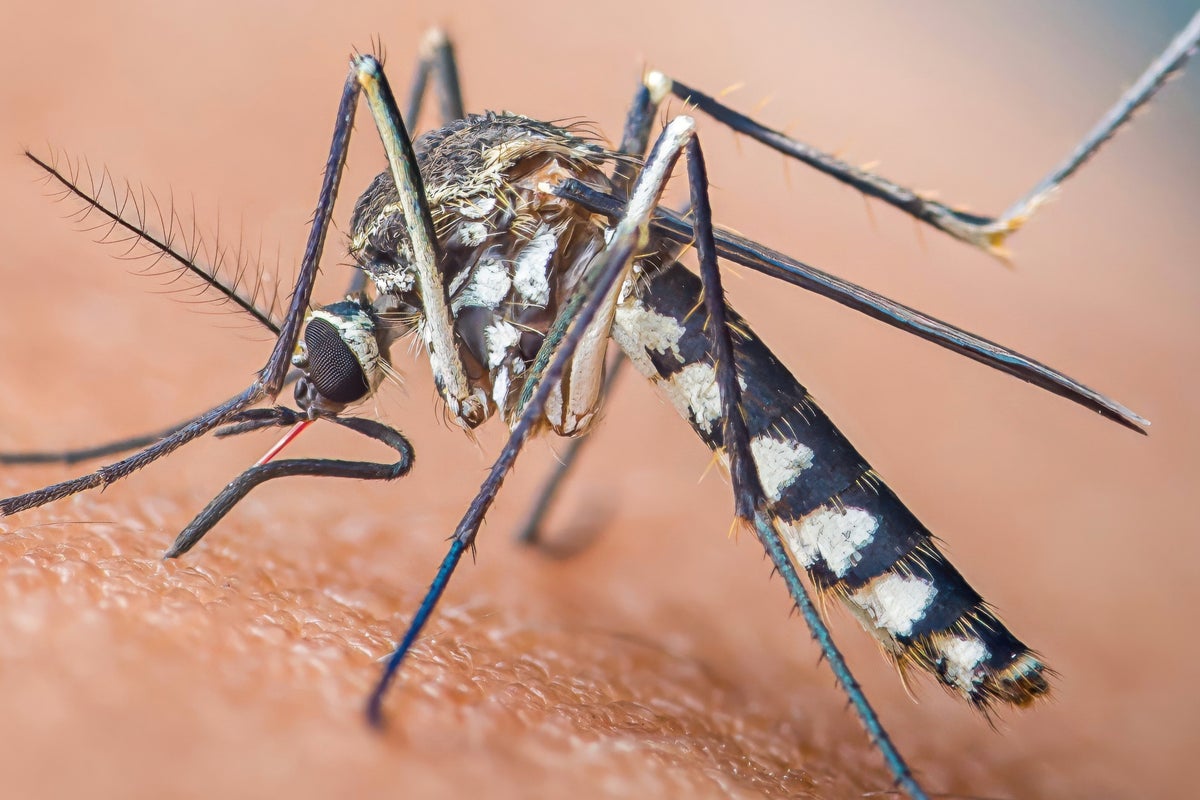
The invasive mosquito species aedes aegypti was found in East London
- Bookmark
- CommentsGo to comments
An invasive species of mosquito known to transmit diseases such as dengue and Zika virus has been discovered breeding in the UK.
The UK Health Security Agency (UKHSA) has increased surveillance and trapping efforts after adult insects and larvae were found at residential properties in east London.
It’s too cold in the UK for aedes aegypti mosquitoes to establish long-term and health officials have said the risk to the public remains low and control measures have now been put in place to destroy the larvae.
But this species of mosquito can transmit zika, chikungunya and dengue, which are found mainly in tropical and subtropical parts of the world.
While some cases of these viruses are mild, some people are hospitalised following infections.
What is Zika virus?
Zika virus is usually caught by being bitten by an infected mosquito.
It can cause a high temperature, headache, red eyes, swollen joints and muscle pain, lower back pain and a rash.
In most cases the virus causes mild symptoms that go away after rest and are not harmful, but it can cause problems in pregnant women.
The NHS warns that Zika virus during pregnancy can cause baby loss, premature birth, still birth and problems with the baby’s brain, hearing and eyesight.
Dengue, also spread through mosquitos, can cause a high temperature, a rash, swollen glands, joint pain and headaches. Some people get more severe symptoms of dengue a few days after they first start feeling ill, but this is rare, the NHS warns.
Chikungunya can similarly cause muscle pain, headache, nausea, fatigue and a rash. Most people recover within a few days or weeks.
Are people in the UK at risk?
The risk of Zika, chikungunya and dengue to the UK population remains very low, experts reassure.
One reason these mosquitos are unlikely to cause any issues is because they primarily survive in tropical regions.
“Despite the warm conditions over the summer, it would require a very large number of these mosquitoes and sustained warm temperatures over a long period for these viruses to be efficiently transmitted,” Heather Ferguson, Professor of Infectious Disease Ecology, University of Glasgow, and lead of the Mosquito Scotland project, said.
She added that these mosquitoes would also need to bite people who had the diseases first to transmit the viruses, which she explained would have to have been acquired outside of the UK.
“It is not impossible for people to be infected with these diseases overseas and carry with them on their return - numerous imported Dengue cases are reported in the UK every year - the chance of these people being bitten by a temporarily-present invasive mosquito, at the right time, and under the right environmental conditions, to start a transmission cycle is very low,” Professor Ferguson added.
Dr David Weetman, Reader in Vector Biology, Liverpool of Tropical Medicine, explained only a very small portion of mosquitoes are infected with these diseases.
“To our knowledge there is not a significant reservoir of any of these diseases in human populations outside of southern Europe, with Italy and coastal southern France the worst impacted, mainly by chikungunya,” he said.
“Only a tiny proportion of mosquitoes are infected with these viral diseases so the statistical probability of one of the very few found carrying an infective viral dose is very, very low indeed.”
Should someone who has recently been bitten by a mosquito be worried?
If you have recently been bitten by a mosquito experts stress not to worry, explaining that the risk of getting a tropical disease from a bite in the UK is very low.
“People should also keep in mind that not all mosquitoes are 'invasive', or a source of disease. We have at least 20 different mosquito species that are native to the UK, that can be found as far north as Shetland. These mosquitoes have been in the UK for longer than people have, and are a natural part of our ecosystems,” Professor Ferguson said.
Will climate change bring more mosquito species?
Aedes aegypti mosquitoes are known to “hitchhike” in vehicles, baggage and imported plants and can survive in suitable climates. But this is the first time they have been found to be breeding.
Experts have warned that climate change and global movement could mean more invasive mosquito species are introduced to the UK.
Dr Steven White, Theoretical Ecologist, Population Ecology, UK Centre for Ecology & Hydrology (UKCEH), said: “One of the most worrying invasive mosquitoes is the related species, the so-called ‘tiger mosquito’, Aedes albopictus. This species is spreading throughout continental Europe and has caused recent novel outbreaks of dengue and chikungunya in European countries, such as France and Italy.
“This species is more cold-tolerant compared to the species found in London and is likely to try to establish in the UK in the near future.”
Join our commenting forum
Join thought-provoking conversations, follow other Independent readers and see their replies
Comments