
Science
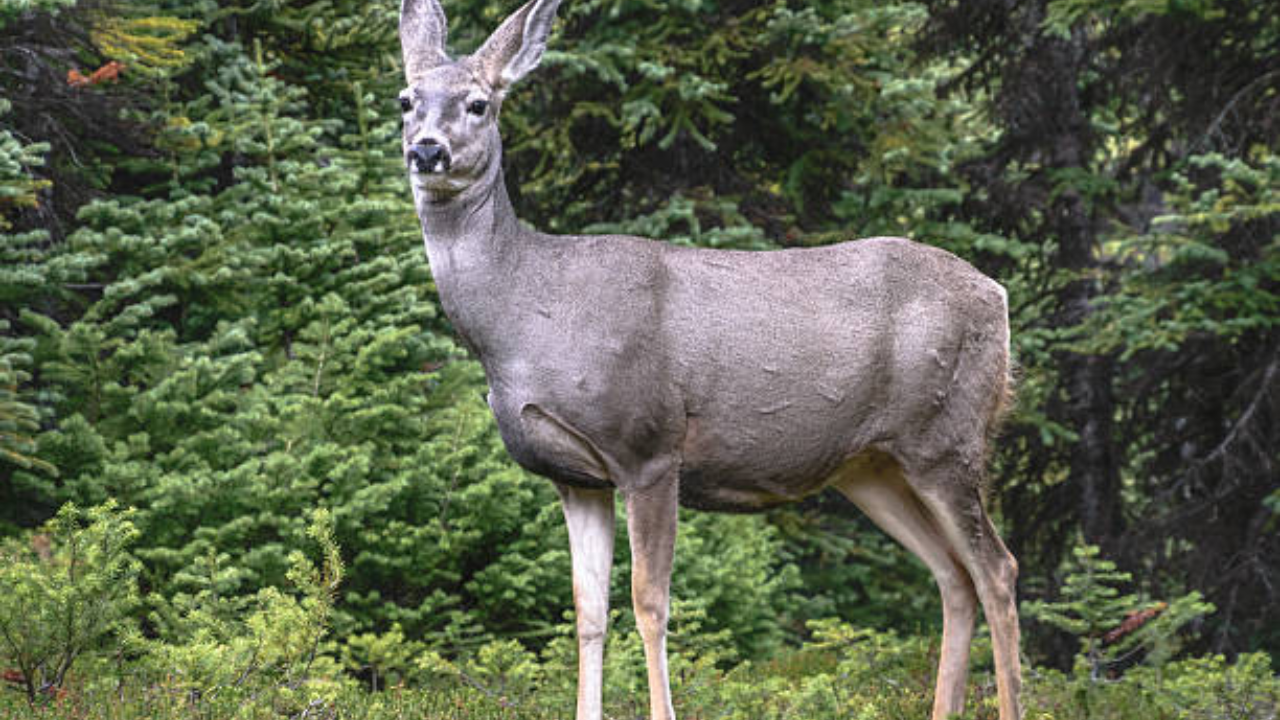
Judge orders cull of 2,500 mule deer introduced to Catalina Island in 1920s
Key Points
In the late 1920s, mule deer were brought to California's Santa Catalina Island, but years later they have grown into an ecological problem that no one is able to contain. Twenty-two animals were brought to the island between 1928 and 1933 and by 1947, the population was about 2,500. Originally native to mainland Southern California, the deer had been introduced as game animals and with no established population of large predators on Catalina the introduced herd expanded rapidly, threatening...
In the late 1920s, mule deer were brought to California's Santa Catalina Island, but years later they have grown into an ecological problem that no one is able to contain. Twenty-two animals were brought to the island between 1928 and 1933 and by 1947, the population was about 2,500. Originally native to mainland Southern California, the deer had been introduced as game animals and with no established population of large predators on Catalina the introduced herd expanded rapidly, threatening the native plants. Now, according to a report by the New York Post, nearly all of the 2,000 mule deer are set to be killed under a controversial plan designed to save the plants and make the wildfire-prone day-trip destination less combustible.
An ecological problem
Catalina's native vegetation had evolved under conditions that did not include large populations of browsing deer, and as the herd spread across the island, this distinction mattered. A 2016 study published in Ecology and Evolution reports on one species in particular: Crocanthemum greenei, more commonly known as island rush-rose. The plant is endemic to the Channel Islands and occurs on Catalina. Researchers wanted to determine whether browsing by introduced mule deer was affecting the plant's ability to grow and reproduce.
The researchers found that plants that were protected from deer browsing were larger and had greater seed-production success than plants exposed to deer. In the study, heavily browsed plants could fail to produce seeds, while non-browsed plants inside the exclosures produced seeds. That result gave researchers a direct way to connect deer browsing with a specific reproductive problem in an island-endemic plant, while it also showed why population control mattered beyond the number of deer seen across the island.
Officials and island managers were considering ways to reduce the population by the late 1940s. One proposal involved capturing the deer and moving them to the mainland, but that effort did not remove the herd: only 150 deer were trapped, and 110 survived capture and transportation, according to historical records summarised by the Catalina Island Conservancy. A hunting season began in 1949, with 477 deer taken that season, and the state had hoped the hunt would remove substantially more animals. The approach continued for decades, but it did not eliminate the population.
The deer may be a beloved fixture around Catalina, including in downtown Avalon, but scientists say their appetite for native shrubs has helped invasive grasses take over parts of the island. Those grasses ignite more easily and allow flames to spread faster than the native vegetation they replace, according to Anna L. Jacobsen, a plant biologist at California State University, Bakersfield.
Removal over population control
Conservation managers were dealing with a different question by 2021: was maintaining a smaller deer herd enough to protect Catalina’s native ecosystem? The Catalina Island Conservancy has used fencing, hunting and other management measures, but deer have continued to browse native vegetation.
On Tuesday, a Los Angeles County judge tentatively rejected opponents’ attempt to block the massacre, clearing the way for the Catalina Island Conservancy to begin culling the herd. The nonprofit, which controls 88% of the island, has plans to wipe out most of the deer population over five years. An estimated 200 animals are expected to be hunted with rifles over the next two months.
The California Department of Fish and Wildlife approved the conservancy’s plan in January, allowing it to move forward with the killings.
Only a small group of deer living near Avalon will be spared and sterilised. Island residents will also be allowed one final hunting season from late October through mid-December. The deer meat will be donated to local tribal groups or used as part of the California condor recovery programs.
Catalina Island (LOCATION)
California (LOCATION)
Santa Catalina Island (LOCATION)
Southern California (LOCATION)
Catalina (ORG)
the New York Post (ORG)
Ecology (ORG)
Crocanthemum (PERSON)
the Channel Islands (LOCATION)
the Catalina Island Conservancy (ORG)
Avalon (ORG)
Anna L. Jacobsen (PERSON)
California State University (ORG)
Bakersfield (LOCATION)
The Catalina Island Conservan (ORG)