
Weather
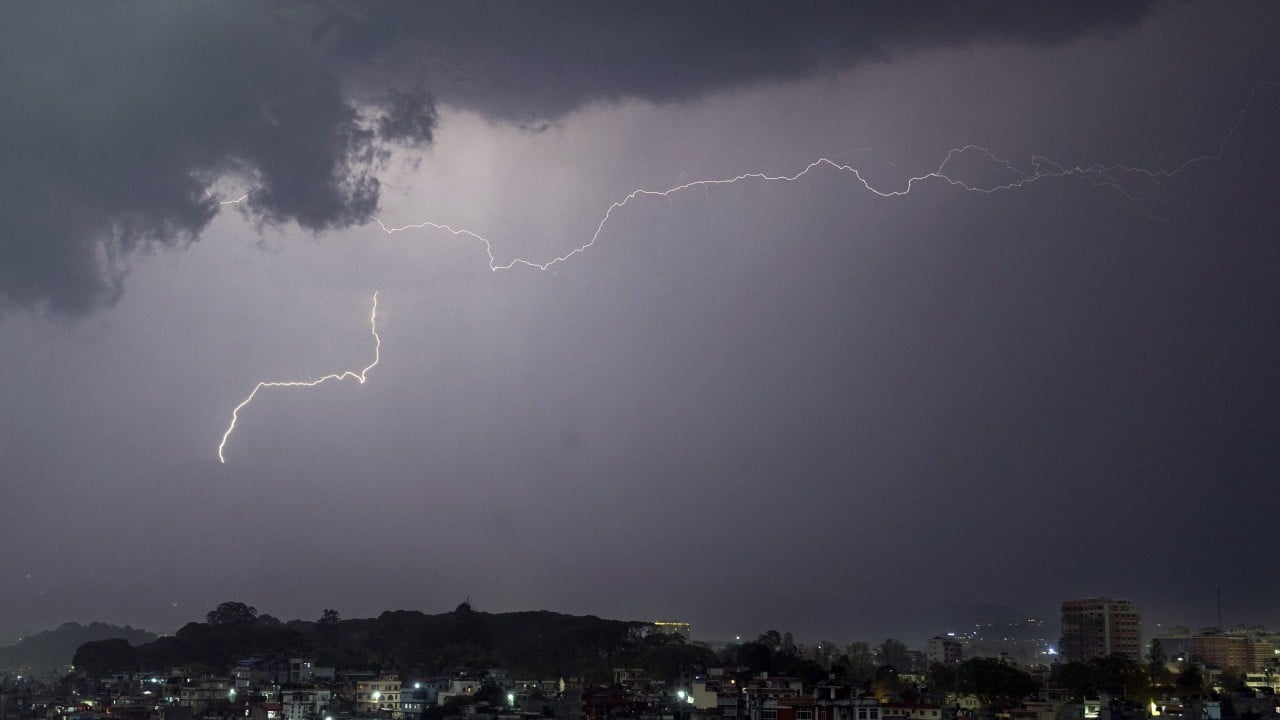
World’s most powerful lightning-chasing satellite joins China-Nepal flood relief efforts
Key Points
World’s most powerful lightning-chasing satellite joins China-Nepal flood relief efforts The Fengyun-4C’s storm-tracking abilities could provide vital early warnings about extreme weather events during the rescue operation China is using the world’s most powerful geostationary weather satellite to track severe thunderstorms over Nepal and deliver real-time intelligence as the two countries continue search and rescue operations following last month’s devastating glacier collapse. The...
World’s most powerful lightning-chasing satellite joins China-Nepal flood relief efforts
The Fengyun-4C’s storm-tracking abilities could provide vital early warnings about extreme weather events during the rescue operation
China is using the world’s most powerful geostationary weather satellite to track severe thunderstorms over Nepal and deliver real-time intelligence as the two countries continue search and rescue operations following last month’s devastating glacier collapse.
The Fengyun‑4C satellite – launched in December 2025 and now positioned 36,000km (22,000 miles) above the equator – carries a Lightning Mapping Imager (LMI) that captures 500 frames per second, sifting through 30 gigabits of data every second to pinpoint individual lightning strokes.
That processing power, engineers say, is equivalent to playing 30 high-definition films a second and spotting every traffic light in each one.
In the hours after the glacier disaster struck last week, Beijing started a cross-border emergency monitoring observation, according to Xinhua News.
At the core of that response is the LMI’s continuous animation, which gives meteorologists a sharp, frame‑by‑frame view of lightning activity inside severe storms.
Combined with the Fengyun‑4C series’ cloud animations, convective initiation data, rainfall estimates and precipitation measurements from the Fengyun‑3G satellite, the system allows forecasters to track regional rainfall and weather changes in real time.
As the most obvious sign of extreme weather, lightning can reveal where storms are intensifying, how fast they are moving and when they might unleash flash floods, landslides or destructive winds.