
Health
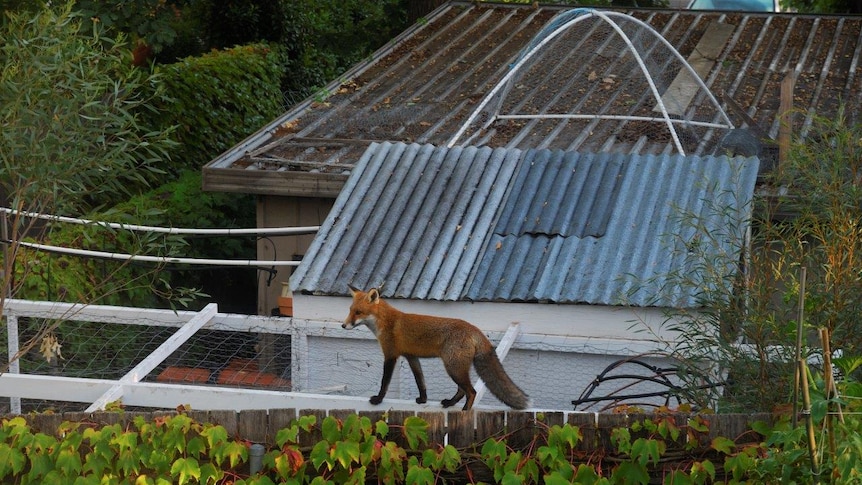
Fox control in urban areas needs 'major rethink' after bird flu spread
Key Points
Bird flu's spread to foxes prompts calls for 'major rethink' on how city dwellers deal with the pest In short: The detection of bird flu in a red fox in an Australian city has experts calling for city dwellers to be part of the solution for tackling the pest. Australian cities have almost double, sometimes triple, the density per square kilometre of foxes compared to rural areas. The National Farmers Federation wants states and territories to match the commonwealth's recent funding for pest...
Bird flu's spread to foxes prompts calls for 'major rethink' on how city dwellers deal with the pest
In short:
The detection of bird flu in a red fox in an Australian city has experts calling for city dwellers to be part of the solution for tackling the pest.
Australian cities have almost double, sometimes triple, the density per square kilometre of foxes compared to rural areas.
What's next?
The National Farmers Federation wants states and territories to match the commonwealth's recent funding for pest management as part of the national bird flu response.
The spread of H5 bird flu into foxes on Australia's mainland has prompted calls for a "major rethink" on how the nation deals with the pest, particularly in urban areas.
Readers are advised this article includes an image of a dead animal.
The detection of H5 in a red fox in metropolitan Adelaide in late August marked the first time the disease was detected in a land mammal in Australia. This was followed by authorities in Victoria confirming the death of a fox at Torquay, south-west of Melbourne, was due to bird flu.
While authorities are not concerned about foxes spreading the disease, there is a threat of them moving infected carcasses around, particularly in urban areas.
Australia's estimated 1.7 million foxes are found in densities up to three times higher in urban zones.
In some suburbs of Melbourne, there can be as many as 16 to 23 foxes a square kilometre.
Vertebrate pest controller and biodiversity surveyor Lisette Mill was not surprised to see bird flu cross into foxes, and occurring so close to a major city.
"A lot of people think that rural and conservation areas have the most foxes, but in urban areas [it's] almost double, sometimes triple the density per square kilometres of foxes,"Ms Mill said.
"There's places to hide: rubbish bins, compost bins. Pet food in backyards, you name it. Cities are just forests of food for a fox."
She said it was "a rethink moment for the whole of Australia", putting an onus on city dwellers, not just farmers, to be part of the solution.
She said backyard chooks, guinea pigs, and rabbits were all potential prey for a hungry fox.
"This is the time when all of us pick up that biosecurity banner and go, 'OK, we know that foxes are probably going to be coming around and they might come through our yard in the night and have a look and see what they can steal,'" Ms Mill said.
Her advice is to keep yards clear of food sources, secure waste bins and remove the possibility of any interaction between foxes and household animals.
Ms Mill said sick or injured foxes often take greater risks.
"They come closer to houses, to sheds because they're unwell, so they want to get food as quickly and easily as possible," she said.
Overseas outbreaks show that cats and dogs can be infected with H5 bird flu, but this usually occurs due to contact with sick or dead birds.
Ms Mill said along with bird flu, foxes could carry diseases like mange that should prompt pet owners to take measures to prevent interaction.
"Nobody who values their dogs, or farm working dogs, wants to see any of them impacted by this horrible disease, or any of the others that foxes carry," she said.
All pests potential spreaders of bird flu
National Farmers Federation chief executive Mike Guerin welcomed the federal government's recent allocation of funding towards pest management as part of the national bird flu response and called on individual states to match it.
"Pests like wild pigs, deer, cats, foxes and rabbits all damage food and fibre production as much as Australia's environment and wildlife," Mr Guerin said.
"Whether it be wild birds or foxes or pigs, they can all be spreaders of the disease and if they get into, for example, a poultry farm and we get the disease into production agriculture, it's a far different outlook for Australia.
"We've contained the outbreak to wildlife. We need to hold it there."
Mr Guerin said ongoing funding for pest control programs was imperative.
"It's important for the environment, it's important for biosecurity, it's certainly important for food security, and it would make an enormous difference to getting on top of these pests," he said.
"If there's a silver lining in this bird flu outbreak, we just need to get this work done for all [those] reasons."
Foxes are considered one of the most damaging invaders in Australia's history, killing about 300 million native animals every year.
In the south east of South Australia, Limestone Coast Landscape Board officer Jarryd Lee estimates there would be tens of thousands of feral foxes.
"In the last 250 years we've lost 30 mammal species, and in that, South Australia has lost 24 …the primary driver for that is predation from feral cats and foxes," Mr Lee said.
"Foxes do like to take lambs quite regularly, particularly in that autumn and winter period when food's more scarce … but they'll also take poultry, ducks and chooks.
"The aim is just to drop the numbers so that our threatened species actually have a chance."
Australian Chief Veterinary Officer, Beth Cookson, said the detection of H5 in foxes was a "concerning development", but not unexpected.
"There is currently no evidence of mammal-to-mammal transmission associated with H5 bird flu in Australia," Dr Cookson said.
"This detection in a fox is a good reminder that people and their pets should avoid sick or dead wildlife."