
Science
Fish unseen by scientists for 40 years rediscovered in Papua New Guinea
Key Points
A small freshwater fish that had not been confirmed by scientists since 1985 has been rediscovered in Papua New Guinea’s Sepik River. The spinach pipefish, a poorly understood species related to seahorses and seadragons, was found during a research expedition that relied heavily on local communities and fisherfolk. According to Mongabay, Indigenous fisherwoman Helen Asu caught two of the elusive fish in June 2026 while using a traditional hand net to catch prawns.
A small freshwater fish that had not been confirmed by scientists since 1985 has been rediscovered in Papua New Guinea’s Sepik River. The spinach pipefish, a poorly understood species related to seahorses and seadragons, was found during a research expedition that relied heavily on local communities and fisherfolk. According to Mongabay, Indigenous fisherwoman Helen Asu caught two of the elusive fish in June 2026 while using a traditional hand net to catch prawns. Her discovery came on the final day of the research team’s two-week search. Scientists later confirmed that the fish was indeed the spinach pipefish, ending a decades-long mystery and offering fresh hope for other species considered lost to science. The finding also shows why local ecological knowledge can be vital to wildlife research and conservation.
A remarkable rediscovery in the Sepik River
The spinach pipefish may be small, but its disappearance had created a major gap in scientists’ understanding of Papua New Guinea’s freshwater ecosystems.
Known scientifically as Microphis spinachioides, the fish is endemic to the Sepik River, meaning it is not known to occur naturally anywhere else in the world. The Sepik is Papua New Guinea’s longest river and supports an extraordinary range of aquatic life, as well as communities whose daily lives are closely connected to its waters.
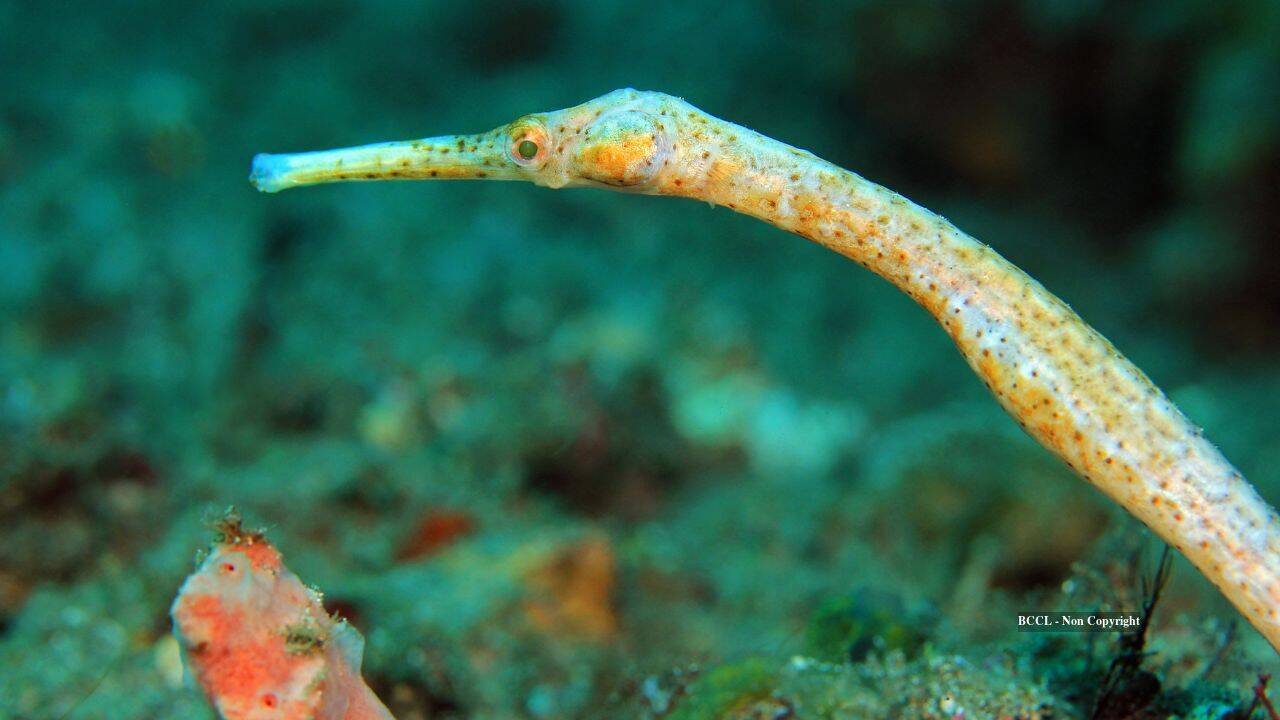
The fish has a slender body, an elongated snout and greenish-brown colouring that helps it blend into vegetation along the riverbanks. It can grow to around 15 centimetres, although the specimens caught during the latest expedition measured nearly 10 centimetres.
For scientists, the species has remained difficult to study because it is well camouflaged and appears to live among water lilies, grasses and other plants close to the river’s edge. Its habits, population size, breeding areas and threats have all remained largely unknown.
The last confirmed scientific record was made in 1985. Since then, researchers had no verified sighting for almost four decades.
The final day of the search
The rediscovery happened during a two-week expedition led by researchers, local scientists and community members. The team travelled by boat and canoe through parts of the Lower Sepik, asking residents and fisherfolk whether they had ever seen the unusual fish.
Researchers showed people pictures of the spinach pipefish and asked them to share any memories or knowledge of it. The search was challenging because the fish is small, blends into the riverbank vegetation and is not a species that local people usually target.
By the middle of June, the expedition team had spent days moving along the river and speaking with communities. They were close to giving up.
Then, on June 18, 2026, local fisherwoman Helen Asu arrived with two pipefish. She had caught them using her umben, a traditional hand net, while fishing for prawns near Imbando village in East Sepik province.
It was the final day of the expedition.
Jerrica Agebigo, a researcher at Papua New Guinea University of Technology and the New Guinea Binatang Research Centre, immediately recognised that the fish could be important. She photographed the specimens and sent the images to Gerald Allen, an Australian ichthyologist familiar with the region’s fish species.
Allen confirmed that the fish were spinach pipefish. A species that had been missing from science since 1985 had been found again through an ordinary fishing activity.
Local knowledge made the difference
The discovery has become an example of how scientific research and traditional ecological knowledge can work together.
Scientists had information about the fish’s appearance, but they had very little practical knowledge about where it lived or how people might encounter it. Local residents, particularly those who fish regularly along vegetated riverbanks, held clues that were not available in scientific records.
When the researchers asked Asu if she had seen a fish resembling the spinach pipefish, she said she had caught something similar before. She agreed to help with the search and found the specimens the next day.
Communities along the river told researchers that they sometimes catch one or two spinach pipefish while fishing for prawns and other small aquatic animals. These accounts suggest that the species may be more widespread than its scientific record indicated.
Women appeared to have particularly useful knowledge about the fish. They often catch prawns and small fish along the plant-covered edges of the river, which may bring them into contact with pipefish more frequently than other members of the community.
The fish is known by different names in different places. In Imbando, people call it karuweng. Upstream communities at Kanduwanum use inap or karuwenai. In Tok Pisin, Papua New Guinea’s official language, it is called lon nus.
These names and observations are not merely cultural details. They can help researchers identify the species, understand its distribution and design better surveys.
What researchers have learned
The rediscovery has already offered scientists some early clues about the spinach pipefish’s habitat.
Local people reported finding the fish along vegetated river margins and near places where tributaries meet the main river. They rarely saw it in floodplain lakes or swamplands.
That information could help researchers focus future fieldwork. Instead of searching across the entire Sepik ecosystem, scientists may be able to concentrate on areas with the vegetation and water conditions the fish appears to prefer.
The species is a close relative of seahorses and seadragons. Like seahorses, male pipefish carry developing embryos in a brood pouch until the young are born. However, scientists still know very little about how spinach pipefish reproduce, what they eat, how long they live or how far they move through the river system.
The only known museum specimen on which the species’ scientific classification was based was held at the Hamburg Museum in Germany. That specimen was destroyed during the Second World War, leaving researchers without the physical reference material they would normally use to study the species.
The new records could now help scientists compare the fish with related species, document its appearance more accurately and confirm details about its biology.
A species still facing threats
The discovery is encouraging, but it does not mean the spinach pipefish is safe.
The species was classified as data deficient during its last assessment for the International Union for Conservation of Nature’s Red List in 2016. That classification reflects a lack of reliable information rather than proof that the population is healthy.
Communities consulted during the expedition described changes in the Sepik River’s fish populations. They also reported increasing sedimentation and a growing presence of introduced fish species.
Sediment can alter river habitats by covering plants, changing water depth and affecting the places where small aquatic animals feed or shelter. Introduced fish may compete with native species or disturb the food web on which they depend.
Because the spinach pipefish appears to live among vegetation near riverbanks, changes to those areas could have a direct effect. The loss of native plants, pollution, river modification and changing water conditions may all create additional pressure.
Researchers say the next stage is to understand where the species occurs, how many individuals remain and what environmental conditions it needs to survive.
Why the discovery matters
The spinach pipefish was listed among the top 10 most wanted species on the Lost Fishes list, a collection of more than 300 freshwater fish species that have disappeared from scientific records.
Its rediscovery provides more than an exciting wildlife story. It demonstrates that species may continue to survive in places where formal scientific surveys have been limited. It also shows that local communities may notice, identify and protect animals that researchers rarely encounter.
Amanda Vincent, chair of the IUCN’s Seahorse, Pipefish and Seadragon Specialist Group and director of Project Seahorse, said the rediscovery offers hope that other freshwater pipefish and lost species may still exist.
That hope is especially important for freshwater ecosystems, which face pressure from habitat degradation, pollution, invasive species and development. Small animals can disappear from scientific records without necessarily disappearing from the places where people live and fish.
The story also challenges the idea that conservation knowledge flows only from laboratories and universities. In this case, a fisherwoman’s experience helped solve a scientific mystery that had lasted for 40 years.
The next chapter for the spinach pipefish
Researchers now hope to combine field surveys, local ecological knowledge, taxonomy and environmental DNA technology to learn more about the species.
Environmental DNA, often called eDNA, allows scientists to search for genetic traces that animals leave behind in water. If successful, this method could help identify areas where spinach pipefish are present without requiring researchers to catch the fish directly.
Future studies may examine the species’ range, breeding behaviour, diet and population health. They may also investigate how changes in the Sepik River are affecting its habitat.
For now, the two fish caught by Helen Asu have restored a missing piece to Papua New Guinea’s freshwater biodiversity record. Their discovery is a reminder that even a tiny, well-hidden animal can have a large story attached to it.
After decades without a confirmed scientific record, the spinach pipefish is no longer considered lost. Its survival is still uncertain, but its return to scientific attention gives researchers and communities a new opportunity to understand and protect it.