
Weather
How super El Nino will put farmers, families and livelihoods under pressure, from Bali to Bangkok
Key Points
How super El Nino will put farmers, families and livelihoods under pressure, from Bali to Bangkok The chance of a “very strong” El Nino from next month to December is forecast to be 98 per cent now. CNA’s Insight looks at how living costs could rise and how ready the region is for the disruptions ahead. BALI: It is known as Indonesia’s green gold.
How super El Nino will put farmers, families and livelihoods under pressure, from Bali to Bangkok
The chance of a “very strong” El Nino from next month to December is forecast to be 98 per cent now. CNA’s Insight looks at how living costs could rise and how ready the region is for the disruptions ahead.
BALI: It is known as Indonesia’s green gold. That is one way to describe seaweed in a country that is the world’s top tropical seaweed producer.
But as its seaweed farmers have recently seen, this green gold can turn white — because of the heat.
Wayan Suwarbawa, 54, was preparing to harvest his seaweed in July when a week of intense heat left much of his crop bleached or detached from its ropes.
In places, seaweed that should have weighed about 650g was down to 25g or 50g. The farmer on Nusa Lembongan, Bali, estimated his losses at nearly 10 million rupiah (US$570). His damaged crop could not be reused for seedlings either.
“We’d never experienced a heat phenomenon like the one we had (in July), with strong gusts from the east,” he said. “As farmers, we fear the impact of the easterly winds.”
The heat comes as El Nino develops across the Pacific, bringing drier conditions to Southeast Asia.
The climate phenomenon recurs naturally every two to seven years, typically lasting around nine to 12 months, when trade winds weaken and cause warm surface water and rainfall to shift towards the central and eastern Pacific.
While its effects are already being felt, with farms in Indonesia hit by drought and reservoir levels in Vietnam dropping, it may only just be getting started. What follows in the next few months could be more severe.
This year’s event may develop into a “super” El Nino, where the warming in the Pacific is both intense and unusually widespread. Some experts have even dubbed it a “Godzilla” El Nino.
Last Thursday, the Climate Prediction Center of the United States’ National Oceanic and Atmospheric Administration said there was a 98 per cent chance of a “very strong” El Nino from next month to December.
It also forecast a 75 per cent chance — up from its previous forecast of 69 per cent — of the most severe El Nino since 1950 during those months.
There have been three other super El Nino events in living memory, in 1982-83, 1997-98 and 2015-16. The current one is unfolding against the backdrop of a warmer global climate than before, which could worsen its impact, researchers warn.
If conditions intensify, the consequences may extend to disruptions in daily life across Southeast Asia, including less obvious risks to health and livelihoods. CNA’s Insight examines the possibilities and asks how prepared the region is.
WATCH: A ‘super’ El Nino is coming for Southeast Asia. What happens next? (45:19)
THE SQUEEZE ON WATER, FOOD, ELECTRICITY
About 100km northwest of Bangkok, in Suphan Buri, farmer Chuan Juntar has been growing rice on 1.6ha of land for more than 30 years.
Each harvest depends on water pumped from his own reservoir, so a prolonged dry spell triggered by El Nino would mean his next planting is off.
“I don’t know what else I’d do if I couldn’t farm,” he said. “Just stay home, grow a few vegetables, that’s about it.”
Thailand is one of the world’s largest exporters of rice and sugar. And although it is the rainy season now, House Committee on Land, Natural Resources and Environment chairman Poonsak Chanchampee is concerned about the dry spell ahead.
“It won’t just affect us this year. Farmers may plant rice, sugarcane or other crops as usual, but then suddenly there’s no water to sustain them,” he said.
In Indonesia, about 30,400ha of rice fields had been hit by drought by July 10, according to the country’s agriculture ministry.
Its palm oil output, meanwhile, could fall by nearly 2 million metric tonnes next year owing to dry weather and high fertiliser costs.
If a prolonged drought weakens harvests across major food producers, then tighter food supplies would push up consumer prices in Southeast Asia.
For Cherry Lim, a preschool principal and mother in Kuala Lumpur, that would add to other costs already rising with the heat.
Her preschool has been running its air-conditioners for longer, which has increased its electricity bills by as much as 50 per cent compared with earlier this year.
At the supermarket, food has already got more expensive. “We’d want our children to eat healthy meals with fresh fruits and vegetables, so we may have to cut back on other expenses instead,” she said.
Even as demand for cooling increases, El Nino could hurt renewable power generation in Southeast Asia. It can weaken the monsoon winds that drive wind farms, while drought threatens hydropower output.
In Vietnam, hydropower makes up about 30 per cent of energy production.
During the last super El Nino, water resources in Vietnam’s river systems declined by as much as 60 per cent in some regions, said Pham Thi Thanh Nga, the director of the Institute of Meteorology, Hydrology, Environment and Marine Sciences.
Some hydropower plants had to halt generation when river flow and reservoir levels fell too low.
At state-owned Garment 10 Corporation, where most of its orders are for export, deputy general manager Ha Manh said a power shortage would force production to be scaled back and affect delivery schedules.
The power strain could extend to regional energy supply chains. Laos, an electricity exporter, is a major part of the current network and supplies Thailand, Vietnam and Singapore, among others.
But if its hydropower generation is reduced, less electricity could be supplied to the region, highlighted Lawrence Loh, the director of the Centre for Governance and Sustainability at the National University of Singapore (NUS) Business School.
Besides the problem of energy intermittency, higher energy prices could feed into production costs and, eventually, the prices of manufactured goods, he said.
FROM TOURISM TO REPRODUCTIVE HEALTH
Besides food, water and energy, El Nino could affect travel and public health.
Tourism accounted for about 14 per cent of Thailand’s economy last year, with Bangkok seeing an estimated 30 million international arrivals.
Periods of extreme heat, however, are changing how visitors spend their days. New Way Travel business development manager Nutthanun Kanjanapattana said her company gives travellers flexibility such as a choice of indoor activities during the hottest hours.
And with El Nino, she is watching out for coral bleaching and changes in marine life at island destinations, which could affect arrivals or at least what tourists come to see.
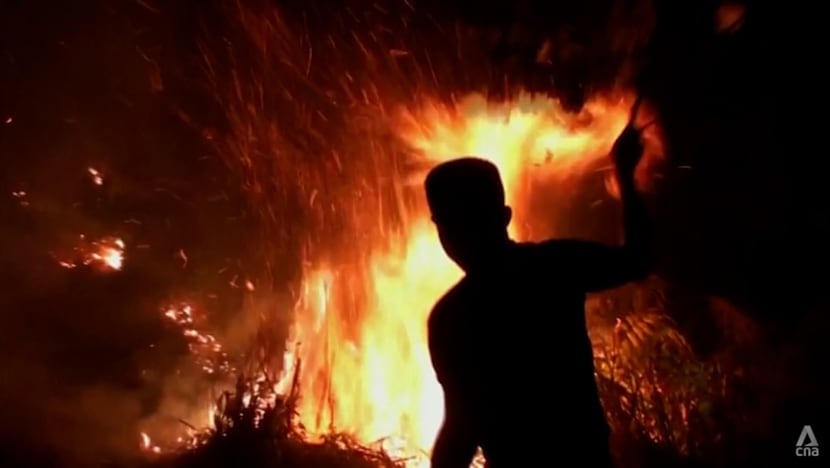
Hotter, drier conditions also increase the risk of forest fires and haze, which choked parts of Southeast Asia during the 1997-98 and 2015-16 El Nino events, affecting both tourism and daily life.
When air quality deteriorates because of the haze, outdoor activities at Lim’s preschool are cancelled and children are kept inside. She still worries.
“Sometimes I can hear the children. They cough more, and they get runny noses and also have … difficulty in sleeping,” she said.
Children and the elderly are vulnerable to the heat too, and Malaysian meteorologists say some areas in the country could see temperatures of around 40 degrees Celsius next year as El Nino strengthens.
Schools may temporarily close if temperatures exceed 37°C for three consecutive days.
Some of El Nino’s health effects may be less noticeable but just as consequential for another vulnerable group: pregnant women. High temperatures during pregnancy have been associated with an increased risk of complications.
Given their higher metabolic rate and core temperature, it is harder for pregnant women to regulate their body temperature, said consultant obstetrician, gynaecologist and fertility specialist Wai Kok Yau at Thomson Hospital Kota Damansara.
For 24-year-old Thamonwan Rakphuak in Thailand, who is six months pregnant with her first child, there is no air-conditioning in her bedroom. She drinks more water, takes showers and uses a fan to keep cool and limits her time outdoors.
Her medical check-ups have revealed no issues, but she remains worried. “As the weather gets hotter, my life is no longer the same,” she said.
When I go outside, I have to take better care of myself so that it doesn’t affect my baby.”
The impact on fertility may begin even before conception.
NUS adjunct assistant professor Huang Zhongwei at the Yong Loo Lin School of Medicine said hotter periods have been associated with lower sperm count and poorer sperm quality, while heat stress and dehydration could indirectly affect menstrual cycles and ovulation.
Birth rates are already falling across Southeast Asia — even to historic lows in Thailand — for reasons including rising living costs and marrying later. Worsening heat could put added pressure on reproductive health and couples’ decisions about having children, said Huang.
“PREPARE FOR THE NEXT TWO YEARS”
How strong El Nino will be this year will become clear only in the months ahead.
“El Nino never happens exactly in the same way. Likewise, its impacts are never exactly the same,” said Ardhasena Sopaheluwakan, deputy head for climatology at Indonesia’s Meteorological, Climatological and Geophysical Agency.
Sea temperatures throughout parts of the world, especially in the tropics and including the Indonesian seas, are higher than during previous El Nino events, he highlighted.
The last super El Nino, from 2015 to 2016, triggered drought, floods and crop failures, among other things, that affected at least 60 million people worldwide. It also caused an estimated US$3.9 trillion in economic losses.
Another super El Nino will cost trillions, Loh envisaged. Estimates of “a few trillion” could be “an underestimate”, he said, as the losses can extend beyond direct damage.
Second-order effects, for example, will be felt by manufacturers that rely on farm produce.
Across the region, governments are managing reservoir levels, improving irrigation, distributing water pumps, encouraging farmers to grow drought-tolerant crops and stepping up wildfire prevention.
Erma Yulihastin, a climatology professor at Indonesia’s National Research and Innovation Agency, pointed out that scientists had warned of an “unusual El Nino” since the start of the year and had urged “early action”.
“We also have to prepare for the next two years,” she said. “We need to prevent any knock-on or domino effects because … current predictions suggest (El Nino) will linger.”
One question is how resources should be shared. In Thailand, Poonsak said authorities will need a plan to allocate water among vulnerable urban residents, hospitals, farmers, industry and the tourism sector if rainfall fails to replenish reservoirs.
“We need to map out these scenarios now,” he said.
Demand for water in Southeast Asia has grown since the last super El Nino. Electricity demand has also grown, on average, by 6 per cent a year, driven by population growth, urbanisation and industrialisation, according to the International Energy Agency.
Data centres add another layer of pressure. Southeast Asia is one of the world’s fastest-growing hubs for the industry, whose facilities require large amounts of electricity and water for cooling.
Poonsak said authorities must ensure data centres do not compete with local communities and farmers for water and called for environmental impact assessments for any proposed facilities.
The underlying issue is that the fallout from El Nino will be uneven, so the response must account for that, said Loh, identifying lower-income groups reliant on agriculture and subsistence living as especially exposed to weather damage and lost income.
On Nusa Lembongan, Suwarbawa is adapting. He plans to move his seaweed cultivation to deeper water further west, although starting again requires money and effort and runs risks such as stronger waves and fish damaging the crops.
“We had a crop failure this July, but that crop failure has motivated us to start again,” he said, “despite the heavy losses we’ve suffered.”
Watch this episode of Insight here. The programme airs on Thursdays at 9pm.