
World News
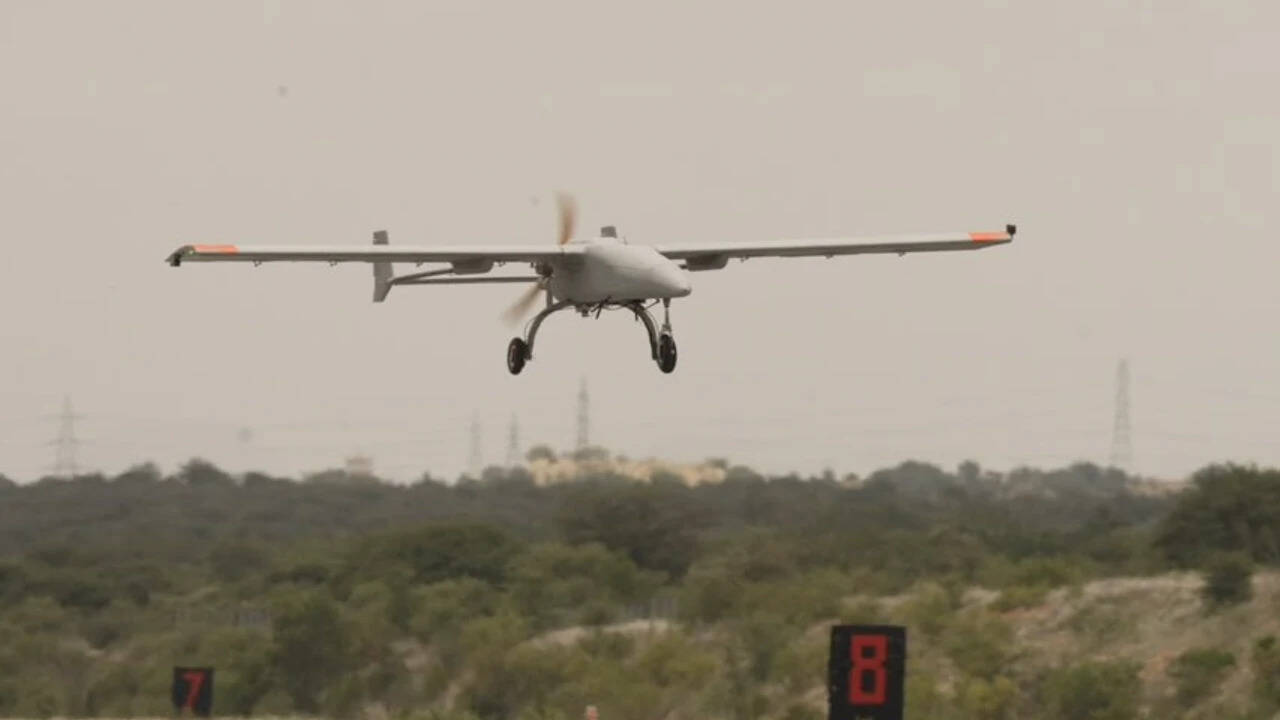
India’s homegrown AI-powered combat aircraft hits 100-hour flight test milestone
Key Points
India’s homegrown AI-powered combat aircraft hits 100-hour flight test milestone NEW DELHI: An Indian AI warfare company, Flying Wedge Defence & Aerospace (FWDA), has completed 100 cumulative hours of flight testing of its indigenous FWD Kaal Bhairava Lite, an indigenous, AI-powered autonomous unmanned aerial vehicle (UAV) for long-endurance intelligence, surveillance, reconnaissance (ISR), and tactical operations. Designed and manufactured entirely in India, with an indigenisation rate of...
India’s homegrown AI-powered combat aircraft hits 100-hour flight test milestone
NEW DELHI: An Indian AI warfare company, Flying Wedge Defence & Aerospace (FWDA), has completed 100 cumulative hours of flight testing of its indigenous FWD Kaal Bhairava Lite, an indigenous, AI-powered autonomous unmanned aerial vehicle (UAV) for long-endurance intelligence, surveillance, reconnaissance (ISR), and tactical operations.Designed and manufactured entirely in India, with an indigenisation rate of 80%, the platform has undergone flight testing in demanding weather conditions, including 25-30 knot gusts over the Bay of Bengal, providing the development team with real-world flight data on aircraft behaviour and control in challenging wind conditions, a company statement said. It has also completed a demonstration in the challenging operating environment of J&K, supporting the platform's development for multi-terrain defence operations, it said.Built with zero foreign dependency, the platform ensures complete data sovereignty and eliminates external kill-switch risks while being positioned at a fraction of the cost of comparable Predator-class UAV systems.Suhas Tejaskanda, founder and CEO of Bengaluru-based FWDA, said, “One hundred hours of flight testing gives us an extensively tested indigenous aircraft architecture. Kaal Bhairava has demonstrated its short-field capability, strong climb performance and operation in demanding wind conditions. With a 1,200-km-class design and 8-10 hours of endurance, we believe the platform has significant potential for both the Indian Navy requirement and international markets.”
End of Article