
Education
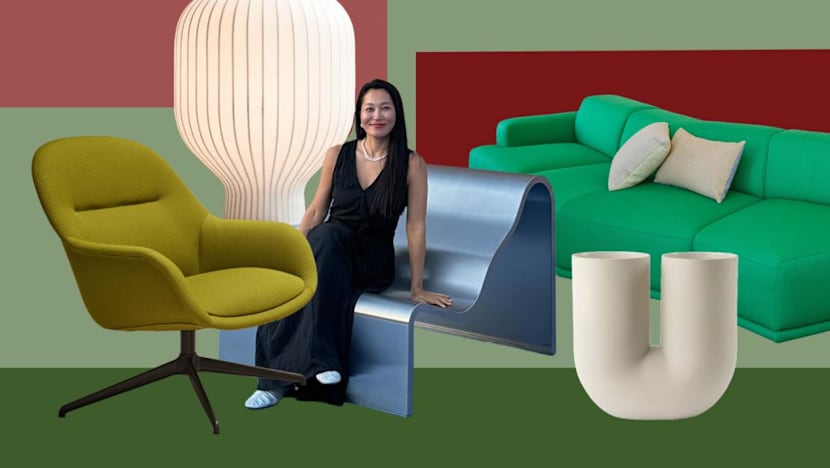
How good design can make your home feel calmer and more comfortable
Key Points
How good design can make your home feel calmer and more comfortable Jae Hah of Scandinavian furniture brand Muuto explains how neuroaesthetics can shape everything from lighting and colour to texture, furniture and the way a room makes us feel. After Jae Hah graduated from Smith College in Massachusetts with a degree in sociology, she found work at “a little mom-and-pop design store” in Williamsburg, Brooklyn. “It was more of a lifestyle store, selling beautiful candles, some furniture...
How good design can make your home feel calmer and more comfortable
Jae Hah of Scandinavian furniture brand Muuto explains how neuroaesthetics can shape everything from lighting and colour to texture, furniture and the way a room makes us feel.
After Jae Hah graduated from Smith College in Massachusetts with a degree in sociology, she found work at “a little mom-and-pop design store” in Williamsburg, Brooklyn. “It was more of a lifestyle store, selling beautiful candles, some furniture pieces, some fashion. The owners were artists and they had this beautiful sensibility,” said Muuto’s director of APAC, MEA and LATAM.
Founded in Copenhagen in 2006 by Peter Bonnen and Kristian Byrge, Muuto takes its name from the Finnish word muutos, meaning “new perspective”. “Muuto’s products are all new designs by contemporary designers, but using an old-school approach of quality and craftsmanship,” explained Hah. Knoll acquired Muuto in 2018, and the company became part of MillerKnoll when Herman Miller and Knoll combined in 2021.
Hah, who was born in South Korea and raised in New York, thought her first job would be temporary while she figured out what she wanted to do. “Turned out that design is my true calling,” she laughed. She has now worked in the industry for more than 20 years, including more than a decade at Muuto.
Her sunny, exuberant personality makes her a natural ambassador for a brand that champions comfort, optimism and colour. I met Hah in Singapore, where she was speaking at 5DesignDays. Organised by design store Xtra, the event ran from Jul 29 to Aug 2 at Marina Square’s Central Atrium, with installations, booths and talks exploring neuroaesthetics.
HOW TO CREATE HOMEY SPACES
Hah assured me that neuroaesthetics is not as complex as it sounds. “It’s very simple. It refers to the scientific research behind how beauty elevates and enhances our biology, our brains, our moods and our mental health. We are drawn to beautiful things and experiences, like seeing a sunrise over a mountain or Angkor Wat. Neuroaesthetics helps explain these reactions by measuring how our nervous system unconsciously responds to elements such as light, colour, shape, nature and tactility.”
Muuto uses these five elements as guides for its product design, showroom layouts and exhibitions. For example, Hah said the brand favours rounded forms and soft edges because sharp edges can instinctively signal danger. “We are also naturally attracted to soft forms as they are found in nature,” she explained. Bringing nature indoors, she added, can also have a calming effect.
Colour can also affect how a space feels, Hah said – cool blues may have a calming effect, while warmer colours can feel more energising. The colour temperature and intensity of artificial lighting matter too, although she favours natural light because our bodies respond to circadian cycles of wakefulness and rest.
Tactility is another important consideration. “We feel grounded when we touch rich textures like wood or plush textiles instead of plastic,” said Hah. “Plastic shell chairs are clean, light and durable. However, many don’t feel nice against the skin. Many have hard edges so they are also not comfortable,” she explained.
With this in mind, Muuto developed a composite for its Fiber Armchair that combines recycled plastic with up to 25 per cent FSC-certified wood fibres, giving the shell a warmer, more tactile feel.
MEASURING DESIGN
In 2019, Muuto collaborated with Google, Reddymade Architecture and the International Arts + Mind Lab at Johns Hopkins University on an experimental installation during Milan Design Week. Titled A Space for Being, it invited visitors to wear biometric wristbands that measured physiological responses including heart rate, breathing rate and skin temperature as they moved through three differently designed rooms.
“Each visitor had five minutes in each room that looked, felt and smelt different. Afterwards, they received a watercolour-type painting representing which room they felt most calm,” said Hah.
The personalised visualisation indicated the room in which each visitor’s physiological responses suggested they felt most at ease. Muuto has since applied neuroaesthetic ideas to other projects, including relatives’ rooms at the New Aalborg University Hospital in Denmark.
The project was developed with the hospital’s healthcare professionals and Danish non-profit organisation Foreningen Vaerdig. Its founder, Maj Kaer, lost her 14-year-old son to meningitis, an experience that led her to advocate for better spaces for families facing medical crises. “She thought about helping families who have to go through medical crises with their families, creating areas for rest instead of very transitional environments that make one feel even more alienated and frightened,” said Hah.
Rather than relying on a single multipurpose room, the project created three spaces for different needs, informed by neuroaesthetic principles. The Conversation Room, for example, features soft furniture and a round table intended to encourage closeness and less hierarchical conversations. Its muted green palette provides a calming backdrop for families facing difficult decisions.
LEARNING ABOUT DESIGN
Given the hurried pace of modern life and the fact that we spend so much time indoors, Hah believes that ideas offered by neuroaesthetics are important for both our wellbeing and quality of living. “We crave an opportunity to feel grounded and at ease, to let down our guard. That’s where design comes in. It can help us create that sense of hominess and belonging that doesn’t drain us or create tension in our bodies.”
She does not take helping others create better spaces for granted. After all, design is something Hah never had as a child. “I grew up as a poor immigrant kid. My father was a teacher in Korea but when he immigrated, he became a stock boy at a vegetable store in New York. It was pure survival mode so I never grew up with beautiful things,” she recounted.
Working at the Brooklyn design shop opened her eyes to how objects could make a space more inviting and personal. “I had a beautiful time there,” said Hah. She went on to spend seven years at Design Within Reach (DWR), which was founded in 1998 to make authentic modern design more accessible to American consumers.
Being surrounded by classic and contemporary furniture and design objects, she said, felt like getting a PhD in modern design. “I got to know the products, design stories and helped clients connect with design,” said Hah. The experience later inspired her to study interior design at Parsons School of Design, training that has helped her advise clients.
AMBASSADOR FOR DESIGN
It is not difficult to imagine the bubbly, attentive Hah being persuasive on the showroom floor. Unsurprisingly, by the time she left DWR, she had become its regional sales director for the northeastern US. After leaving in 2012, she took on executive roles at e-commerce businesses including online design marketplace Fab.com and vintage furnishings marketplace Chairish.
She loves working in sales. “I love creative work and beautiful design, but if there’s no way to access the designs or help customers make an informed decision about what to buy, then design happens in a vacuum. I love connecting people with good design and seeing how it elevates their lives,” Hah said.
In 2014, she returned to South Korea. “My husband really wanted to move to South Korea because he started learning Korean and fell in love with the culture,” Hah shared. The move proved fortuitous: The following year, she joined Muuto as director of Asia Pacific.
Today, Hah leads a team of 10 regional managers. She not only promotes the brand but applies the principles of neuroaesthetics in her own home with Muuto’s pieces. One of them is the Strand pendant lamp, whose paper-like shade is actually made from a cocoon material sprayed over an inner steel structure.
“I have this in my living room. The light quality is diffused and calming, thereby lowering stress levels. The surface is also tactile and pleasing to the touch. I love the beautiful, warm light quality,” said Hah, adding that she often finds herself reaching out to touch its surface.
She also owns an Outline leather sofa, whose simplicity belies the thought behind its design. Hah pointed to its clean lines, subtly rounded arms and slender cast-aluminium legs, details that give the understated sofa visual interest. “The elevated seating makes it easy to clean, the slim arms allow more people to fit into the small seating area, and details are thoughtfully incorporated – such as the zippers underneath the seat cushions so that they don’t shift around,” she added.
Its deep seat offers what Hah described as “an instant sense of ease” and is roomy enough to double as a makeshift bed for overnight guests. “Most importantly, they’re deep enough for my husband and my dogs to pile into and lounge comfortably,” she said with a smile.