
World News
Children among at least 139 deaths after migrant boat capsizes
Key Points
Children among at least 139 dead after migrant boat capsizes A boat carrying 305 migrants capsized off the coast of Djibouti in east Africa - Bookmark Become an Independent member to bookmark this article Already a member? Log in A vessel carrying more than 300 migrants has capsized off the coast of Djibouti in east Africa, leaving at least 139 people dead, including children, the International Organization for Migration said on Sunday. This figure only accounts for those buried by Djibouti...
Children among at least 139 dead after migrant boat capsizes
A boat carrying 305 migrants capsized off the coast of Djibouti in east Africa
- Bookmark
Become an Independent member to bookmark this article
Already a member? Log in
A vessel carrying more than 300 migrants has capsized off the coast of Djibouti in east Africa, leaving at least 139 people dead, including children, the International Organization for Migration said on Sunday.
This figure only accounts for those buried by Djibouti authorities. Speaking to the AP by phone, Alexandre Coissac, IOM Chief of Mission in Djibouti, said others buried by fellow migrants will not be added to the official count until authorities can verify the bodies.
"What is terrible is that they were buried with no names, in a common grave, like in a war situation," Coissac said. "They all have a mother, a father, and we may never learn what happened."
Coissac explained that the migrants had boarded the ship on the evening of 8 October, with the vessel sinking close to the shore shortly after setting sail, "mainly because it was overcrowded."
“The local authorities did their best,” Coissac said, “but they were overwhelmed with all the bodies that kept coming at once towards the shore.”
He said authorities were bringing the surviving migrants to the IOM rescue center in Obock where they receive medical assistance after swallowing sea water, and psychological support.
“They're all in a state of shock,” Coissac, who visited the area of the shipwreck Saturday, said. “I tried to talk to some of them but it's very difficult.”
Some of the migrants in the IOM center are already aware that their family members died during the shipwreck. Others were given access to phones to call loved ones back home to notify them they are alive.
At least 84 people remained missing in one of the deadliest shipwrecks yet on the popular but perilous crossing from the Horn of Africa to the Arabian Peninsula, where many migrants seek work in rich Gulf nations.
The boat was traveling from Djibouti to Yemen when it capsized on Thursday night or Friday morning, according to the IOM. More than 80 people survived, all of them Ethiopian nationals, it said.
The Geneva-based U.N. migration agency said the vessel had 305 people on board and warned that the death toll could still rise.
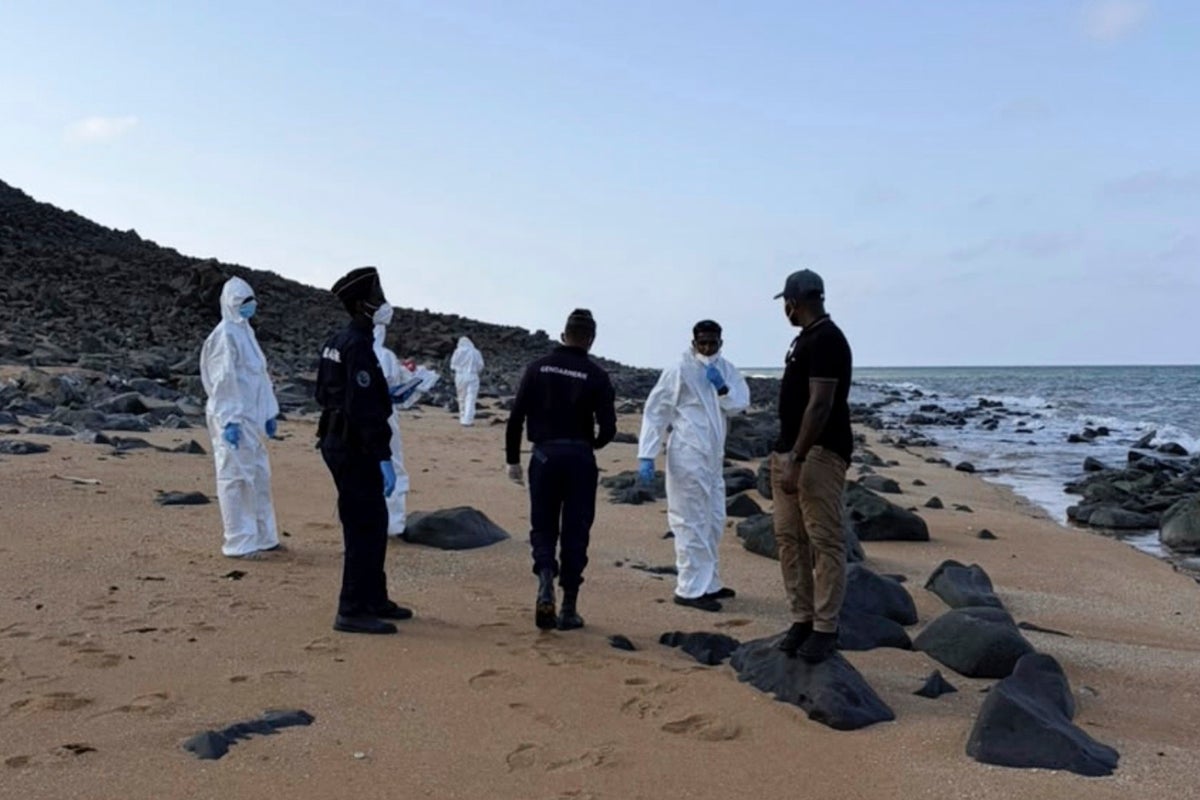
Personal items likely belonging to the migrants, including shoes, were seen on a beach in a video shared by IOM. Rescue work continued as fears grew for the missing.
Tens of thousands of migrants from the Horn of Africa travel every year through Djibouti and across the Bab el-Mandeb Strait towards Gulf countries in search of safety and economic opportunities, the IOM said in its statement.
That movement has continued despite newly escalating fighting in Yemen, on the other side of the strait.
“This is a devastating loss of life,” said Coissac. “This tragedy is a stark reminder of the dangers faced by migrants along this migration corridor as they seek economic opportunities.”
In recent weeks, at least 2,000 Yemenis have received aid in Djibouti as the fighting has escalated in Yemen between the Saudi-backed, internationally recognized government and Iranian-backed Houthi rebels.
That's the opposite direction from the movement of the migrants who died in the shipwreck and the typical migration patterns of recent years: The tens of thousands who cross from eastern Africa toward Yemen each year have typically been looking for work in places like Saudi Arabia.
Over 900 migrants died or went missing along the route last year, according to IOM’s Missing Migrants Project.
“No one gets into a boat like that unless they believe there is no other safe way,” IOM Director-General Amy Pope said. “We cannot keep treating these deaths as normal. Safe and legal pathways save lives. I am asking governments and donors to act before the next boat goes down.”
Djibouti (LOCATION)
Africa (LOCATION)
Independent (ORG)
the International Organization for Migration (ORG)
Alexandre Coissac (PERSON)
IOM (ORG)
Coissac (ORG)
Obock (LOCATION)
the Horn of Africa (LOCATION)
the Arabian Peninsula (LOCATION)
Gulf (LOCATION)
Yemen (LOCATION)
Ethiopian (ORG)
Geneva (LOCATION)
U.N. (ORG)