
World News
Saudis investigate why defense systems failed to stop deadly Houthi attack on Riyadh airport
Key Points
Saudis investigate why defense systems failed to stop deadly Houthi attack on Riyadh airport The incident has exposed vulnerabilities in Saudi Arabia's defense system and signaled a dangerous inflection point in an expanding Mideast conflict - Bookmark Become an Independent member to bookmark this article Already a member? Log in Saudi Arabia has launched an probe to determine how its air defenses failed to intercept a barrage of missiles and drones fired by Iran-backed Houthi rebels,...
Saudis investigate why defense systems failed to stop deadly Houthi attack on Riyadh airport
The incident has exposed vulnerabilities in Saudi Arabia's defense system and signaled a dangerous inflection point in an expanding Mideast conflict
- Bookmark
Become an Independent member to bookmark this article
Already a member? Log in
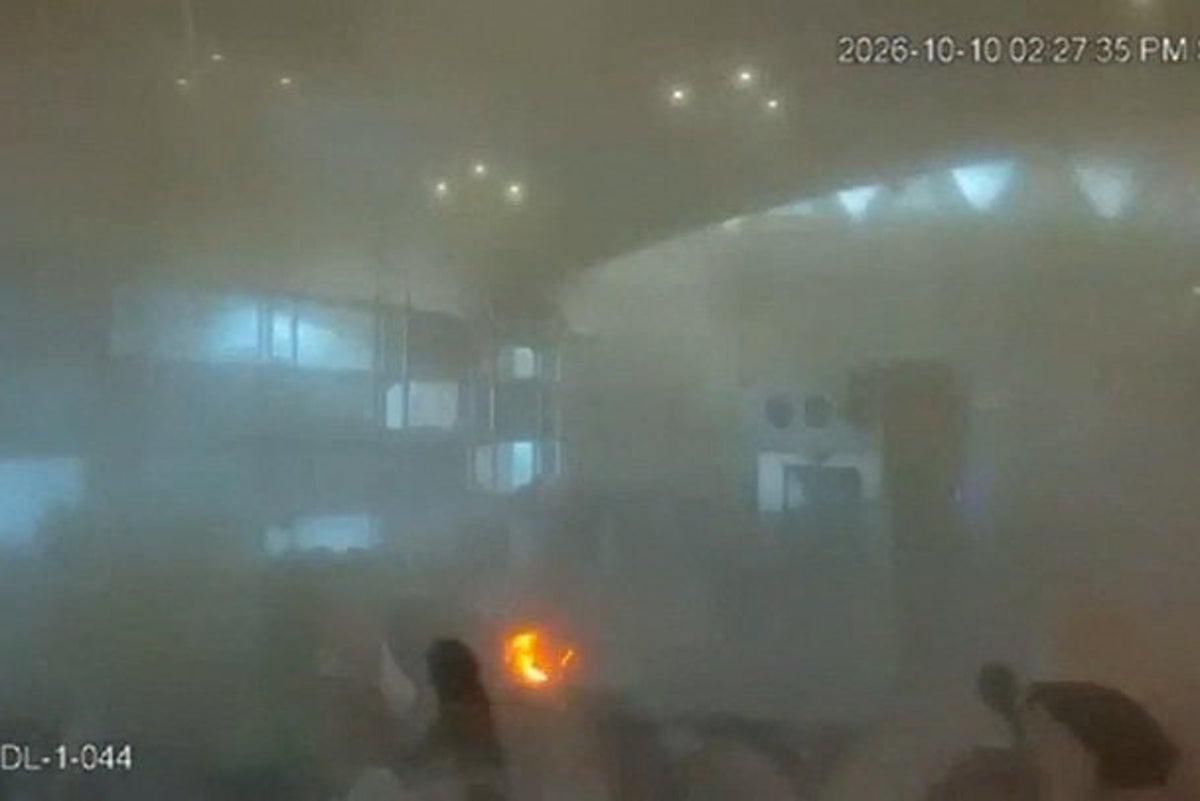
Saudi Arabia has launched an probe to determine how its air defenses failed to intercept a barrage of missiles and drones fired by Iran-backed Houthi rebels, including an attack on Riyadh airport that killed at least 13 people and wounded over 300.
Two regional officials said preliminary findings suggest Yemeni Houthis initially deployed several drones to bypass defenses before launching a combination of cruise and ballistic missiles toward King Khalid International Airport in Riyadh.
Houthi forces possess ballistic weaponry equipped with advanced warheads capable of altering trajectory during flight, creating significant challenges for Saudi Arabia’s Patriot interceptors and associated defense networks.
According to one official, the inquiry is specifically examining why detection networks failed to issue timely warnings, given that the Houthi projectiles traveled more than 1,000 kilometers (620 miles) across the region before reaching the capital.
Part of a broader sequence of Houthi strikes hitting Saudi airports since last week, the incident has exposed vulnerabilities in the kingdom's defense structure while signaling a dangerous turn in an expanding Middle East conflict that began more than seven months ago when the U.S. and Israel launched their war against Iran.
Meanwhile, the Saudi-led coalition stated it had intercepted and destroyed two Houthi ballistic missiles aimed at Riyadh on Monday. At least three detonations echoed across the city on Monday night before civil defense authorities announced that the immediate threat had passed.
Rebel forces later stated they had targeted King Khalid Airport on Monday, issuing a warning to commercial airlines that all airports across Saudi Arabia—excluding those in the Islamic holy cities of Mecca and Medina—were unsafe.
State media in Saudi Arabia reported earlier on Monday that armed forces were countering a fresh attack involving cruise missiles and drones, though further details were not provided.
"The events of recent weeks are serious," Saudi Energy Minister Prince Abdul Aziz bin Salman told the World Petroleum Energy Congress in Riyadh on Monday. "Our response must be equally serious."
The Saudi government's Center for International Communication, which handles relations with foreign media, did not immediately respond to a request for comment regarding the probe into defense breaches.
Saudi officials want more US help in countering Houthi attacks
The Saudis want the U.S. to become more directly involved in their fight against the Houthis. The U.S. has provided intelligence sharing, target identification and planning for a Saudi-led offensive, but has held off on carrying out strikes against the Houthis.
A U.S. intervention could prompt the Houthis to try to halt shipping through the Bab el-Mandeb Strait at the southern end of the Red Sea off Yemen, restricting the flow of oil out of the Persian Gulf.
The flow of Mideast oil has already been complicated by Iranian efforts to choke off the Strait of Hormuz, where about one-fifth of the world's oil flowed before the U.S.-Iran war began.
The rebels seized key areas along the Bab el-Mandeb last month. The Saudi-led coalition, backing forces aligned with Yemen’s internationally recognized government, has been trying to retake them.
U.S. President Donald Trump told reporters on Saturday after the deadly airport strike that he was looking at the possibility of carrying out U.S. attacks against the Houthis.
But the conflict comes at a delicate time for Trump, just weeks before U.S. midterm elections that will decide if his Republican Party keeps control of Congress.
Persistent inflation and high gas prices fueled by the ongoing conflict with Iran have driven widespread American disapproval of that war. Expanding U.S. military involvement in the region risks further stoking voters' resentment.
Houthis say Saudis launch new attacks
Yemen’s Houthi-run health ministry said Monday that airstrikes on a government complex and a house in the northern province of al-Jawf killed nine people, including five children and a woman, and wounded seven others, according to the Houthi-controlled SABA news agency.
Houthi officials also said that Saudi Arabia carried out new strikes on the Yemeni capital of Sanaa, killing one person and wounding 12.
Ministry spokesperson Anees al-Asbahi said 107 Yemenis have been killed by the Saudi-led coalition since Sept. 3, and 278 were injured. Over 60% of casualties were women and children, he said.
The Riyadh airport remained closed on Monday and workers in the capital's financial district were told to work from home.
However, the Saudis on Monday continued with the second day of the World Petroleum Energy Congress.
UAE diplomat suggests Gulf allies respond to Houthis jointly
Separately, an Emirati diplomat on Monday called for “joint Gulf action” to defend against attacks by Iran and its allied groups.
Anwar Gargash, a diplomatic adviser to the rulers of the United Arab Emirates, said Iran and its allies wrongly assessed that Gulf Arabs were “the weakest link” in the U.S. war against Iran, during which Tehran and its allies repeatedly attacked Arab countries on the other side of the Gulf.
“It has become clear that we are all targeted, and that our security is indivisible,” he wrote on social media.
Iran’s Foreign Ministry on Monday expressed concern about fighting between the Saudis and Houthis and said Iran would be ready to settle disputes.
“We are severely concerned about developments in the Arabian Peninsula,” spokesperson Esmail Baghaei said at his weekly briefing. “We have many times announced readiness for applying our good offices in order to facilitate talks between the two sides.”
Baghaei said Foreign Minister Abbas Araghchi and his Saudi counterpart, Prince Faisal bin Farhan Al-Saud, spoke by phone on Sunday about the situation but did not offer details.
Funeral held for Jordanian killed in airport attack
Dozens of mourners attended the Monday funeral for a Jordanian killed in the missile strike on King Khalid International Airport.
Mahmoud Al-Barqawi, 33, who worked in a Riyadh cafe and was the father of two children, was buried after a funeral procession began at a mosque in Amman.
His father, Hasan al-Barqawi, said the family was struggling to cope.
“No one can truly feel the pain of this tragedy,” he said.
The strike also wounded four Jordanian citizens.
Jordan’s Royal Court chief Yousef Al-Issawi attended the funeral, offering condolences on behalf of the king and crown prince.