
Health
'No one should feel safe': 5 dead as Amish country measles horror explodes past 1,350 cases
Key Points
'No one should feel safe': 5 dead as Amish country measles horror explodes past 1,350 cases Lancaster County, home to the largest Amish population in the U.S., is now the epicenter of the nation’s worst measles outbreak in 35 years - Bookmark Become an Independent member to bookmark this article Already a member? Log in Pennsylvania has recorded more than 1,350 measles cases this year, the largest count of any U.S. state, according to state health figures. More than a third of those...
'No one should feel safe': 5 dead as Amish country measles horror explodes past 1,350 cases
Lancaster County, home to the largest Amish population in the U.S., is now the epicenter of the nation’s worst measles outbreak in 35 years
- Bookmark
Become an Independent member to bookmark this article
Already a member? Log in
Pennsylvania has recorded more than 1,350 measles cases this year, the largest count of any U.S. state, according to state health figures.
More than a third of those infections have arisen in Lancaster County alone.
The county is home to the largest Amish population in the U.S., and it now finds itself the epicenter of the nation's worst measles outbreak in 35 years.
The scale of the outbreak prompted one leading physician to warn, “No one in the United States of America who is susceptible to the measles virus, either having not been vaccinated or not having previously had it, should feel safe from measles. No one.”
Vaccination rates have long been low among the Amish, and are now falling in the general population, creating the perfect conditions for the contagious virus — officially considered “eliminated” from the U.S. since 2000 — to spread here and beyond.
Community leaders say the true figure is likely a big undercount, since many people with measles never see a doctor.
The state has recorded three measles-associated deaths in Lancaster and two in other counties.
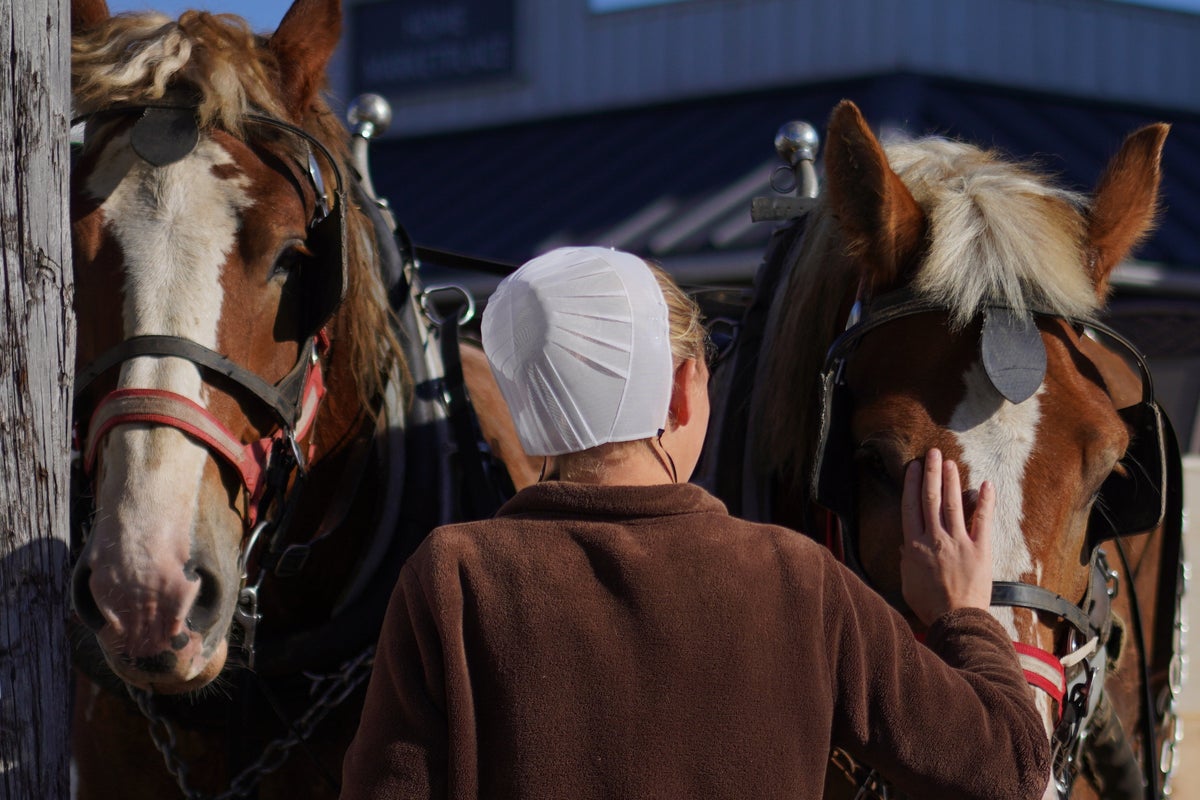
The outbreak has hit especially hard among the “Plain communities” of Amish and conservative Mennonites, so named for the religious groups' modest dress and limited use of technology.
Vaccination rates and attitudes about vaccines vary widely among them.
Overall, they are less likely to be vaccinated than the general population, more because of culture and habit than doctrine.
The outbreak follows one in 2025 in Mennonite populations in Texas and elsewhere.
Most states have recorded cases this year.
And though the Plain People avoid participating in many areas of society, they're not isolated.
They interact with the general public at farmers' markets, doctors' offices and elsewhere.
So their new openness to vaccines after bearing the brunt of the outbreak impacts the entire community.
While some think all Plain people reject vaccines, views actually vary
Attitudes toward vaccines in Plain communities have alternately warmed and cooled over the years, most recently cooling in reaction to strict COVID-19 public health measures, according to community leaders and scholars.
The measles outbreak is prompting many to accept the shots while reinforcing vaccine skepticism and suspicion in others.
Those who avoid vaccines usually aren't driven by ideology, community leaders and experts say.
“There’s nothing in Amish theology or historic documents that you can find that specifically addresses or is opposed to immunization,” said Steve Nolt, director of the Young Center for Anabaptist and Pietist Studies at Elizabethtown College in Lancaster County.
The main reason Plain people skip vaccinations isn't that they're against them, added Allen Hoover, an Old Order Mennonite and former administrator of the Parochial Medical Center in New Holland. “It was simply, ‘Well, we never did before, and we came through all right.’”
Dropping vaccination rates across the US increases the threat of measles
Measles spreads easily when people who have it breathe, cough or sneeze, or through contaminated surfaces.
“Measles is really the lion king of infectious diseases when it comes to transmission,” said Michael Osterholm, who directs the University of Minnesota's Center for Infectious Disease Research and Policy. “No one in the United States of America who is susceptible to the measles virus, either having not been vaccinated or not having previously had it, should feel safe from measles. No one.”
The risk grows as vaccination rates decline, as they have across the nation.
According to the Centers for Disease Control and Prevention, 92.4% of U.S. kindergarteners in 2025-26 received the required MMR shots.
That's down from 95.2% in 2019-20.
“Though Plain communities are an easy and recognizable target, declining childhood vaccination rates in our county are not limited to the Amish,” wrote Berwood Yost, director of the Center for Opinion Research at Franklin & Marshall College in Lancaster, in a recent commentary. “Kindergarten vaccination rates have declined in every central Pennsylvania county since 2020.”
In fact, Pennsylvania's overall kindergarten MMR vaccination rate fell to 93.2% by last year.
That is below the 95% rate that makes an outbreak extremely unlikely in a community.
During the COVID-19 pandemic, area doctors saw more vaccine hesitancy among patients within and outside of Plain communities.
“The COVID vaccine just created a lot of distrust, a lot of conspiracy theories,” said Dr. Anne-Marie Derrico, chief medical officer at the nonprofit Union Community Care. “There’s still kind of an overall distrust of vaccines.”
After a decline in trust, some minds are changing
Lancaster County Commissioner Alice Yoder said public officials need to promote the message that the vaccine is safe and effective and encourage people to get it.
That approach succeeded during Pennsylvania's last measles outbreak in 1991.
“There were lines of people in the Plain community that would come and get vaccinated,” she said.
Dr. D. Holmes Morton, who founded the Central Pennsylvania Clinic in Mifflin County, which treats Plain patients with genetic diseases, said the same is happening now.
“We are having more success at having vaccine days,” he said.
Ultimately, this will keep everyone safer, said Dr. Diego Hijano of St. Jude Children's Research Hospital.
Getting the shot is “an act of love to your community,” he said. “You will get protected yourself. But in truth, you are actually protecting everyone around you.”