
Politics
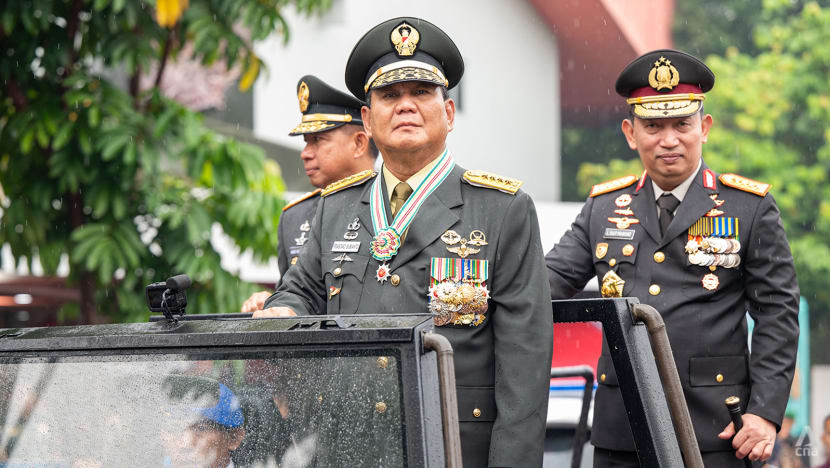
From Habibie to Prabowo: A history of wiretapping controversies involving Indonesian presidents
Key Points
From Habibie to Prabowo: A history of wiretapping controversies involving Indonesian presidents The communication surveillance scandal involving President Prabowo Subianto is the latest in a line of such incidents that have targeted his predecessors. Allegations of wiretapping targeting Indonesian President Prabowo Subianto, which came to light late on Tuesday (Nov 3), are the latest in a series of controversies involving the surveillance of the country's top leaders over the years. The...
From Habibie to Prabowo: A history of wiretapping controversies involving Indonesian presidents
The communication surveillance scandal involving President Prabowo Subianto is the latest in a line of such incidents that have targeted his predecessors.
JAKARTA: Allegations of wiretapping targeting Indonesian President Prabowo Subianto, which came to light late on Tuesday (Nov 3), are the latest in a series of controversies involving the surveillance of the country's top leaders over the years.
The latest case has implicated former National Police chief Listyo Sigit Prabowo - who was most recently a part of Prabowo's cabinet - and two other senior police officials, with authorities warning that more arrests could be made.
Previous incidents include the leak of a telephone conversation involving then-president BJ Habibie in 1998, an Australian intelligence operation targeting Susilo Bambang Yudhoyono in 2009 when he sat in office, and the discovery of suspected surveillance devices at facilities used by Joko Widodo before he became president.
Former president Megawati Soekarnoputri has also spoken about her concerns over the interception of private communications. In 2024, she claimed she was frequently targeted by surveillance and had avoided using her personal mobile phone.
These incidents unfolded against different political backdrops, from Indonesia's transition to democracy during the Reformasi era and diplomatic tensions with Australia to allegations of abuse of authority by security agencies.
CNA looks back at the history of alleged wiretapping and surveillance cases involving Indonesia's leaders.
LEAKED PHONE CONVERSATION BETWEEN HABIBIE AND ATTORNEY-GENERAL
One of the earliest surveillance controversies following Indonesia’s Reformasi period emerged after a leaked telephone conversation between the country’s third president BJ Habibie and attorney-general Andi M Ghalib.
The conversation which took place on Dec 10, 1998 reportedly concerned the legal handling of former president Suharto, who had stepped down from power in May that year.
A transcript of the leaked conversation subsequently circulated in national media in February 1999, prompting concerns over the confidentiality of communications within the presidential palace.
The incident came as the Habibie administration faced political pressure during Indonesia’s transition to democracy following the end of Suharto’s authoritarian New Order regime.
According to media reports, a small microphone was suspected to have been concealed in the president’s office.
But the identity of those responsible for the alleged surveillance and the release of the transcript was never publicly disclosed.
MEGAWATI CLAIMS SHE WAS FREQUENTLY TARGETED BY SURVEILLANCE
In 2024, Indonesia’s fifth president Megawati Soekarnoputri claimed that she was among those in the country frequently targeted by communications surveillance.
She made the remarks while attending the inauguration of the new headquarters for the youth wing of her political party in Jakarta in October 2024.
Megawati claimed that she deliberately avoided using her personal mobile number because she feared her conversations were being monitored by others.
The chairwoman of the Indonesian Democratic Party of Struggle (PDI-P) recounted that she would borrow her assistant’s mobile phone whenever she needed to contact someone.
The former president further claimed that she had confronted people she suspected of conducting surveillance when she became frustrated by the alleged monitoring, though their identities were never publicly revealed.
AUSTRALIAN INTELLIGENCE MONITORED SBY’S PHONE COMMUNICATIONS
In a high profile case, diplomatic relations between Indonesia and Australia came under strain following revelations that Australian intelligence had targeted telephone communications of Indonesia’s sixth president Susilo Bambang Yudhoyono.
The surveillance operation took place in August 2009, during his first presidential term.
The incident only garnered public attention in November 2013 when Australia’s ABC and The Guardian published reports based on classified documents leaked by Edward Snowden, a former US National Security Agency contractor.
The documents revealed that Australia’s Defence Signals Directorate had monitored Susilo’s mobile phone activity for 15 days.
The surveillance included collecting call records to identify people who had contacted the president and those he had called.
Australian intelligence also reportedly attempted to obtain the contents of the Indonesian leader’s telephone conversations.
One such attempt was said to have failed because the call lasted less than a minute.
The surveillance operation in 2009 did not target Susilo alone.
Several senior officials and people close to him were also on the target list, including his wife Ani Yudhoyono, vice-president Boediono, former vice-president Jusuf Kalla and other government officials.
The revelations prompted strong protests from Jakarta.
In November 2013, Susilo instructed then-foreign minister Marty Natalegawa to recall Indonesia's ambassador to Australia from Canberra.
The Indonesian government also demanded an explanation from Australia over the intelligence activities, which it considered damaging to the strategic partnership between the two countries.
Efforts to restore relations subsequently included discussions on a code of ethics and conduct governing bilateral ties.
By May 2014, both countries had made progress towards restoring relations, including discussions on Australia’s commitments and steps by Indonesia to normalise diplomatic ties.
SUSPECTED SURVEILLANCE DEVICES FOUND AT JOKO WIDODO’S OFFICIAL RESIDENCE
Former president Joko Widodo was also linked to allegations of surveillance when he was serving as Jakarta governor before being elected president in 2014.
The allegations was first made public by Tjahjo Kumolo, who was then secretary-general of Widodo’s former PDI-P party
According to Tjahjo, an internal security team had discovered at least three devices suspected of being used to record or intercept conversations at facilities used by Widodo.
The devices were reportedly found in several locations at the then-Jakarta governor’s official residence in Menteng, Central Jakarta including the living room, dining room, main bedroom and official vehicle.
The discovery raised concerns about the security of communications and the privacy of public officials as Widodo had emerged as a prominent figure in Indonesia’s political landscape ahead of the 2014 presidential election.
ALLEGED WIRETAPPING OF PRABOWO INVOLVING FORMER NATIONAL POLICE CHIEF
The latest case to emerge on Tuesday involves allegations of wiretapping targeting Prabowo, which authorities said to have taken place between 2025 and 2026.
Besides the president, the wiretapping operation also allegedly targeted state officials, political figures, media representatives, civil society leaders and non-governmental organisations.
Former national police chief Listyo was named a suspect alongside Inspector-General Ahrie Sonta Nasution and Inspector-General Eko Hadi Santoso.
Prabowo subsequently dismissed Listyo from his position as Presidential Chief of Staff on Wednesday after he was assigned the post on Oct 1.
Habibie (LOCATION)
Prabowo (LOCATION)
Indonesian (ORG)
Prabowo Subianto (PERSON)
JAKARTA (LOCATION)
Listyo Sigit Prabowo (PERSON)
BJ Habibie (PERSON)
Australian (ORG)
Susilo Bambang Yudhoyono (PERSON)
Joko Widodo (PERSON)
Megawati Soekarnoputri (PERSON)
Indonesia (LOCATION)
Reformasi (ORG)
Australia (LOCATION)
CNA (LOCATION)