
Politics
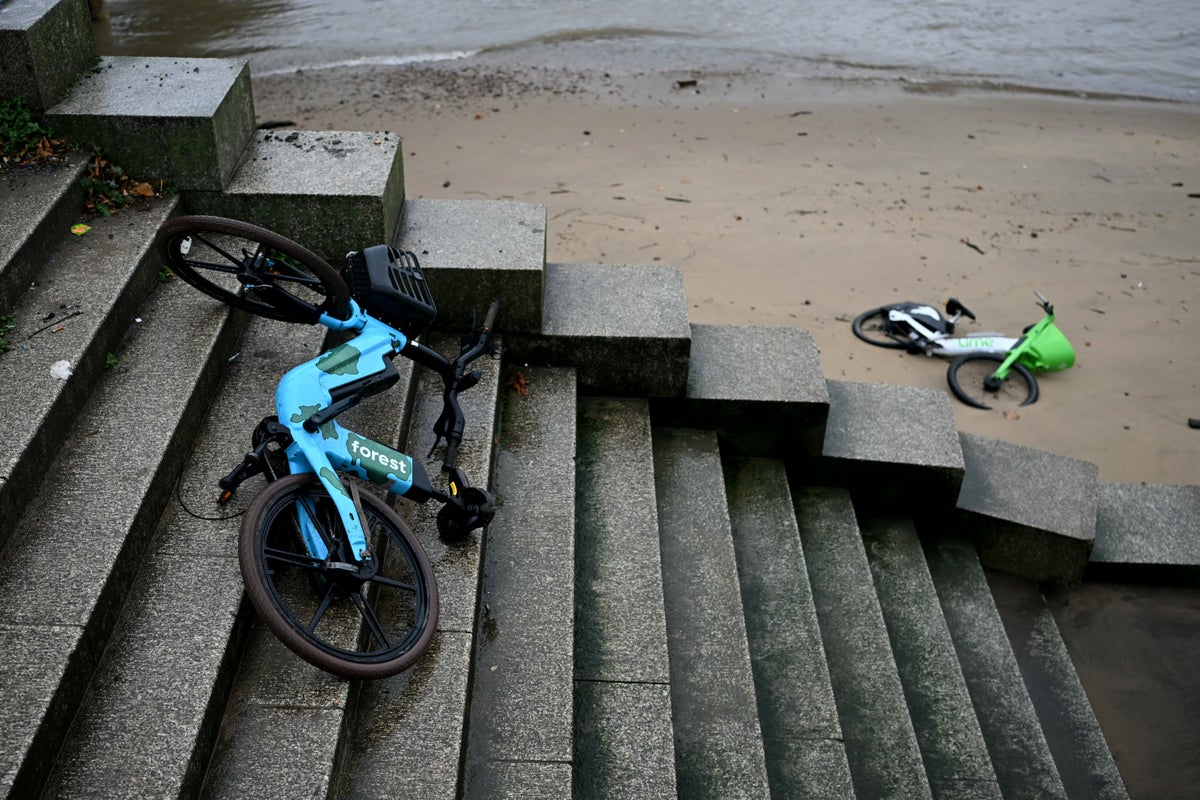
Government to crack down on ‘wild west’ e-bike parking
Key Points
Government to crack down on ‘wild west’ e-bike parking The Department for Transport has opened a consultation on setting new regulations for e-bike providers - Bookmark - CommentsGo to comments Become an Independent member to bookmark this article Already a member? Log in The Government has pledged to use a proposed set of standards to crack down on the “wild west” of e-bike parking. The Department for Transport (DfT) on Thursday launched a consultation on setting out the new rules, which...
Government to crack down on ‘wild west’ e-bike parking
The Department for Transport has opened a consultation on setting new regulations for e-bike providers
- Bookmark
- CommentsGo to comments
Become an Independent member to bookmark this article
Already a member? Log in
The Government has pledged to use a proposed set of standards to crack down on the “wild west” of e-bike parking.
The Department for Transport (DfT) on Thursday launched a consultation on setting out the new rules, which will target shared e-bike schemes run by companies such as Lime, Voi and Forest.
Parking and fleet management plans designed to ensure bikes are not overcrowding streets are among the issues covered by the consultation.
It also raises potential insurance requirements for operators, which would mean people can claim compensation if they are hit by a rider on a shared e-bike.
Antisocial and illegal behaviour such as drunk cycling, riding on pavements or underage users is targeted by the proposals as well.
The DfT said establishing national standards was aimed at ending the current “patchwork of rules” for operating e-bike schemes in different areas.
“Shared e-bike schemes have revolutionised the way people travel around our towns and cities,” Transport Secretary Heidi Alexander said.
“They are easy to use, get us active and help reduce emissions, but we need to make sure they work with the communities where they operate.
“That’s why we are taking decisive action to give local leaders the power to stop nuisance parking, tackle antisocial behaviour and make journeys safer.”
In the capital, the Transport Secretary was working with London mayor Sir Sadiq Khan on devolving new powers to Transport for London (TfL), so that implementation and enforcement of e-bike rules are standardised across the city, and differences between boroughs come to an end.
“The ‘Wild West’ approach to dockless e-bikes cannot continue,” the mayor said.
“While these services are helping thousands more Londoners to cycle, their rapid growth has also brought challenges around safety, inconsiderate parking, and the lack of data needed to properly manage them.”
“For too long, cities have been left without the tools needed to properly manage these services, despite clear evidence that the current approach is not working,” he added.
Prime Minister Andy Burnham said E-bikes could make travel a bit easier, but they could also be a “real frustration” when they blocked pavements or were used “irresponsibly”.
“I want to sort that by giving communities more control over where they are parked and making sure companies and riders play by the rules,” he said.
“While making the big, long-term changes to make transport better and more affordable for people across the country, this is a small but important everyday fix to make our streets safer.”
‘A real opportunity’
Founder and chief executive of Forest Agustin Guilisasti said seeing London become a “cycling city” was “something to celebrate”.
“But to achieve this, we need national standards, and a coherent, well-regulated, London-wide system – better for riders and, importantly, better for pedestrians and the city.
“With around 350,000 shared e-bike trips taken every day in London, this is a real opportunity to work with government and local leaders to make cycling an easy, everyday choice.
“That means enough bikes in the right places and enough parking, so people can arrive easily and park responsibly – for calmer streets, cleaner air and a city that moves.”
Lime chief executive Wayne Ting said the consultation was “an important step forward”.
“Lime’s unmatched experience in working with cities to build and grow UK e-bike schemes means we know what it takes to make shared cycling work at scale.
“It’s why we recognise the current patchwork approach is confusing for riders, councils and operators, all of whom deserve greater clarity and certainty.
“We look forward to working with Government and local authorities to help deliver schemes that work for riders, operators and everyone in the communities we serve, all for a greener and more connected UK.”
Eleanor Briggs, head of policy, public affairs and campaigns at charity Guide Dogs, said national standards would give “much-needed powers to tackle dangerous parking and unsafe use”.
“For people with sight loss, badly parked rental e-bikes are a barrier to independent travel, blocking pavements, creating unexpected obstacles and making it harder to navigate safely,” she said.
Join our commenting forum
Join thought-provoking conversations, follow other Independent readers and see their replies
Comments