
Science
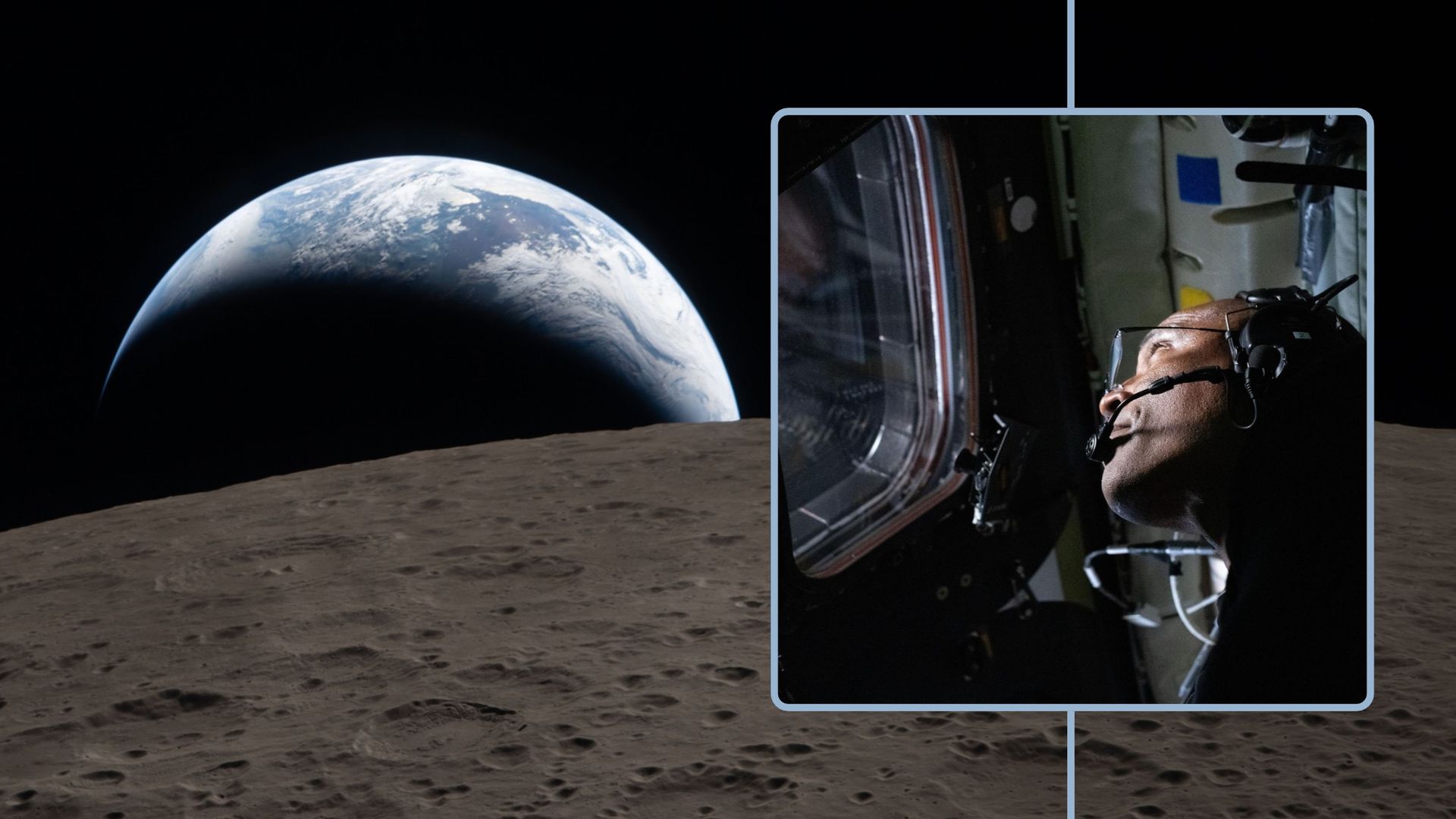
You don't have to go to the moon to see Earth differently: Artemis II astronaut Victor Glover on what really matters
Key Points
You don't have to go to the moon to see Earth differently: Artemis II astronaut Victor Glover on what really matters After a record-breaking journey around the moon, Artemis 2 astronaut Victor Glover explains why you don't need to travel into space to see Earth differently. TENERIFE, Canary Islands — Imagine traveling over 250 million miles from home, watching Earth disappear behind the moon and losing contact with the billions of people who call it home. What would you miss most?
You don't have to go to the moon to see Earth differently: Artemis II astronaut Victor Glover on what really matters
After a record-breaking journey around the moon, Artemis 2 astronaut Victor Glover explains why you don't need to travel into space to see Earth differently.
TENERIFE, Canary Islands — Imagine traveling over 250 million miles from home, watching Earth disappear behind the moon and losing contact with the billions of people who call it home. What would you miss most?
For Artemis II astronaut Victor Glover, the answer wasn't a particular place, a familiar view or even the comforts of home. It was something much more fundamental: human connection.
Speaking during a discussion with former astronaut Chris Hadfield at the Starmus VIII festival on Oct. 18 in Tenerife, Canary Islands, Glover reflected on the extraordinary experience of traveling around the moon and how being so far from Earth had given him a renewed appreciation for the people living on it.
"The greatest reason to go to space, it isn't to be a swashbuckler hero," Glover said. "It's to do something that only 651 people have been able to do: miss Earth and miss other Earthlings."
Glover was one of the four astronauts aboard NASA's Artemis II mission, which launched on April 1, 2026, marking humanity's first crewed journey to the moon since Apollo 17 in 1972. Alongside NASA astronauts Reid Wiseman and Christina Koch and Canadian Space Agency astronaut Jeremy Hansen, the crew traveled farther from Earth than any humans before them.
As the Orion spacecraft traversed the far side of the moon, the Artemis II crew watched Earth disappear below the lunar horizon before losing radio contact with our planet. Around 40 minutes later, Earth came back into view as the spacecraft emerged from behind the moon.
For Glover, however, the experience was about much more than the view. He believes that if everyone on Earth had the opportunity to make the same journey, they would come away with a similar appreciation for what they'd left behind.
"I think all of us would say something in our native language, in the most basic way we can communicate about love, joy, hope and inspiration," Glover said.
Although Glover shared the extraordinary journey with three fellow astronauts, the four of them were separated from the rest of humanity by hundreds of thousands of miles.
And for Glover, that distance brought with it a strange contradiction: the farther he traveled from humanity, the more he longed to connect with it.
"At the point of ultimate disconnection, [there is] this longing for connection," Glover said.
The experience gave him a perspective that he carried back into everyday life.
"There are moments where I am rushing through traffic and want to get where I'm going because I'm being selfish," Glover admitted. "But I don't have to stay there."
Instead, he remembers what it felt like to look back at a planet so distant that everyone who has ever lived could be covered by his hand.
"I wish you could all feel what it's like to come back home after that disconnection," he said.
The 'sea level effect'
Astronauts often describe experiencing the "overview effect", a profound shift in perspective that can come from seeing Earth from space. But Glover believes that there's something equally powerful waiting to be discovered much closer to home.
When asked by a Starmus VIII attendee whether people needed to undergo something extraordinary to develop a greater sense of kindness toward others, his answer was no.
Glover encouraged people to look more closely at the natural world around them, whether that meant walking along the beach, watching the ocean or simply examining a leaf held up to sunlight.
Even something as ordinary as a leaf, he explained, is capable of turning sunlight into food through photosynthesis. And although science can explain how that happens, understanding the process doesn't make it any less remarkable.
"We have to choose to be moved by these things," Glover said.
He worries that modern life, with its endless technological distractions, has made it all too easy to overlook the extraordinary things happening around us.
"Familiarity breeds contempt. Have you heard this? I think it's worse than that. Familiarity breeds indifference," he said.
Glover has a name for this perspective he hopes people can rediscover without traveling into space: The sea level effect.
It's about finding the same sense of wonder and connection that astronauts experience in orbit, but right here on Earth, where most of us spend our lives. And ultimately, Glover believes the greatest wonder isn't the moon, the stars, or even the incredible complexity of nature. It's the people we share our planet with.
"I think the hardest place to see this miracle is in the actual greatest miracle in the universe: other humans," he said.
"We all feel it with babies, but when we get old enough to have opinions, we start to want to argue with each other."
Glover hopes that by taking the time to appreciate the natural world, people might become a little more willing to appreciate one another too.
"That's the mission that I want to be part of for the rest of my life," Glover said.
Daisy Dobrijevic joined Space.com in February 2022, having previously worked as a staff writer for All About Space magazine. She completed an editorial internship with BBC Sky at Night Magazine and worked at the National Space Centre, communicating space science to the public.
Daisy holds a PhD in plant physiology and a Master's in Environmental Science. Based in Nottingham, U.K., she covers all things space, with a special focus on solar activity and space weather. She also has a keen interest in astrotourism and is always on the lookout for the next northern lights adventure.
She will join Hurtigruten as an onboard astronomer for a northern lights sailing in January 2027.
You must confirm your public display name before commenting
Please logout and then login again, you will then be prompted to enter your display name.