
Health
'We are humans too, we have feelings': Healthcare workers grapple with abuse by those they care for
Key Points
'We are humans too, we have feelings': Healthcare workers grapple with abuse by those they care for Reports of abuse and harassment against healthcare workers have nearly doubled in two years. But protecting staff becomes more complicated when those responsible are vulnerable patients who still depend on their care. SINGAPORE: Nursing home rehabilitation worker Mary (not her real name) had come to regard the residents she cared for as family.
'We are humans too, we have feelings': Healthcare workers grapple with abuse by those they care for
Reports of abuse and harassment against healthcare workers have nearly doubled in two years. But protecting staff becomes more complicated when those responsible are vulnerable patients who still depend on their care.
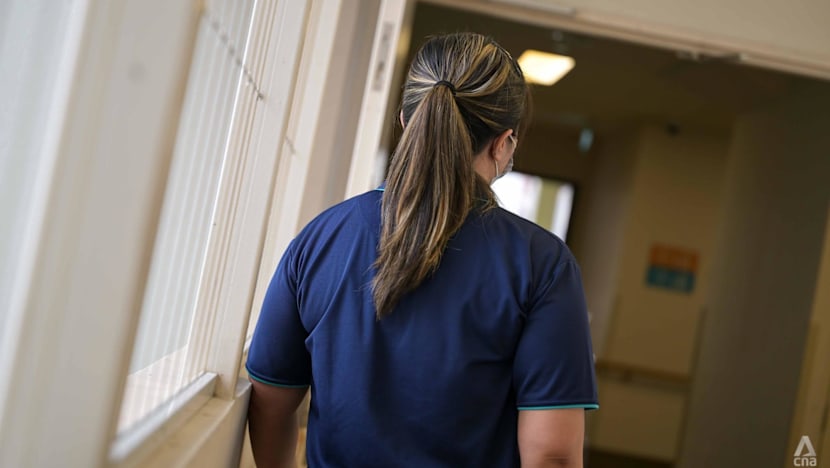
SINGAPORE: Nursing home rehabilitation worker Mary (not her real name) had come to regard the residents she cared for as family.
But during a rehabilitation session last year, a male resident she had known for years began making sexually inappropriate remarks towards her.
Stunned initially, the 29-year-old, who has worked in healthcare for eight years, told him to stop. But when he repeated the remarks, she immediately ended the session and informed her supervisor.
“There was no trigger, I was professional with him, doing my usual exercise. I didn't know how to react,” she recalled.
"We are humans too, we have feelings. We are in the healthcare line, so we need to have patience, but I hope the public can understand we are hurting if they do this to us.”
Reports of abuse and harassment against healthcare workers at public institutions nearly doubled from 2,200 in 2023 to 4,200 in 2025, the Ministry of Health (MOH) said in September.
The Tripartite Workgroup for the Prevention of Abuse and Harassment of Healthcare Workers said the increase was consistent with greater awareness of what constitutes unacceptable behaviour and greater confidence among healthcare workers to speak up against abuse.
But despite zero-tolerance policies and measures to protect staff, healthcare institutions and workers told CNA that tackling abuse is far from straightforward when those responsible are vulnerable patients who still depend on their care.
WHY ABUSE GOES UNREPORTED
About two in three healthcare workers surveyed by the tripartite workgroup in 2023 had witnessed or experienced abuse or harassment.
Yet many incidents went unreported, with workers citing fears of repercussions, uncertainty over reporting channels or a belief that such treatment was part and parcel of their work.
For some, reluctance to speak up also stems from an understanding that patients and their families may be going through some of the most stressful moments of their lives.
“A lot of people who come into healthcare (do it) because of a passion,” said Dr Gillian Lim, a senior consultant and chief of the central-north region at the Institute of Mental Health (IMH).
“There's a desire to serve and care for people when they are feeling the most ill. So sometimes we excuse certain behaviours because we feel maybe it's the illness causing them to feel so uncomfortable.”
Dr Lim, who has experienced verbal, physical and sexual harassment during her career, said healthcare workers have become more willing to report such incidents over the years, compared with a time when they might not have discussed them or felt the need to speak up.
But the emotional impact of abuse can linger long after an encounter.
She recalled a patient who was unhappy with his treatment and spat at her, kicked in her direction and made sexually inappropriate remarks.
“I was just like, 'Let's finish this review.' But the moment I finished typing my notes, I remember crying,” she said.
Dr Lim said she had made two police reports over harassment incidents during her medical career, including one involving that patient.
Under the Tripartite Framework for the Prevention of Abuse and Harassment in Healthcare, healthcare workers can make police reports at their discretion, and are particularly encouraged to do so if they suffer physical injuries or receive threats of harm.
The public healthcare institutions are also expected to assist workers in making police reports where necessary.
The framework also states that healthcare institutions should consider providing post-incident support, such as time off to prepare for and attend police interviews.
The number of abuse and harassment cases involving public healthcare workers reported to the police rose from about 350 in 2023 to 550 in 2025, according to MOH figures released in September.
The impact of such encounters can extend well beyond the incidents themselves, said Mr Kalaivanan Dakshnamoorthy, IMH's assistant director of nursing.
"Many healthcare workers continue caring for other patients immediately after such encounters, even while processing the emotional impact of what has occurred,” he said.
“Repeated exposure to aggression can also contribute to stress and burnout.”
WHEN THOSE RESPONSIBLE ARE ALSO PATIENTS
Protecting healthcare workers becomes more complicated when the behaviour they face may be linked to a patient's medical condition, or when the person responsible remains dependent on their care.
Mr Ronnie Poh, head of nursing at MWS Nursing Home in Eunos, said shouting and demeaning remarks from anxious family members can be "deeply demoralising" for staff, who also face physical aggression from residents with dementia.
In one incident, a resident shouted, spat at and hit members of a nursing team.
"These situations require a clinically informed and compassionate response," said Mr Poh.
"Dementia-related behaviour may reflect fear, confusion, discomfort or difficulty communicating needs, rather than a deliberate intention to harm."
Such situations make it difficult for healthcare institutions to respond to abuse in the same way as other workplaces.
Mr Jason Lai, head of human resources and staff protection officer at nursing home operator Vanguard Healthcare, said discussions within the tripartite workgroup had highlighted the particular difficulties faced by nursing homes.
While acute care settings may be able to restrict abusive patients or visitors, such measures are not always feasible in long-term care facilities.
Residents who repeatedly display abusive behaviour cannot easily be discharged or transferred elsewhere, leaving institutions having to find ways to protect staff while continuing to meet their charges' care needs.
At IMH, staff also have to consider how mental illness may influence patients' behaviour.
Some patients may be highly distressed, experiencing psychotic symptoms, anxiety or difficulty regulating their emotions, which can affect how they respond to healthcare workers.
Dr Lim said determining the extent to which patients can be held responsible for abusive behaviour can be difficult, given their illnesses and vulnerabilities.
She also recounted instances when she feared for her safety because of aggressive patients or family members.
"There have also been instances where I've just felt unsafe because a patient or family member has been so upset that they try to lift up a chair and throw it, push computers, slam the door, make verbal threats to harm me or the staff around me," she said.
Even making a police report may not necessarily put an end to the harassment.
Dr Lim cited instances in which patients continued to target or harass healthcare workers after learning that police reports had been made against them.
This can make staff hesitant to report incidents, particularly when they know they may have to care for the same patients again.
The difficulties are not limited to patients themselves.
Vanguard Healthcare’s Mr Lai cited a case involving the only listed next-of-kin of a nursing home resident, who lived overseas and repeatedly made verbal threats and abusive remarks to staff over the phone.
The case was escalated to senior nursing staff, who took over calls from the family member, while affected employees were offered counselling.
At MWS Nursing Home in Eunos, senior staff nurse Donna Ritumalta recalled feeling discouraged after family members raised their voices aggressively during a confrontation over the facility's visiting requirements and safety protocols.
Management eventually stepped in to engage the family members, while nursing leaders provided her with emotional support and counselling.
"Professionalism does not mean tolerating abuse,” said Ms Ritumalta.
“We should continue to communicate respectfully and compassionately, while also recognising the importance of safeguarding our own safety, dignity and well-being.”
BEYOND ZERO TOLERANCE
Given the complexities of different care settings, healthcare institutions have adopted a range of measures to protect staff, from identifying triggers for aggressive behaviour to training workers to respond to potentially volatile situations.
The Tripartite Workgroup for the Prevention of Abuse and Harassment of Healthcare Workers was established in 2022 amid growing concerns over the safety and well-being of healthcare workers.
Over four years, it established a sector-wide zero tolerance framework, strengthened reporting and support for affected healthcare workers, and stepped up training and public education efforts.
Posters reminding patients and visitors that abuse and harassment of healthcare workers are unacceptable are also displayed at healthcare institutions.
At Vanguard Healthcare, staff are trained to document details of abusive incidents, including when a resident's behaviour escalates.
Mr Lai said such information can help staff identify patterns, such as agitation occurring later in the day, which may be associated with "sundowning" among people with dementia.
Understanding these patterns can help staff better plan residents' care and manage potentially difficult situations.
Vanguard Healthcare has also established reporting procedures and a care recovery programme, under which supervisory staff are trained to provide timely peer counselling following incidents of abuse.
In Mary's case, after she reported the sexual harassment incident to her supervisor at the nursing home, the matter was escalated to the director of nursing, who checked in on her about five times afterwards to ensure she had ongoing support.
She has not had to work with the male resident who made the sexually inappropriate remarks since the incident, and he is now attended to only by male staff.
She can also be accompanied by a colleague when working with other residents on the same floor as him.
At MWS Nursing Home in Eunos, training also takes into account the diverse cultural and language backgrounds of its healthcare workforce.
Mr Poh said differences in communication styles can sometimes lead to misunderstandings.
As part of MWS' in-house nursing orientation programme, new employees are taught local communication practices and expectations, and given opportunities to practise responding to challenging situations.
At IMH, frontline staff undergo mandatory crisis response training, which uses realistic simulations to help them recognise early signs of aggression, violence and behavioural disturbance.
Selected nurses receive advanced “Code Grey” team training covering risk assessment, situational awareness, negotiation, coordinated team responses and safe physical intervention.
"The focus is always on protecting patients, visitors and staff while minimising distress and preserving the dignity of everyone involved," said Mr Kalaivanan.
IMH also has escalating measures to address repeated abusive behaviour, said Dr Lim, who sits on the hospital's total workplace safety, health and well-being committee.
These include verbal warnings, followed by written warnings if the behaviour continues, and potentially restrictions on ward entry or visiting.
WHAT MORE NEEDS TO BE DONE?
Despite improvements in reporting procedures, training and post-incident support, healthcare workers said more could be done to prevent repeated abuse and help staff deal with its emotional consequences.
Some called for more practical, scenario-based training, stronger measures against repeated harassment and greater access to professional psychological support.
MWS Nursing Home’s Ms Ritumalta said that while she had received basic hospitality training and learnt therapeutic communication techniques, particularly for residents with dementia, more opportunities to practise managing difficult situations would help build her confidence.
Meanwhile, Mary said professional psychological support would help workers affected by abuse receive more targeted care. For her, the support of colleagues and supervisors was crucial in moving on from the incident.
Speaking up also prompted greater awareness among her colleagues of the need to report inappropriate behaviour.
"When I shared it to the whole team, including other female staff, they knew that if something like this happened next time, we have to speak up," she said.
IMH’s Dr Lim said more needs to be done to protect healthcare workers on a case-by-case basis, particularly when they may have to continue caring for patients who have previously harassed or abused them.
She also emphasised that the impact of abuse is not limited to frontline healthcare workers, noting that administrative and operations staff responsible for documenting incidents and following up on reports can also face considerable stress.
The tripartite workgroup has acknowledged that sustained efforts will be needed from healthcare institutions, workers, patients, caregivers and the wider community to build a healthcare system where abuse and harassment have no place.
An employer-led Community of Practice will build on the workgroup's efforts and provide a platform for healthcare employers to share expertise and best practices.
While Dr Lim acknowledged that healthcare institutions had made addressing workplace abuse and harassment a priority in recent years, she stressed that such treatment should never be accepted as an inevitable part of the job.
"Mental preparation to be abused and harassed is not something that we can train people for," she said.
"We shouldn't be sweeping it under the carpet or saying that this is just part of the job. Because if this happened in another instance, it would have been treated completely differently."